
Abacus vs Kumon vs Conceptual Math: Which Is Right for Your Child?
Which Is Better?6 min read
Parent Guides

Aina Rashid
Parent Education Editor, Algonova Malaysia
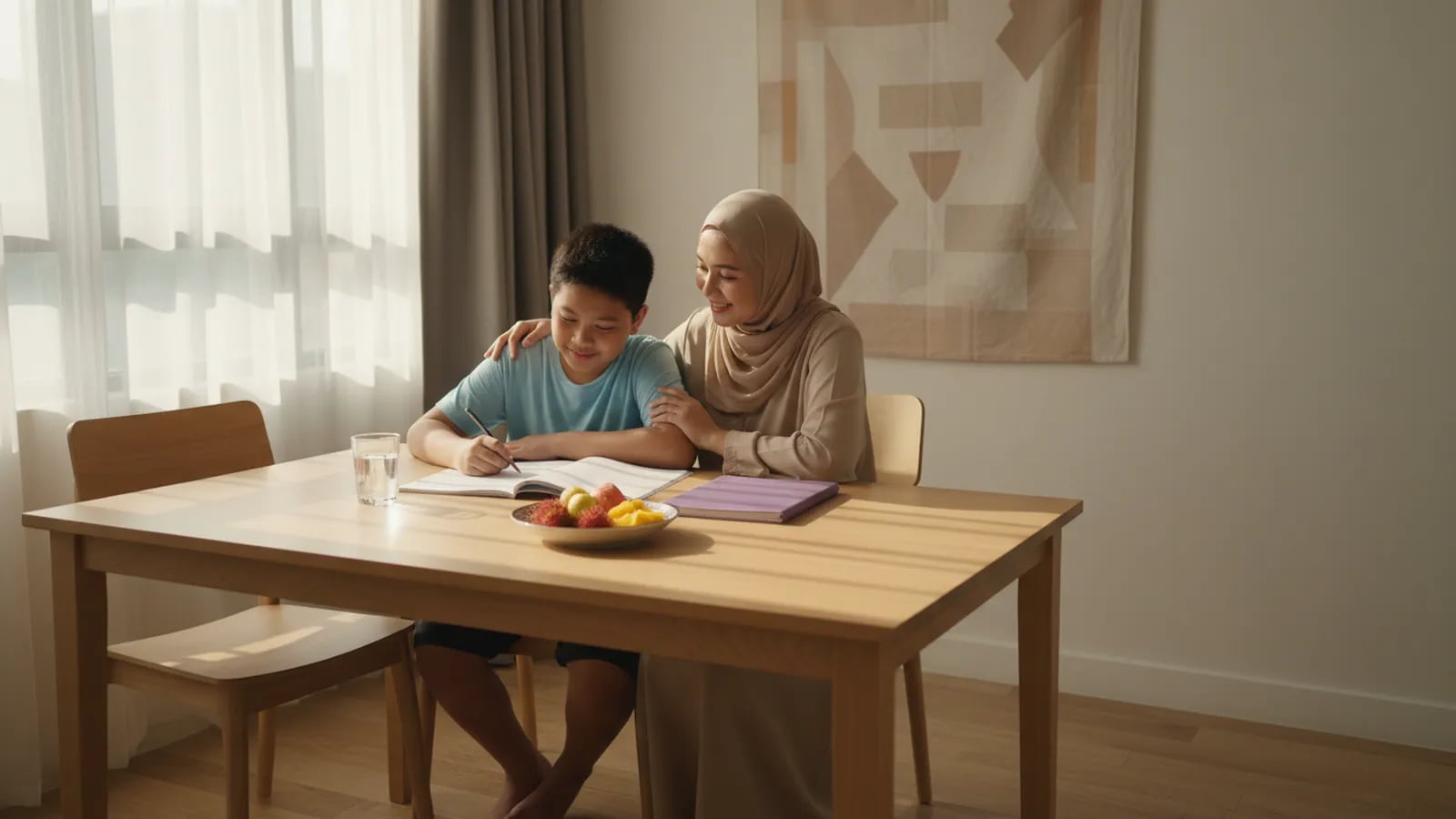
Child exam stress before UASA is common in Malaysian primary schools, and most of it eases with steady routines at home: 9 to 12 hours of sleep, calm talk and a short daily review. Watch for 8 signs, from stomach aches to sudden tears over homework. If the signs last longer than 2 weeks or stop your child from going to school, speak to a doctor or school counsellor.
Exam stress is the worry and tension a child feels when a test is coming, and a small amount of it is normal and even useful. A little nervousness helps a 10 year old revise and stay alert in the exam hall. It becomes a problem when the child stops sleeping or eating properly, or goes blank in the exam hall.
UNICEF describes exam anxiety as something that shows up in the body as well as the mind: stomach aches, headaches, dizziness or a racing heart. Its advice to parents in a UNICEF guide on anxiety before exams is simple: stay close, listen with empathy and watch for signs that a child needs more help.
Think of it as a scale. A child who says "I'm nervous about the maths paper" on Sunday night is at the normal end. A child who cries every evening for a week and refuses to open a school bag is at the other end and needs more support.
The clearest sign of exam stress in a child is a change from their usual self that starts as the test gets closer. One bad evening means little. Look for patterns that repeat over several days.
| Sign | What you might see at home | What helps first |
|---|---|---|
| Sleep changes | trouble falling asleep, waking at night, bad dreams | fixed bedtime, no screens 30 minutes before bed |
| Body complaints | stomach aches or headaches on school mornings | check with a doctor once, then talk about worry |
| Appetite changes | skipping breakfast, eating much more or less | small regular meals, eat together |
| Tears over homework | crying at one hard question | stop, take a break, try one easier question |
| Irritability | snapping at siblings, quick anger | name the feeling: "you seem worried about UASA" |
| Avoidance | "forgetting" books, refusing to revise | start with 10 minutes together |
| Negative talk | "I'm stupid", "I will fail everything" | answer with facts about what they can already do |
| Pulling away | dropping a favourite sport or game | keep 1 fun activity in the week |
UASA (Ujian Akhir Sesi Akademik) is the end-of-year test in upper primary, and to a child it can feel like the most important exam in the world. For parents the facts are calmer. UASA is written and marked by your child's own school, and the school sets its own timetable in the final weeks of the session, so the class teacher is the best person to ask for exact dates.
UPSR, the old national exam at the end of Year 6, was abolished in 2021. UASA is part of school-based assessment, and the result is one picture of where your child stands at the end of the year. It isn't a national exam like UPSR was.
So why the pressure? Children hear it from classmates comparing tuition and from every adult who asks "ready for exams?". A 10 year old can't yet tell a school test from a life event. Parents who know this tend to stay calmer, and children pick that up.
A test your child's own teacher wrote tells you what to practise next. Treat it that way at home, and most children will too.
The most useful help in the last 2 weeks is a predictable routine, not extra hours of revision. Children cope better when they know what each evening looks like.
Take Aiman, Year 5, who started waking at 2 am a week before UASA. His mother moved revision to right after school, turned off the tablet at 8.30 pm and walked with him around the block before dinner. By the end of the week he slept through again.
For maths practice, the UASA Year 5 maths questions with worked answers show the format so the paper holds no surprises.
The best words for a stressed child show that you see the feeling and that your love doesn't depend on the score. Children often hear pressure where parents mean support.
| Instead of | Try saying |
|---|---|
| "You must get an A." | "Do your best, and that is enough for us." |
| "Your cousin scored 90." | "Let's look at what you already know well." |
| "Stop crying, it's only a test." | "It sounds like you're worried. Tell me about it." |
| "Why didn't you study more?" | "What part felt hardest? Let's look at it together." |
| "If you fail, no holiday." | "Whatever the result, we'll plan the next step together." |
After each paper, ask "What was the easiest question?" before "How did you do?". It lets the child start with something good. Praise effort you saw: "You revised fractions 3 evenings in a row" means more than "you're so clever".
Often a child's UASA fear centres on one subject, and in many homes that subject is maths. Usually it traces back to a gap that started much earlier: place value in Year 1, times tables in Year 2, then fractions that never quite made sense.
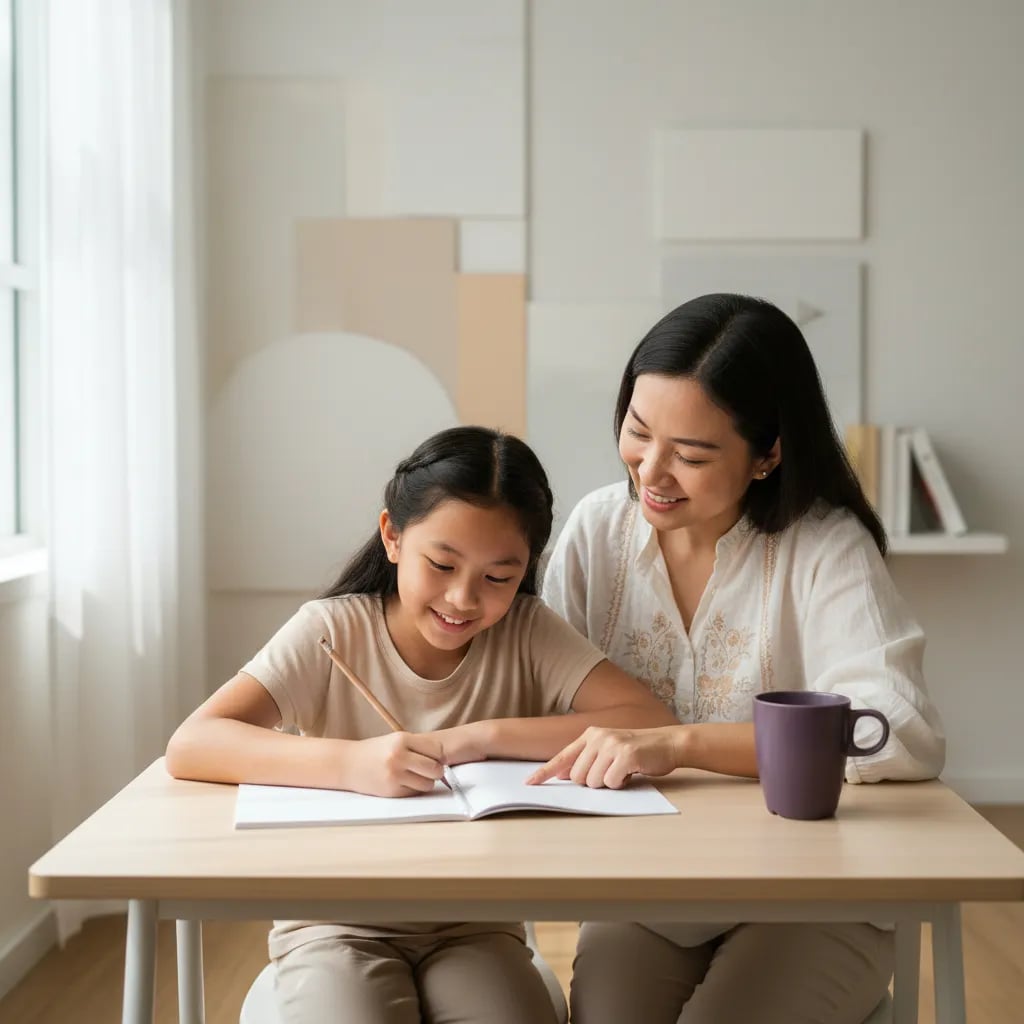
Parents can check this at home. Give your child 5 questions from an earlier year, such as 47 + 38 or 6 x 7. If those cause tears too, the problem is the foundation, not the exam. Our guide on how to help a child catch up in maths walks through a plan, and the article on math anxiety in children explains how fear of numbers grows.
The calmest Year 4 exam starts with solid maths in Year 1 and Year 2. Algonova's maths classes for ages 6 to 8 run online in groups of up to 10, and each child starts with a free maths diagnostic of about 60 minutes. It shows which topics are secure and which need work, so a younger child reaches upper primary without the gaps that turn a test into a fear. Parents share their experience on our Algonova Malaysia reviews page.
Talk to a doctor or counsellor if your child's stress lasts longer than 2 weeks, keeps them from school or comes with signs such as panic, constant crying or talk of self-harm. Exam worry should fade after the last paper. If it doesn't, it may be something more.
Good first steps in Malaysia:
Algonova teachers are not counsellors or doctors, and a maths class doesn't treat anxiety. If you are worried about your child's mental health, a professional should be your first call.
Related reading:
Yes, mild stress before UASA is normal and can even help a child focus. Most primary pupils feel some nerves in the week before an exam, especially if classmates talk about tuition and marks. Normal stress looks like a few restless nights, extra questions about the papers or a short temper on the evening before a test. It usually fades soon after the last paper. What matters is how big the change is and how long it lasts. If your child still sleeps, eats and plays most days, routines at home are usually enough. If the worry grows each day, stops them from going to school or lasts beyond 2 weeks, talk to the class teacher and your family doctor. A short chat each evening about how the day went helps you notice the difference early.
The common signs are changes in sleep, appetite and mood that appear as the exam gets closer. You may notice trouble falling asleep, bad dreams, stomach aches on school mornings, crying over homework or sudden anger at siblings. Some children avoid revision by "forgetting" books, while others say things like "I'm stupid" or "I will fail". A useful test is whether the behaviour is new. A child who has always been a picky eater is not suddenly stressed, but a child who stops eating breakfast the week before UASA may be. Write down what you see for 5 to 7 days. A short list helps you talk to the teacher or a doctor with facts, and it also shows whether things get better after the exams finish. Most stress signs ease within a few days of the last paper.
Children aged 6 to 12 need 9 to 12 hours of sleep in 24 hours, according to the American Academy of Sleep Medicine, with the guidance endorsed by the American Academy of Pediatrics. During exam week, sleep matters more than one extra hour of revision, because a tired brain recalls less and loses patience faster. Keep the usual bedtime, even on the night before the hardest paper. Turn off phones, tablets and TV at least 30 minutes before bed and keep screens out of the bedroom. If your child lies awake worrying, a quiet routine helps: a warm shower, a short story, then lights out. A Year 5 pupil who goes to bed at 9 pm and wakes at 6.30 am gets 9.5 hours, which sits inside the range. Weekend lie-ins are fine, but keep wake-up time within about an hour of school days.
No, late-night revision usually does more harm than good for primary school children. Sleep is when the brain stores what was learned during the day, so cutting it short makes recall harder in the exam hall. A child who revises until midnight and wakes at 6 am gets 6 hours of sleep, well below the 9 to 12 hours recommended for ages 6 to 12. A better plan is 30 to 40 minutes of review after school, with a break in the middle, then dinner, play and bed at the usual time. If your child feels unready, look at the topics with the class teacher rather than adding hours. On the night before a paper, a quick look at notes for 10 minutes is enough, and the rest of the evening should be calm.
Say something that lowers the pressure and shows your love doesn't depend on marks, such as "Do your best, and that is enough for us." Children often hear expectations in small comments, so avoid comparisons with siblings or cousins and avoid rewards or punishments tied to grades. Before the exam, remind your child of what they already know: "You practised fractions all week." After the exam, start with "What was the easiest question?" instead of "How many did you get right?". If your child is upset, name the feeling first: "You sound worried." That simple step often helps a child calm down enough to talk. Keep the morning routine normal too, with breakfast together and no last-minute quizzing at the school gate. A hug and "see you after school" is enough of a send-off.
Extra classes reduce exam stress only when they close a real gap, and more hours alone can add pressure. If your child panics at fractions or long division, the cause is often a missing skill from Year 1 or Year 2, and practising exam papers won't fix that. First find where the gap starts. You can test earlier-year questions at home, such as adding 2-digit numbers or simple times tables. For children aged 6 to 8, a free maths diagnostic of about 60 minutes at Algonova shows which topics are secure and which need work. Classes then run online in groups of up to 10 with a live teacher. For older children, talk to the class teacher about which topics to strengthen during the school holidays, and keep practice light during exam week itself.
See a doctor or counsellor if the stress lasts longer than 2 weeks, keeps your child away from school or comes with panic, constant crying or talk of hurting themselves. Physical complaints such as daily headaches or stomach pain should also be checked once by a doctor to rule out other causes. In Malaysia you can start with your family doctor, the nearest klinik kesihatan or the school counsellor. Talian HEAL 15555 is the Ministry of Health mental health line run by counselling officers, and it can guide parents on next steps. If your child ever talks about self-harm, seek help the same day. Exam worry that fades after the last paper is normal, but worry that stays needs a professional. Bring your notes on sleep, appetite and mood to the appointment.
A weak UASA result shows which topics need more work; it doesn't close any doors. UASA is a school-based test at the end of the year, and since UPSR was abolished in 2021 there is no national primary exam that decides a child's secondary school. Read the report with your child calmly and look for patterns: is it one subject, one topic or nerves on the day? Ask the class teacher what they saw during the year, because school-based assessment covers more than one paper. Then plan small steps for the holidays, such as 15 minutes of maths practice a day. Avoid punishment or comparisons with siblings. A child who feels safe after a bad mark is more likely to try again next year, and to tell you early when a topic stops making sense.
Blog


Start your child's tech journey
Book your free 60-minute trial class with an Algonova certified tutor. No payment, no obligation, just discover what your child can build.

Algonova worldwide
Contact us
Email: int_legal@alg.team
Visit us
Suite 8634, 1021 E Lincolnway, Cheyenne, WY, Laramie, US, 82001
Algonova online LLC International tech school for kids and teens

