
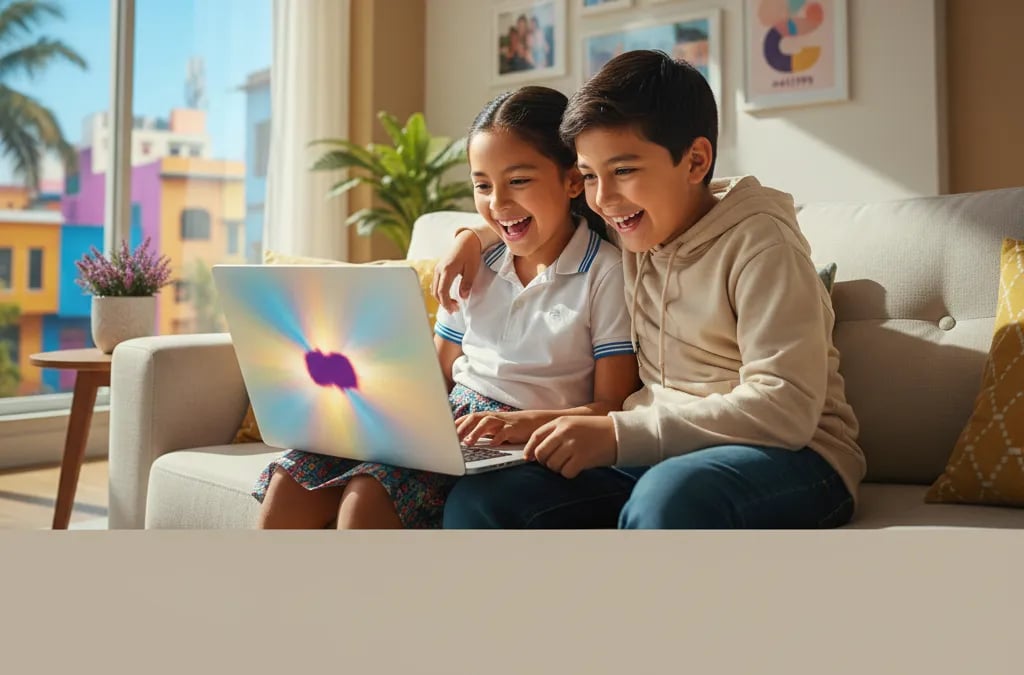
Programming (or coding), which kids can start learning from age 6 with visual blocks, is the process of writing instructions a computer can understand and run, using a programming language such as Python, JavaScript, or Scratch. In short, programming is how people "talk" to a computer to make it do something: from displaying a web page to moving a character in a video game.
The terms programming and coding are used almost interchangeably. Technically, coding is the part of writing lines of code, while programming covers the whole process: designing, writing, testing, and fixing. If you're looking for the full picture for your child, read our guide to coding for kids.
What Programming Is, Simply
Think of a cooking recipe: when you write the ordered steps to make tacos, that's like programming — except here the "reader of the recipe" is the computer, and the result can be an app, a web page, or a game.
Three basic elements of almost every piece of code:
- Instructions: a specific action (print "Hello", add two numbers, wait 2 seconds).
- Sequence: the computer runs instructions top to bottom, one at a time.
- Logic (conditions & loops): code can make decisions (if… then…) or repeat steps many times.
A computer doesn't "think" on its own: it does exactly what is written. That's why the heart of programming is thinking logically and in a structured way, not memorizing code. This skill is known as computational thinking.
Types of Programming and Examples
Programming is used across many fields. The most common types and what they produce:
| Type | What it's for | Example languages |
|---|---|---|
| Web development | Web pages & apps | HTML, CSS, JavaScript |
| Mobile development | Phone apps | Kotlin, Swift, Dart |
| Video games | Games | C#, Lua, C++ |
| Data & AI | Data analysis, artificial intelligence | Python, R |
| Automation | Automating repetitive tasks | Python, Bash |
Popular Programming Languages
A programming language is the "language" used to write code. Some of the most popular:
- Python — simple syntax; used in AI, data science, and automation. Great for beginners. Python is one of the most widely used languages today in artificial intelligence, data science, and web development.
- JavaScript — the main language for interactive web pages.
- HTML & CSS — technically not programming languages, but the foundation of a web page's structure and design.
- Scratch — a visual block-based language from the MIT Media Lab, used to introduce programming to beginners and kids aged 8-16.
How Does Programming Work?
When you write code, the computer doesn't understand it directly. There is a translation process from human language to machine language (0s and 1s).
The simple flow:
- Write the code — the programmer writes instructions in a programming language.
- Translate — a compiler or interpreter translates the code into machine language.
- Run — the computer executes the instructions and shows the result: a website, app, or game.
A one-line Python example that prints text:
print("Hello, Mexico!")
When run, the computer shows: Hello, Mexico! — usually the first program people make when learning to code.
Who Is Programming For?
Programming used to be seen as just for engineers. Today, understanding its logic is useful for almost any profession —doctors, designers, entrepreneurs, teachers— because nearly every field connects with technology and AI.
Key benefits of learning to program:
- Trains logic and problem-solving.
- Sparks creativity — turning ideas into real products like games or apps.
- A future-ready skill — an edge in the digital economy of Mexico and Latin America.
Programming for Kids
Children can start programming from age 6 — not by writing complex code, but with colorful blocks like Scratch. A common path: ScratchJr (early years) → Scratch (primary) → Python (secondary and up).
For kids, programming isn't about becoming engineers — it's about building structured thinking early. At Algonova this is taught in live classes — private 1-on-1, mini-groups of 2 to 4, or groups of up to 10 students — with age-based programs (6-9, 10-13, and 14-17).
Summary
- Programming is writing instructions so a computer does something, using a programming language.
- Three basic elements: instructions, sequence, and logic.
- How it works: code is written → translated by a compiler/interpreter → run by the computer.
- Popular languages: Python, JavaScript, HTML/CSS, and Scratch for beginners.
- Programming is useful for everyone — and can start in childhood.
Want your child to learn programming in a fun, structured way? Book a free Masterclass at Algonova — a session to assess their level, at no cost.