December School Holiday 2026 Coding Plan for Kids 7-12: 4 Weeks From Scratch to Roblox

Learn Coding13 min read
Glossary

Hafiz Rahman
Coding Curriculum Team, Algonova Malaysia
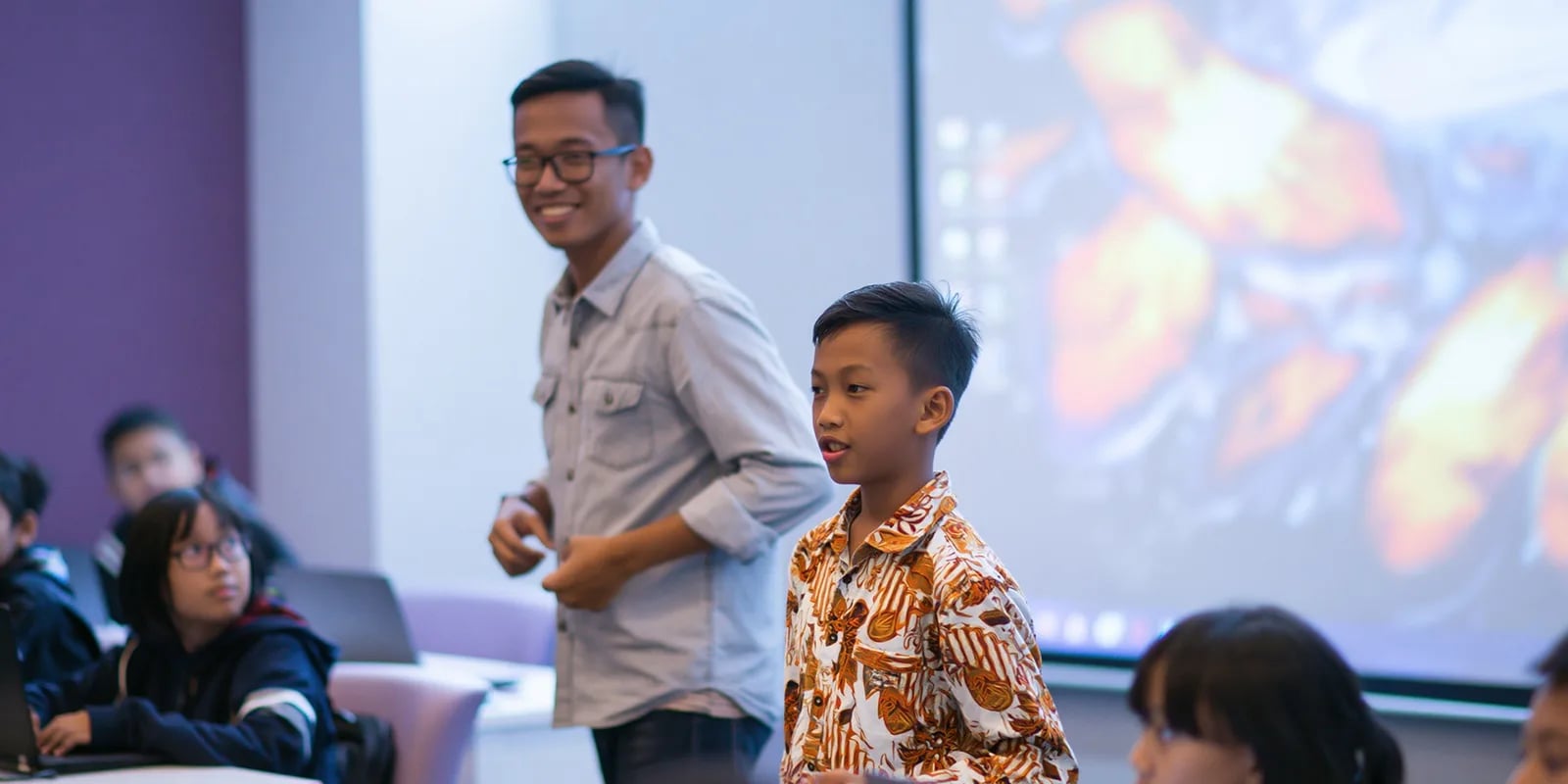
Machine learning is a branch of artificial intelligence (AI) in which a computer learns to perform a task by finding patterns in examples, called data, instead of following step-by-step instructions written by a programmer. In traditional programming, a person writes every rule by hand. In machine learning, the computer discovers the rules on its own by studying thousands of examples.
A machine learning model learns in three stages: it is shown many labelled examples (training), it looks for patterns, and then it makes predictions about new things it has never seen before. Imagine teaching a computer to recognise a cat in a photo. You do not describe whiskers, ears and fur one by one. Instead, you show it thousands of pictures labelled "cat" or "not a cat," and the model gradually learns which shapes and textures make a cat. Modern image models are often trained on more than a million photos, which is why an app can now identify an animal in less than a second.
Machine learning already powers the apps children use every day, from video recommendations to voice assistants, so understanding it helps them become creators rather than just users. It also builds the logical thinking and problem-solving skills highlighted in Malaysia's KSSR curriculum and STEM education. Learning the basics early, first through block coding and later with Python, gives kids a head start in a data-driven world. Structured Algonova coding classes introduce these ideas step by step, and a gentle first project like what is coding for kids makes the concept click. Curious learners can try a free trial lesson to see machine learning in action.
Start your child's tech journey
Book your free 60-minute trial class with an Algonova certified tutor. No payment, no obligation, just discover what your child can build.
Machine learning is a type of artificial intelligence in which a computer learns from examples instead of following fixed rules, so it improves at a task as it sees more data. A spam filter, for example, studies thousands of emails and slowly learns which ones look like junk. Kids meet the same idea when they train a simple image or voice model and watch it get smarter with practice. Children explore how this works in Algonova's online coding classes for kids, often after building projects in Scratch, and you can try it live in a free trial class.
You can show a child machine learning in about 15 minutes with free browser tools. Google's Teachable Machine lets your child hold up two objects, say a pencil and a cup, in front of the webcam, take 20 or 30 photos of each, and train a model that tells them apart. The fun part comes when it gets something wrong: show it a pen and watch it guess "pencil". That mistake opens the real conversation, because the model only knows what it was shown.
Sit next to your child for this, since the tool uses the camera. For kids who already know Scratch, the free site Machine Learning for Kids connects a trained model to a Scratch project, so a sprite can react to words or pictures the child labelled.

Algonova worldwide
Contact us
Email:
| Age | What works |
|---|---|
| 7 to 9 | Train a simple image model together and talk about why it makes mistakes |
| 10 to 12 | Build a Scratch game that uses a model the child trained |
| 13+ | First Python projects with real data sets |
If your child keeps asking how apps like YouTube or ChatGPT "know" things, a structured course helps the curiosity turn into skill. Algonova's AI classes for kids are built for ages 10 to 14 and run live online in small groups. Younger children usually start with coding classes first, and our guide AI for kids: what age and how to start covers the steps in more detail.
Machine learning is when a computer learns from examples instead of being given exact rules. By studying lots of data, it spots patterns and uses them to make decisions, such as sorting photos or suggesting videos.
Machine learning is a part of artificial intelligence. AI is the broad goal of making machines act smart, while machine learning is one popular method of getting there by learning from data.
Yes. Children can start with visual block coding and simple projects that show how computers learn from examples, then move on to Python as they grow more confident.
Kids as young as 7 to 8 can explore the ideas through games and block-based coding. Deeper topics with real code usually suit ages 10 and above.
Start with a free browser tool such as Google's Teachable Machine, where your child trains a model to recognise two objects using the webcam. It takes about 15 minutes and needs no coding. Afterwards, ask why the model got some guesses wrong. That talk about examples and mistakes is the core idea of machine learning, and kids who know Scratch can take it further with Machine Learning for Kids.
Yes. Algonova runs live online AI classes for children aged 10 to 14 in Malaysia, in small groups of up to 10 students. Children who are younger or new to coding usually begin with visual block coding and move to AI later. A free 60-minute trial class helps you see which level fits your child.