AI or coding first: which should your child learn?
Course Guides7 min read
Coding Education

Hafiz Rahman
Lead Coding Instructor at Algonova Malaysia
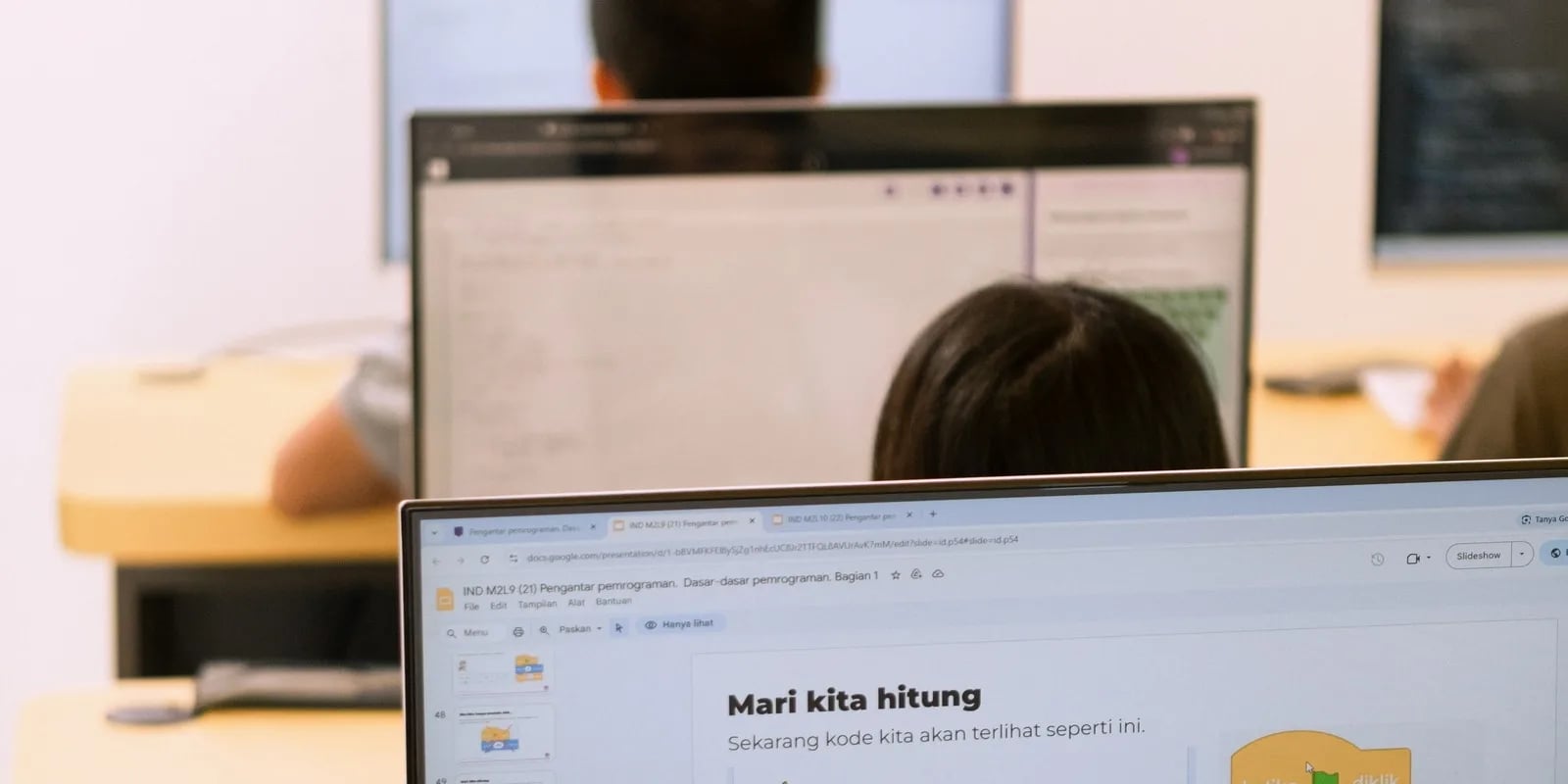
Scratch is a free block-based visual programming language built by the Lifelong Kindergarten Group at MIT Media Lab under Mitchel Resnick and released in 2007. Children aged 8 to 16 snap colour-coded blocks together to make games, animations and interactive stories instead of typing code. More than 90 million registered users have joined the Scratch community, and ScratchJr covers ages 5 to 7.
Scratch runs in any browser at scratch.mit.edu with nothing to install and no fee at any stage. Algonova teaches Scratch as the first step of its online coding track for children aged 6 to 17 in Malaysia, from RM 48 per lesson, and opens with a free 60 minute trial masterclass. Algonova has taught more than 1,000,000 students across 97 countries since 2016, holds a 4.9 star parent rating and is a Bett MEA Awards winner.
Scratch replaces written code with drag and drop blocks that lock together like puzzle pieces. Each block is one command, such as "move 10 steps", "play a sound" or "when green flag clicked". Stacking them in order tells a character, called a sprite, what to do. Blocks that do not belong together will not connect, so a child never hits the syntax errors that stop typed code from running.
A child might drag a "when space key pressed" block onto a cat sprite so it jumps whenever the space bar is tapped, which is the first step toward a full platformer game. Projects run instantly in a web browser, and every project published on scratch.mit.edu can be remixed, so kids learn by opening and changing what other people have made. Algonova teachers in Malaysia build lessons around that same remix habit, and every child finishes a working project inside the first 60 minute session.
Scratch coding for kids means learning to program inside the Scratch visual editor from MIT Media Lab. Children begin with a moving sprite or a short animation, then build fuller games with score, levels and sound effects. Scratch teaches loops, conditions, variables and events, the same concepts used in Python, without asking a child to memorise any syntax.
Most children in Malaysia start Scratch around age 8 and move to Python at 11 or 12, once they want programs longer than a block stack can hold comfortably. Algonova runs that whole path as a guided course for ages 6 to 17: private one to one, mini groups of 2 to 4, or groups of 6 to 10, from RM 48 per lesson. Parents usually begin with the free 60 minute masterclass and watch their child finish a first Scratch project live before paying anything.
Scratch builds computational thinking, which means breaking a problem into steps, spotting patterns and fixing mistakes. Those are the same STEM foundations Malaysia's KSSR curriculum encourages. Because the blocks remove spelling and syntax errors, a beginner gets something that works on day one, and that early win is what carries a child into text languages like Python.
Structured Algonova coding classes take children from a first Scratch project to real programs, and our guide to coding languages for kids shows what comes next. Algonova has taught over 1,000,000 students in 97 countries since 2016 and is a Bett MEA Awards winner. Parents in Malaysia can book a free trial class and see Scratch in action with a live teacher.
Scratch is used to build interactive games, animations, quizzes and digital stories by snapping colour-coded blocks together, which teaches programming logic without typing a single line of code. Created at MIT Media Lab in 2007 by Mitchel Resnick's Lifelong Kindergarten Group, it is now shared by more than 90 million registered users who publish and remix each other's projects.
Kids also use Scratch for greeting cards, simple simulations and school assignments. Because the blocks remove spelling and syntax mistakes, a beginner as young as 8 can build something that works on the first day, and the same logic later transfers to text languages such as Python. Younger children start on ScratchJr, the tablet version for ages 5 to 7 made by Tufts University with MIT. Children practise this step by step in Algonova's online coding classes for kids for ages 6 to 17, from RM 48 per lesson, and you can watch a real project come together in a free 60 minute trial class.
Scratch is used to create games, animations, interactive stories and simple simulations. Children build them by dragging code blocks together in the free editor at scratch.mit.edu, made by MIT Media Lab. It is the most widely used first coding tool in the world, with more than 90 million registered users publishing and remixing projects.
Scratch was created by the Lifelong Kindergarten Group at MIT Media Lab, led by professor Mitchel Resnick, and released in 2007. ScratchJr, the tablet version for ages 5 to 7, followed in 2014 from Tufts University working with MIT. Both are free, and Scratch now has over 90 million registered users worldwide.
Scratch is best for children aged 8 to 11, because the blocks carry short words and need basic reading. Younger children start with ScratchJr, which uses icons only. Algonova teaches Scratch to children aged 6 to 17 in Malaysia and moves them to Python once they want longer programs, usually around age 11 or 12.
Yes. Scratch is completely free online at scratch.mit.edu, with no software to install and no account required to start creating. It is run as a non-profit by the Scratch Foundation, so there are no ads and no in-app purchases. Teacher-led courses are separate: Algonova classes in Malaysia start from RM 48 per lesson after a free 60 minute trial.
Yes. Scratch teaches real programming concepts, including loops, variables, conditionals and events, using visual blocks instead of typed text, so the logic transfers directly to Python. The difference is spelling, not thinking. That is why Algonova uses Scratch as the opening stage of its coding track before children move on to text languages.
Open scratch.mit.edu in any browser, click Create, pick a sprite and drag a few Motion blocks under a green flag block. That first project takes about five minutes. If you want a teacher guiding the path from Scratch to Python, Algonova runs a free 60 minute trial class for ages 6 to 17, with regular lessons from RM 48.
Start your child's tech journey
Book your free 60-minute trial class with an Algonova certified tutor. No payment, no obligation, just discover what your child can build.

Algonova worldwide
Contact us
Email: int_legal@alg.team
Visit us
Suite 8634, 1021 E Lincolnway, Cheyenne, WY, Laramie, US, 82001
Algonova online LLC International tech school for kids and teens