
Holiday Programme for Kids: How to Choose an Online One for December 2026
Checklists & Calendar8 min read
Which Is Better?

Arjun Menon
Education Analyst, Algonova Malaysia
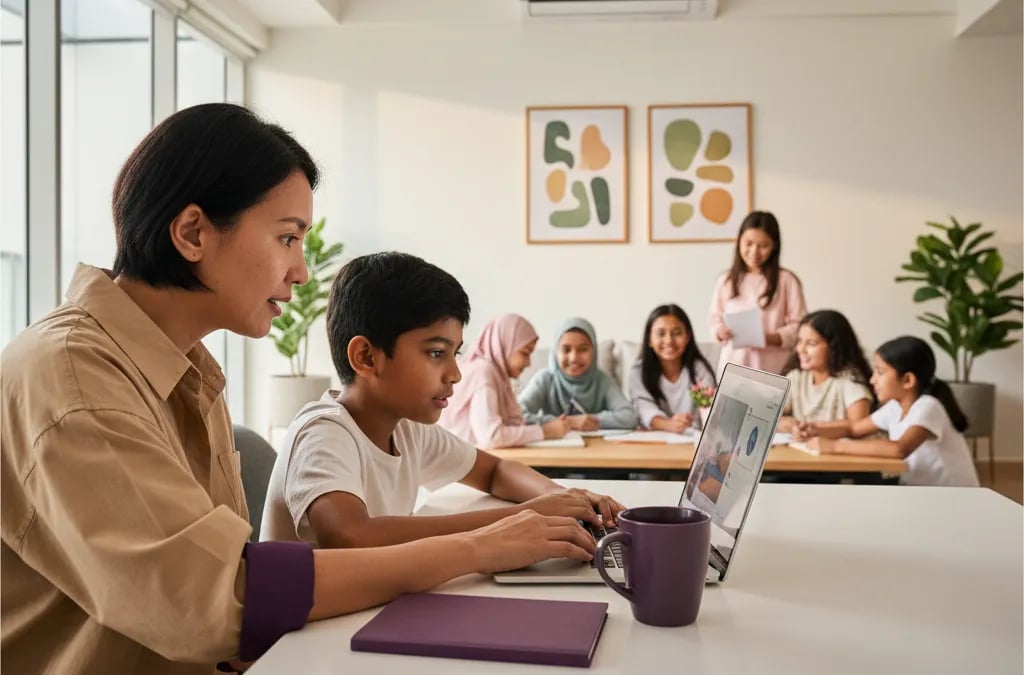
For Malaysian children aged 8 and up, live online coding classes work as well as physical ones, and usually win on consistency. The reason is logistical rather than educational: no travel means fewer classes lost to KL traffic, monsoon rain, or a sibling falling ill. Physical classes still win in three specific cases, set out below with a 7-question checklist.
Algonova is an online school for coding, Mathematics, AI, and design for children aged 5 to 17, with more than 1,000,000 students across 97 countries since 2016. Classes run live with certified teachers in small groups of up to 10 students, not recorded video, and the first trial class is free.
What decides a course's outcome is not where the class happens but how many classes actually happen.
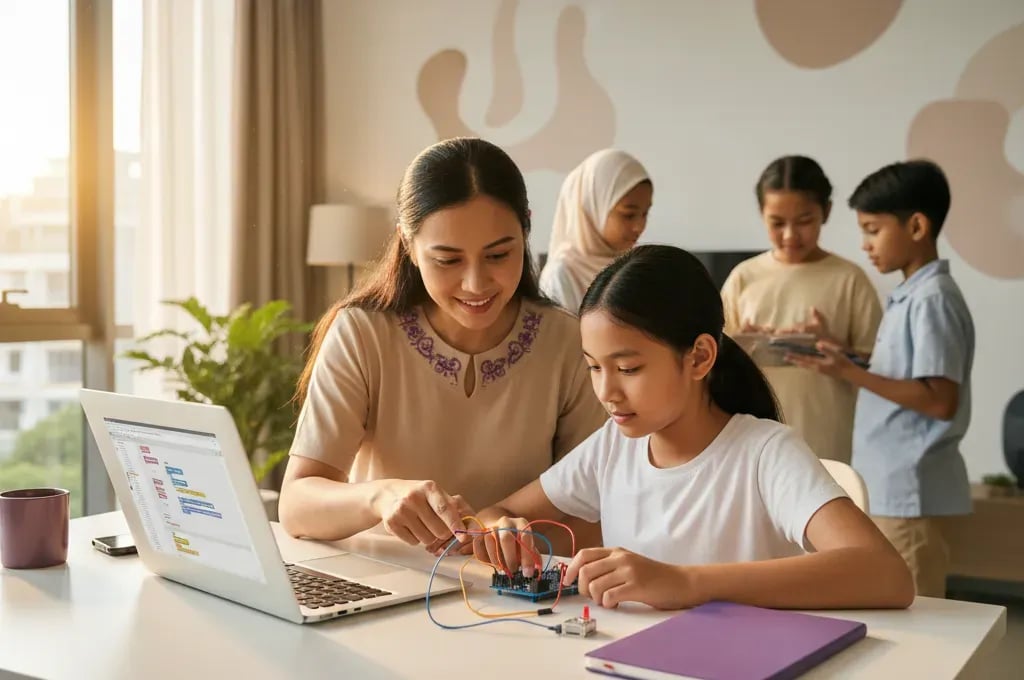
A physical course of 32 classes a year that a child misses six times through traffic or rain becomes 26 classes. An online course joined from the living room rarely loses more than two.
That four-class gap sounds small, but in coding each topic sits on the one before. A child absent when loops are explained arrives lost at conditions, and the gap widens from there.
Before comparing formats, it helps to be clear on what a child actually learns at each stage. That is covered in what coding for kids is.
Online wins on teacher attention and consistency; physical wins on face-to-face contact and hardware work.
| Aspect | Live online | Physical centre |
|---|---|---|
| Travel time | Zero | 30 to 90 minutes per class |
| Missed classes | Low, usually rescheduled | Rain, traffic, illness |
| Group size | Small groups, up to 10 | Depends on the centre |
| Reviewing later | Recording available | Only the child's own notes |
| Face-to-face contact | Limited | High |
| Access outside KL and Penang | Same for everyone | Depends on local supply |
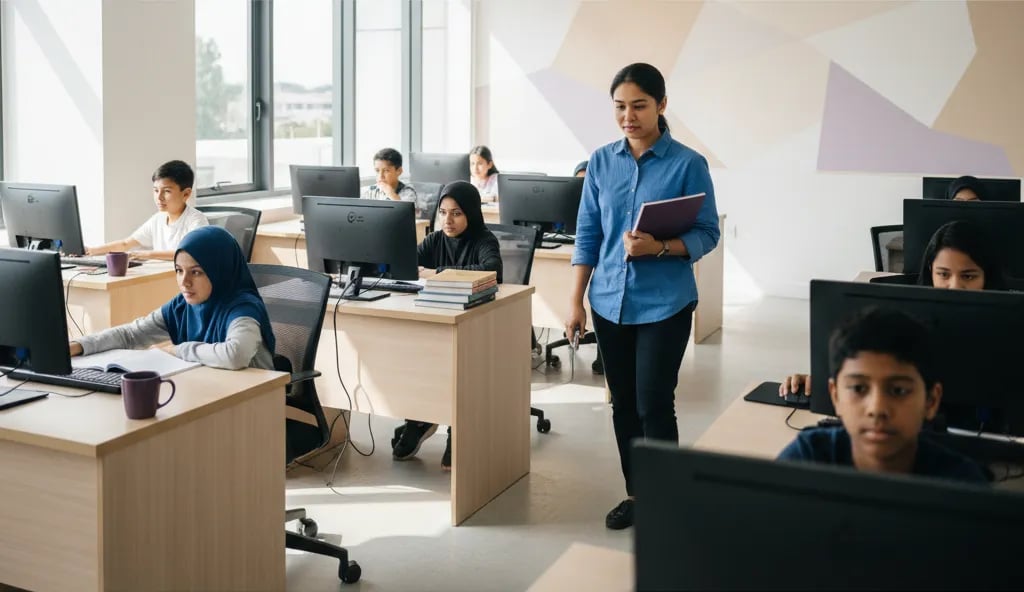
The factor that weighs most does not appear in this table. An excellent physical course a child reaches late half the time delivers less than an average online course they join punctually every week.
If you are comparing providers rather than formats, the criteria sit in how to choose an online coding school in Malaysia.
A physical centre's fee rarely includes petrol, tolls, parking, and an adult's time on the road.
Run the numbers against your own routine. A centre 30 minutes away means 60 minutes there and back per class. Twice a week is roughly 8 hours a month of an adult accompanying, on top of fuel and parking in KL or Petaling Jaya.
For many families that time costs more than the fee difference between two providers. Hourly rates in the market are compared in Math tuition cost per hour in Malaysia, and the same logic applies to coding.
There is a quieter cost too: the classes that simply do not happen. Two missed classes a month is 25% of what you already paid for.
Physical wins in three specific cases, and they are worth naming rather than dismissing.
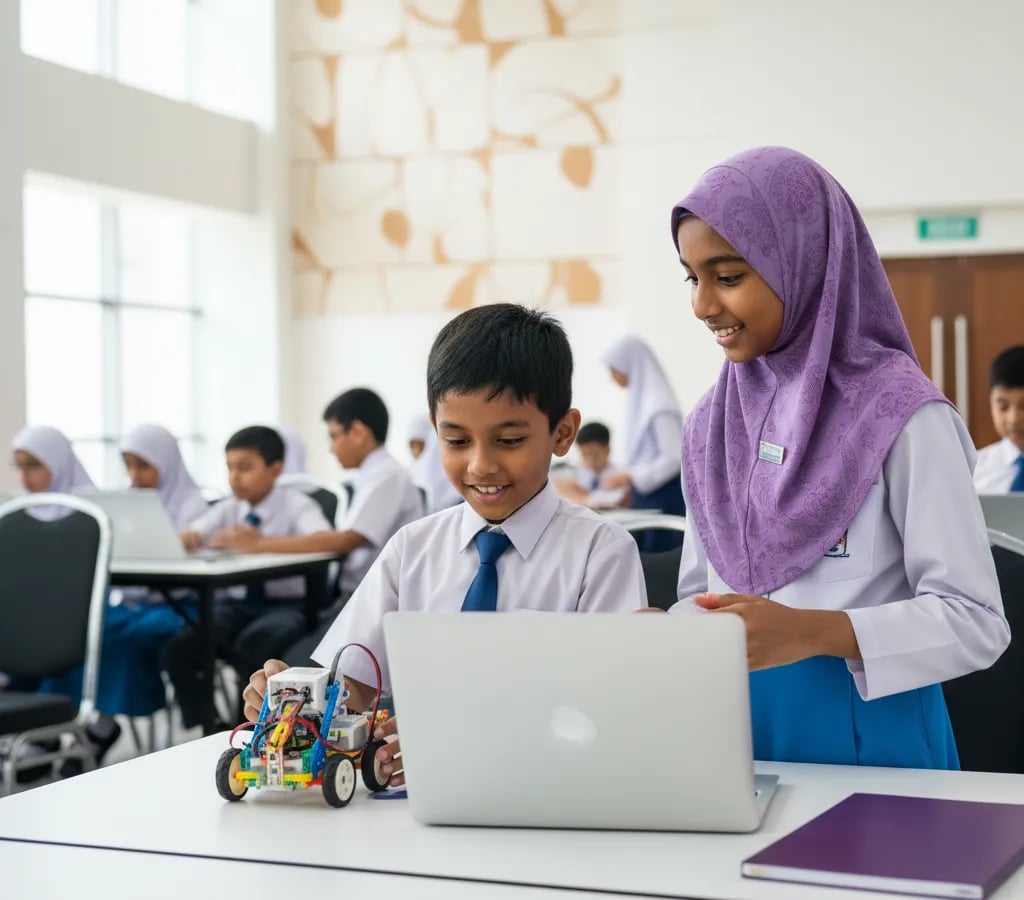
First, children under 7 who cannot yet handle a mouse confidently and need an adult to guide their hand. Second, robotics courses with physical hardware, where the child wires and tests a real device. Third, children whose main goal is meeting friends rather than learning to code.
Outside those three, the educational difference from age 8 is small, provided the online class is live with a teacher rather than a recorded video.
That distinction between live and recorded matters more than online versus physical. A video with nobody watching is what makes most children quit within two months.
Answer these about your own family, not about the ideal course in the abstract.
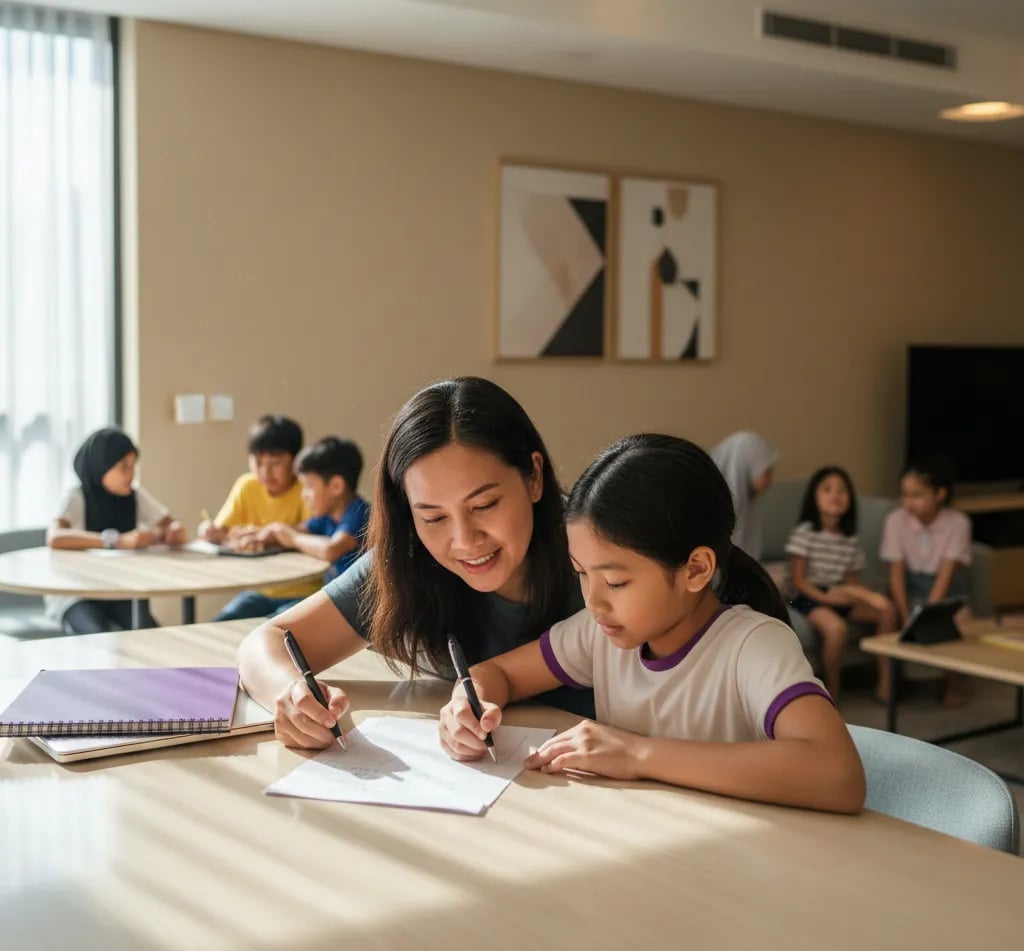
If four or more answers point to online, that is your option. If your child is under 7 or you want robotics with hardware, check what is available near you first.
If you are still deciding whether your child is ready at all, the behaviour signs are in is coding right for my child, and the age bands are in what age should a child start coding.
From age 8, live online classes work as well as physical ones, provided there is a live teacher and not just recorded video. The difference is logistical rather than educational. With no travel, a child loses fewer classes to traffic, monsoon rain, or family disruptions, and in coding each topic rests on the one before it. For example, a 32-class physical course missed six times becomes 26 real classes, while an online course joined from home rarely loses more than two. Physical remains better for children under 7, for robotics with hardware, and when the main goal is meeting friends.
No, as long as the class is live and the group is small enough for the teacher to see your child's screen and correct in the moment. In coding the teacher needs to see the code rather than the face. Screen sharing often shows a student's work in more detail than looking over a shoulder in a room of twenty children. What does reduce learning is recorded video with no guidance, because nobody corrects the mistake and the child gets stuck alone. When comparing options, the key question is not online or physical but live or recorded.
The advertised fee rarely includes petrol, tolls, parking, and an adult's time spent travelling. A centre 30 minutes away means 60 minutes there and back per class. Twice a week works out to roughly 8 hours a month of an adult accompanying, before fuel and parking in KL or Petaling Jaya. For many families that time is worth more than the fee difference between two providers. On top come the classes that never happen: two missed a month equals 25% of what you already paid for.
From age 8 they work with no special arrangements, and at ages 6 to 7 they work if an adult helps for the first few minutes. The limit is mouse control and the independence to log in, not comprehension. A six-year-old usually needs help opening the class rather than doing the activity itself. Many families sit in for the first five minutes during the first month, after which the child joins on their own. For children under 7 who still struggle with a mouse, a physical class can be more comfortable at the start.
In three specific cases: children under 7, robotics courses using physical hardware, and children whose main goal is meeting friends. In robotics the child wires components, connects sensors, and tests a real device. That does not translate well at a distance unless kits are shipped home. In the social case, if the family's aim is for the child to spend time with peers, a physical classroom serves that better than a screen. Outside those three cases, the educational difference from age 8 is small.
A laptop or computer with a camera, a stable internet connection, and a headset with a microphone. High specifications are not needed. Scratch runs directly in the browser with nothing to install, and beginner Python uses a lightweight editor. Connection stability matters more than processor speed. A headset prevents echo and helps your child speak to the teacher without household noise interfering. A tablet works for the youngest children but becomes awkward once they move to text-based coding.
Watch three signals during the trial class: whether your child speaks, whether the teacher corrects them in the moment, and whether they want to continue at the end. A child who stays silent for 60 minutes is not participating, and that holds equally in a physical classroom. Participation is the most honest indicator available to a parent. For example, if the teacher spots an error and flags it while your child is still typing, the format is working. Most serious providers offer a free trial, so booking one of each format before deciding costs nothing.
Yes, and that is where they make the biggest difference, because local supply of children's coding centres is thin outside the major cities. In smaller towns the real problem is often not choosing between online and physical but that no centre with teachers trained to teach children exists at all. The online format levels access: the same certified teacher and the same curriculum reach Kuala Lumpur, Kota Kinabalu, and a town two hours from either. All that is needed is a stable connection, not necessarily a fast one.
Once a week suits most children, plus 20 to 30 minutes of independent practice. Regularity matters more than frequency. A child studying 60 minutes every week for a year progresses far further than one doing three hours once a month. Twice a week makes sense when a child shows clear interest and wants to finish a specific project, or when a teenager is preparing a competition or a portfolio. The number of classes is agreed with the team after the free trial, fitted around school and existing tuition commitments.
This decision is not settled by reading comparisons but by watching your child in one real class of each format.
Most serious providers offer a trial class. Book an online one and, if a centre nearby offers the same, book that too. Watch three concrete things: whether your child speaks during the class, whether the teacher corrects them in the moment, and whether they want to continue when it ends.
Those three signals say more than any brochure. A child who stays silent for 60 minutes is not learning, online or in a classroom.
On healthy screen limits while your child studies, the age benchmarks are in screen time for kids in Malaysia. If you have not chosen a language yet, the order by age sits in coding languages for kids.
For the wider case, see why Malaysian kids should learn coding, and for those in the Klang Valley, coding classes in Kuala Lumpur and Petaling Jaya.
Blog
Start your child's tech journey
Book your free 60-minute trial class with an Algonova certified tutor. No payment, no obligation, just discover what your child can build.

Algonova worldwide
Contact us
Email: int_legal@alg.team
Visit us
Suite 8634, 1021 E Lincolnway, Cheyenne, WY, Laramie, US, 82001
Algonova online LLC International tech school for kids and teens

