AI or coding first: which should your child learn?
Course Guides7 min read
Coding Education

Hafiz Rahman
Lead Coding Instructor at Algonova Malaysia
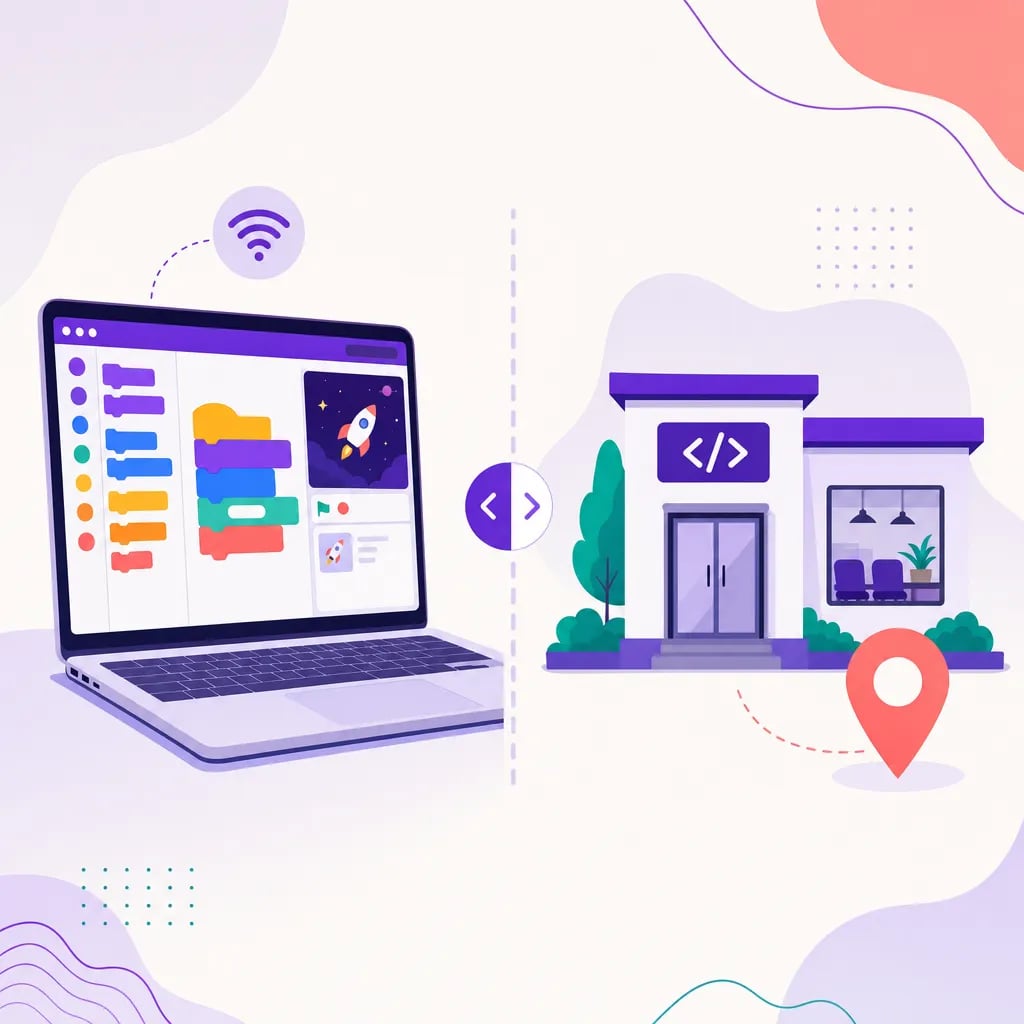
When choosing coding for kids in Malaysia, the real decision isn't "near me" versus far — it's format. A live online small-group class gives your child a certified teacher, classmates, and a real curriculum, without the KL–PJ commute a nearby centre demands. Distance stopped being the deciding factor the moment good teaching went online.
Algonova is an international tech school for kids and teens aged 6 to 17. We have taught coding, maths, AI, and design for over 10 years, with a community across 97 countries and a 4.9-star parent rating. Classes run live with certified teachers in small groups of up to 10 students — never pre-recorded videos — and every child starts with a free Master Class that maps their interests to a best-fit learning path.
Most Malaysian parents start the same way: they search "coding classes for kids near me" and hope something good sits within a 20-minute drive. That habit made sense for piano lessons and tuition centres. It makes far less sense for coding, where the skill of the teacher matters more than the postcode of the building.
Here is the shift worth understanding. A coding class is a screen, a mentor, and a small group of kids building something together. None of those three things live inside a specific shopping-mall unit in Bangsar or Subang Jaya. They can happen just as well — often better — over a live video session your child joins from the dining table.
So the honest question isn't "which centre is nearest." It's "which format gives my child the best teacher, the right class size, and a curriculum that actually goes somewhere." Get the format right first. The map comes second.
The choice comes down to three formats, and each one changes your child's day-to-day experience far more than the drive to class does. Once you see them side by side, "near me" stops feeling like the safe default.
1. A local centre near you. Your child physically attends a coding studio or tuition centre in KL, Petaling Jaya, Penang, or Johor Bahru. The upside is the room: kids in the same space, a teacher they can high-five. The cost is everything around it — the commute through KL traffic, the fixed weekly slot that fights with school and co-curricular activities, and a teacher pool limited to whoever that one branch could hire.
2. Online one-to-one. A private tutor works with your child over video, just the two of them. It's focused and flexible. But for most kids under 15, one-to-one all the time gets quiet fast — there are no classmates to bounce ideas off, no one to compare a game or an app with, and the pressure of constant solo attention can tire a young learner out.
3. Online small-group live. Your child joins a scheduled live session with a certified teacher and a handful of other kids — at Algonova, up to 10 per class. They see the teacher's screen, share their own, and build alongside peers. It combines the accountability of a real class with the reach of the internet: the teacher can be genuinely excellent because they weren't hired from one neighbourhood.
Malaysian families increasingly land on the third option, and the reasons are practical rather than trendy.
A nearby centre gives you convenience; a live online small-group class gives you the two things that actually drive a child's progress — a stronger teacher and the right number of classmates. For coding specifically, those two levers matter more than proximity ever will.
The single biggest difference between one coding class and another is the person teaching it. A local centre can only hire from the pool of instructors willing to commute to that branch. If the strong one leaves, your child inherits whoever replaces them.
Online removes that ceiling. A well-run school assigns certified teachers regardless of where the family or the teacher lives, and matches your child to a mentor who fits their level and pace. Your child in Ipoh can learn from the same quality of teacher as a child in the middle of KL — because the classroom is the session, not the street.
Class size is the other quiet lever. A room of 20 kids at a centre means your child waits for help. A one-to-one session can feel like an exam that never ends. Small live groups of up to 10 hit the middle: the teacher still knows your child by name and can check their screen, but there are peers to build with, show off to, and learn from.
That peer energy is a real part of how kids stick with coding. When a child sees a classmate finish a game level or debug something tricky, they want to get there too. It's the same reason school group projects can spark more effort than solo homework.
For coding, the teacher makes the class. Online just means you're no longer limited to the teachers who happen to work near your house.
Aina Rashid · Coding Education Specialist, Algonova
Compare the formats on what actually shapes your child's week — commute, teacher pool, class size, scheduling, curriculum, and progress tracking — and the "nearest centre" rarely wins on more than one row.
| What matters | Local centre "near me" | Online one-to-one | Online small-group live |
|---|---|---|---|
| Commute / KL–PJ traffic | Weekly round-trip through traffic; parent drives and waits | None — joins from home | None — joins from home |
| Teacher pool | Limited to who that branch can hire locally | Wider, but you depend on one tutor | Certified teachers matched regardless of location |
| Class size | Often 12–20+; your child waits for help | Just one — no classmates | Up to 10 — teacher knows each child, peers to build with |
| Scheduling around school | Fixed weekly slot, hard to move | Flexible | Multiple time slots to fit school and co-curriculars |
| Curriculum structure | Varies by branch; may be ad-hoc | Depends entirely on the tutor | Structured path from blocks to real code, level by level |
| Progress tracking | Informal, often verbal at pickup | Tutor's notes only | Regular progress reports and a visible learning path |
Read across the rows and a pattern shows up: "near me" wins on the feeling of a physical room, and loses almost everywhere the learning actually happens. That trade-off is why so many Malaysian parents who start with a "near me" search end up choosing live online.
For a closer look at what these classes tend to cost, see our guide to coding class options for kids in Malaysia. If you're set on a physical location, our guide to coding classes in Kuala Lumpur covers what to look for on the ground.
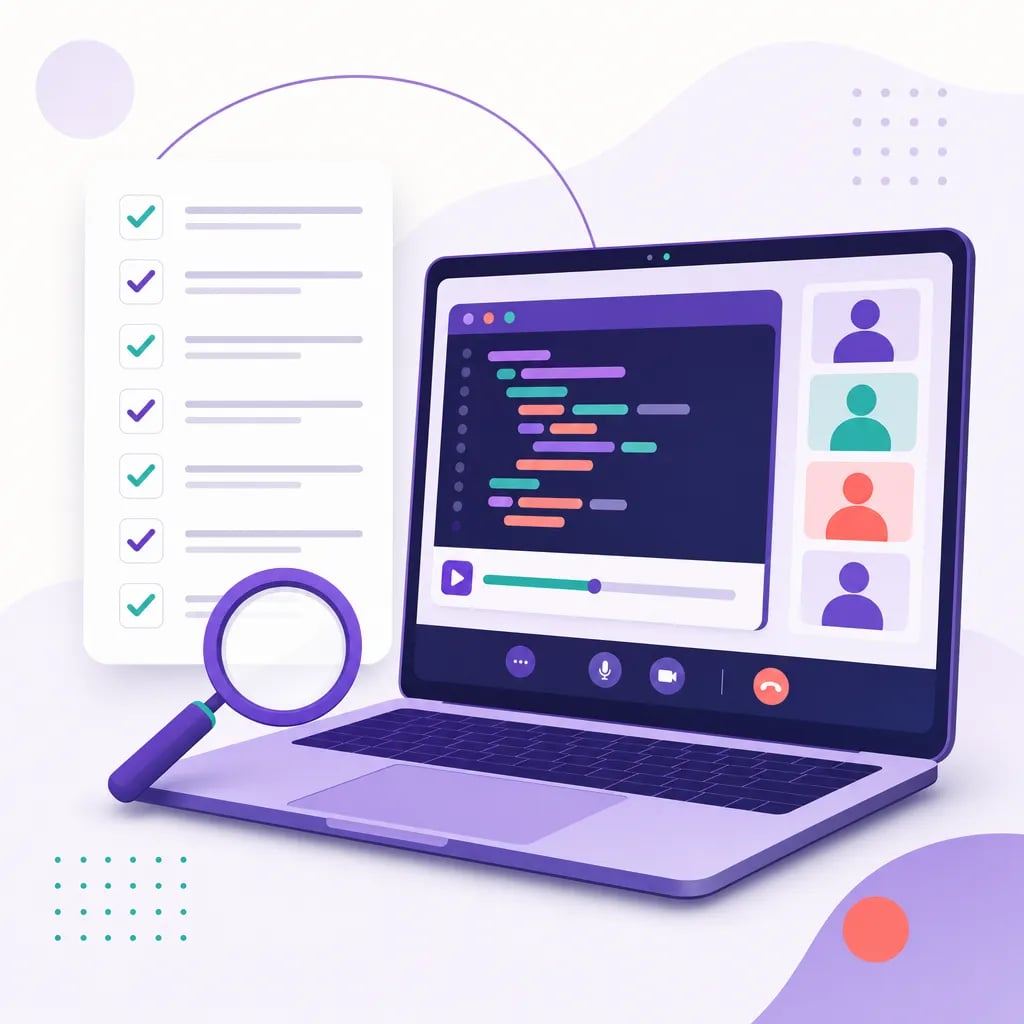
Before you pay for any coding class — online or near you — put the provider through seven simple questions. Good schools answer all seven without hesitating; weak ones dodge at least two. This is the part that protects your money and your child's time.
Run this list once and you'll quickly separate a serious school from a room that happens to have computers. For a deeper walkthrough of the decision, see our full guide on how to choose a coding school for your child in Malaysia.
A nearby centre is the better call in two honest situations — a very young child who needs hands-on physical supervision, or a home without a reliable device or internet. It's worth naming these plainly, because format should follow the child, not the other way round.
If your child is at the younger end and still learning to sit through a structured session, being in a room with an adult right there can help. Some four- and five-year-olds simply do better with a person physically beside them. Online small groups work well from around age 6 or 7 once a child can follow a screen and take turns.
The second case is practical. If your home doesn't have a laptop or tablet the child can use, or the connection drops constantly, a centre solves a real problem — the equipment is on site. For most Malaysian families with a working device and decent broadband, though, neither of these outweighs the teacher-quality and class-size gains of going online.
Algonova gives Malaysian children live small-group coding with certified teachers, a structured path from blocks to real code, and a free first session — the format most families are actually looking for when they search "near me." We built the school around teaching quality, not location.
Here's what that looks like in practice. Classes are live with certified teachers, capped at 10 students, so your child is known and guided — never parked in front of a recording. We've taught modern tech skills to kids for over 10 years, with a learning community across 97 countries and a 4.9-star parent rating. Every child begins with a free Master Class: an AI-assisted talent diagnostic that shows what your child gravitates toward and recommends a best-fit path — often not the course parents first assumed. You can browse our coding classes for kids in Malaysia to see the full path from blocks to real code.
There's a national angle too. Malaysia's MyDIGITAL Blueprint puts digital and future-of-work skills at the centre of the country's next decade. Coding is exactly that kind of skill — and starting a child early, with a proper curriculum, is one of the most concrete ways to prepare them for it.
Keep exploring before you decide:
Ready to try it? Book a free trial class and let a certified teacher meet your child.
We built Algonova around the teacher and the small group — the two things that make a child actually stay with coding — and let the internet handle the rest.
Aina Rashid · Coding Education Specialist, Algonova
Yes, live online coding classes are as effective as in-person ones for most children, and often more so, because the format keeps the two things that drive progress: a strong teacher and a small group of classmates. What makes a coding class work is not the room but the mentor and the number of kids in it. Online, a certified teacher runs a live session, sees each child's screen, and answers in real time. For example, a child in Penang can learn from the same quality of teacher as a child in central Kuala Lumpur, because the class is the session rather than the building. The one caveat is that recorded videos are not the same thing. Make sure the class is genuinely live.
Children in Malaysia can start coding from around age 6 to 7 using visual block-based tools, and can move to text-based languages such as Python in their preteen and teenage years. Younger children begin by dragging colourful blocks to make characters move, which teaches logic and sequencing without needing to type or read much. As they grow, they graduate to real programming languages and build games, apps, and simple websites. For example, a six-year-old might start by animating a story in a block editor, then a few years later be writing their first lines of Python. Good schools teach the full range from 6 to 17, so the child is always matched to tools that fit their age and stage.
Start by comparing formats rather than distance, then vet each provider with a few direct questions. Ask whether the teachers are certified, whether classes are live rather than recordings, how many children are in each class, whether there is a real curriculum that progresses over time, and whether you get a free trial and regular progress reports. A small live group of up to ten, taught by a certified teacher, usually beats a large or ad-hoc room, whether that room is nearby or online. For example, a parent in Johor Bahru who assumed the nearest centre was the only option often finds a live online small group offers a stronger teacher and a better fit around the school timetable. Try a free session before you commit.
For most children, a small online group is better than one-to-one because it keeps the teacher's attention while adding classmates to learn alongside. One-to-one can be intense and quiet, and many young learners lose energy without peers to build with and show their work to. A small group of up to ten strikes the balance: the teacher still knows each child by name and can check their screen, but there is the peer motivation that helps kids stay with coding. For example, when one child finishes a game level, the others want to reach it too, which sparks more effort than solo work often does. One-to-one still suits children who need highly individual pacing, so the right answer depends on the child.
Yes, learning to code is worth it for Malaysian kids in 2026, because digital and future-of-work skills sit at the centre of the country's direction, including the national MyDIGITAL agenda. Coding builds more than a job skill. It teaches logical thinking, problem-solving, and the confidence to make things rather than only consume them, all of which help across school subjects too. Starting early with a proper curriculum means a child grows their ability step by step instead of cramming later. For a fuller picture of the benefits and how to begin, see our companion guide on why Malaysian kids should learn coding, which walks through the reasons in detail without the hype.
Start your child's tech journey
Book your free 60-minute trial class with an Algonova certified tutor. No payment, no obligation, just discover what your child can build.

Algonova worldwide
Contact us
Email: int_legal@alg.team
Visit us
Suite 8634, 1021 E Lincolnway, Cheyenne, WY, Laramie, US, 82001
Algonova online LLC International tech school for kids and teens