AI or coding first: which should your child learn?
Course Guides7 min read
Coding Education

Hafiz Rahman
Lead Coding Instructor at Algonova Malaysia
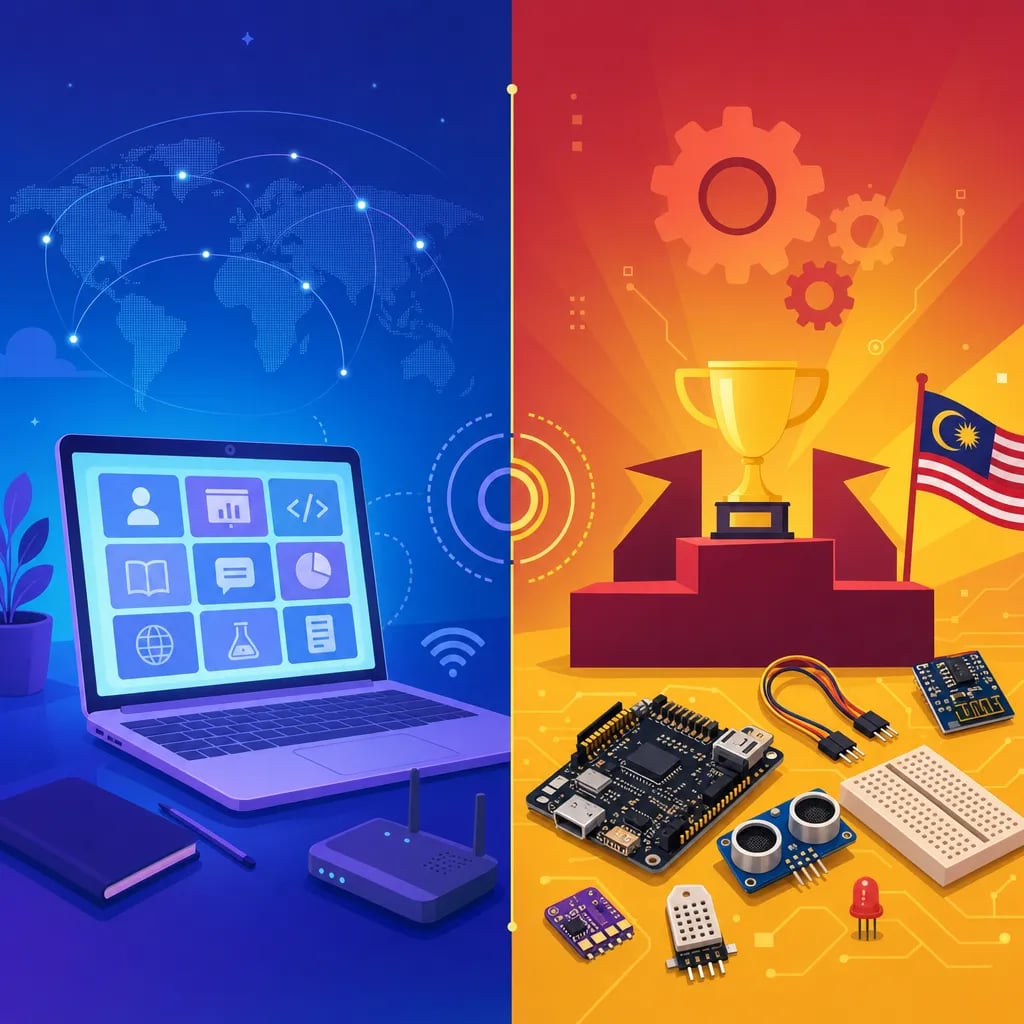
Algonova is an online coding school for children aged 5-17 (1,000,000+ students in 97 countries), with small groups of up to 10 students and a progressive curriculum Scratch → Python. Chumbaka is a Malaysian STEM school for kids and teens focused on hands-on hackathon culture — microcontroller programming, IoT, AI, robotics, 3D design — with 35,000+ students across Malaysia and 1,000+ schools engaged. These two schools serve different needs: Algonova for structured weekly online coding progression from the early school years; Chumbaka for teens who want hackathon experience and hardware innovation projects.
This article compares both honestly — what each excels at, and which Malaysian family each fits.
Chumbaka is a Malaysian STEM education school for kids and teens founded to teach technology skills through hands-on projects. They have physical centres across Peninsular Malaysia (Kelantan, Penang, Cyberjaya, PJ & KL, Malacca, Kluang, Johor Bahru) and Borneo (Kuching, Sarikei, Sibu, Miri, Kota Kinabalu, Tawau), plus online options.
Their curriculum emphasises microcontroller programming, coding and mobile apps, IoT (Internet of Things), AI technology, robotics, 3D design, block-programming, and electronic circuits — with three pillars: technology learning, innovative project creation, and life skills (communication, critical thinking, collaboration, creativity).
According to Chumbaka, they've reached 35,000+ students directly, 1,000+ schools have participated in their programmes, and 70+ schools have adopted their curriculum. They emphasise real-world projects with companies like Khind and international organisations.
Chumbaka's strengths: Malaysian roots, extensive nationwide network across Peninsular Malaysia and Borneo, hackathon and competition culture, real-world project partnerships, and IoT/hardware focus that's rare in kids' STEM education.
Algonova is an online coding, maths, AI, and design school for children aged 5-17, with 1,000,000+ students across 97 countries and 10+ years of teaching experience. All classes are live with certified teachers in small groups of up to 10 students, 100% online.
In Malaysia, Algonova teaches families across the whole country online — from Kuala Lumpur and Petaling Jaya to Kuching and Kota Kinabalu. Curriculum follows a progressive path: Digital Literacy (6-7) → Scratch (8-11) → Roblox game design (10-12) → Python (12+) → AI + web + data.
Algonova's strengths: global scale (1M+ students, vs Chumbaka's 35K+), very small groups (private 1-on-1, mini groups of 2-4, or up to 10 — high per-child attention), a consistent weekly cadence from the first school years, cross-subject integration (coding + maths + AI + design), 4.9★ parent rating, and nationwide online access.
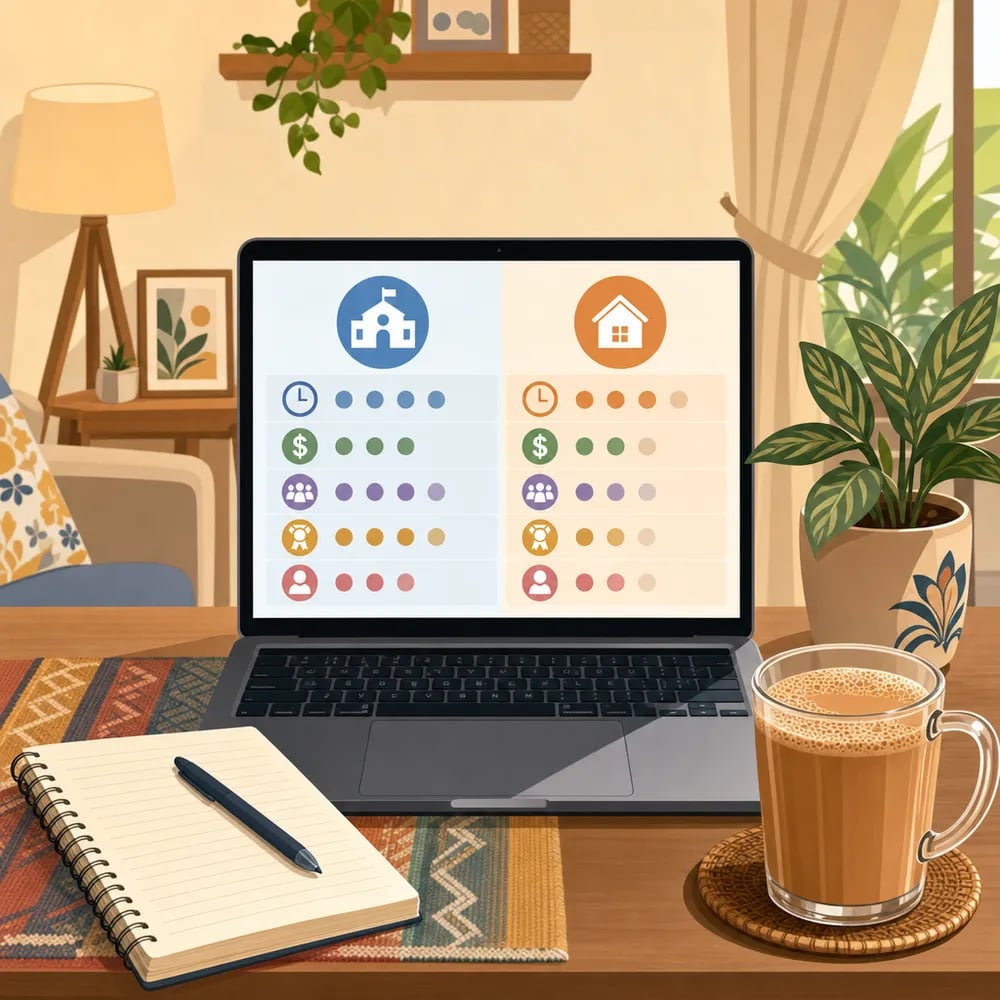
Not "which is better" but "which fits your family":
Age focus: Algonova serves 5-17 as a continuous progression. Chumbaka focuses more heavily on "kids and teens" with strongest programmes for older kids interested in projects and hackathons.
Format cadence: Algonova is weekly live online classes with structured curriculum. Chumbaka offers a mix of ongoing programmes and project-based intensives (bootcamps, hackathons, competitions).
Curriculum emphasis: Algonova covers coding → game design → Python → AI + integrated maths. Chumbaka emphasises hardware (microcontrollers, IoT), 3D design, and applied projects with industry partners.
Delivery: Algonova is 100% online. Chumbaka offers both online and physical centres across Malaysia (Peninsular + Borneo).
Community model: Algonova is a global online community. Chumbaka is Malaysia-native with strong local ecosystem (schools, industry partners, competitions).
| Algonova | Chumbaka | |
|---|---|---|
| Origin | Global, 97 countries | Malaysia native |
| Format | 100% online | Online + physical centres nationwide |
| Locations | All of Malaysia via online | Peninsular MY + Borneo (12+ centres) |
| Age focus | 5-17 continuous | Kids and teens (stronger on teens) |
| Cadence | Weekly live classes | Ongoing + bootcamps + hackathons |
| Curriculum | Scratch → Python → AI + math + design | Microcontrollers, IoT, AI, robotics, 3D |
| Group size | 1-on-1, mini 2–4, or up to 10 | Varies by centre and programme |
| Scale | 1,000,000+ students globally | 35,000+ students in Malaysia |
| Schools engaged | Individual families | 1,000+ schools participated |
| Real-world projects | Portfolio via GitHub | Industry partners (Khind, others) |
| Competitions | Hackathons, coding olympiads | Hackathons, MakerFaire, national STEM comps |
| Free trial | Yes, 60 min free | Contact Chumbaka centre |
| Language | English + Bahasa Malaysia | English + Bahasa Malaysia |
Chumbaka fits when: your teen loves hackathon culture and wants intensive project-based STEM, your family lives near a Chumbaka centre and prefers physical interaction, you value Malaysia-native brand with strong local schools network, or your teen wants IoT/hardware focus (Micro:Bit, Arduino, industry projects).
Algonova fits when: your child is young and needs structured beginner progression, you want consistent weekly online cadence from home, you value very small groups (1-on-1, 2–4, or up to 10) for maximum per-child attention, or you want a cross-subject curriculum (coding + maths + AI + design integrated).
They can combine well: a Malaysian teen can do Algonova online (weekly Python + AI progression) plus attend Chumbaka bootcamps or hackathons quarterly for hands-on IoT projects and competitive experience.
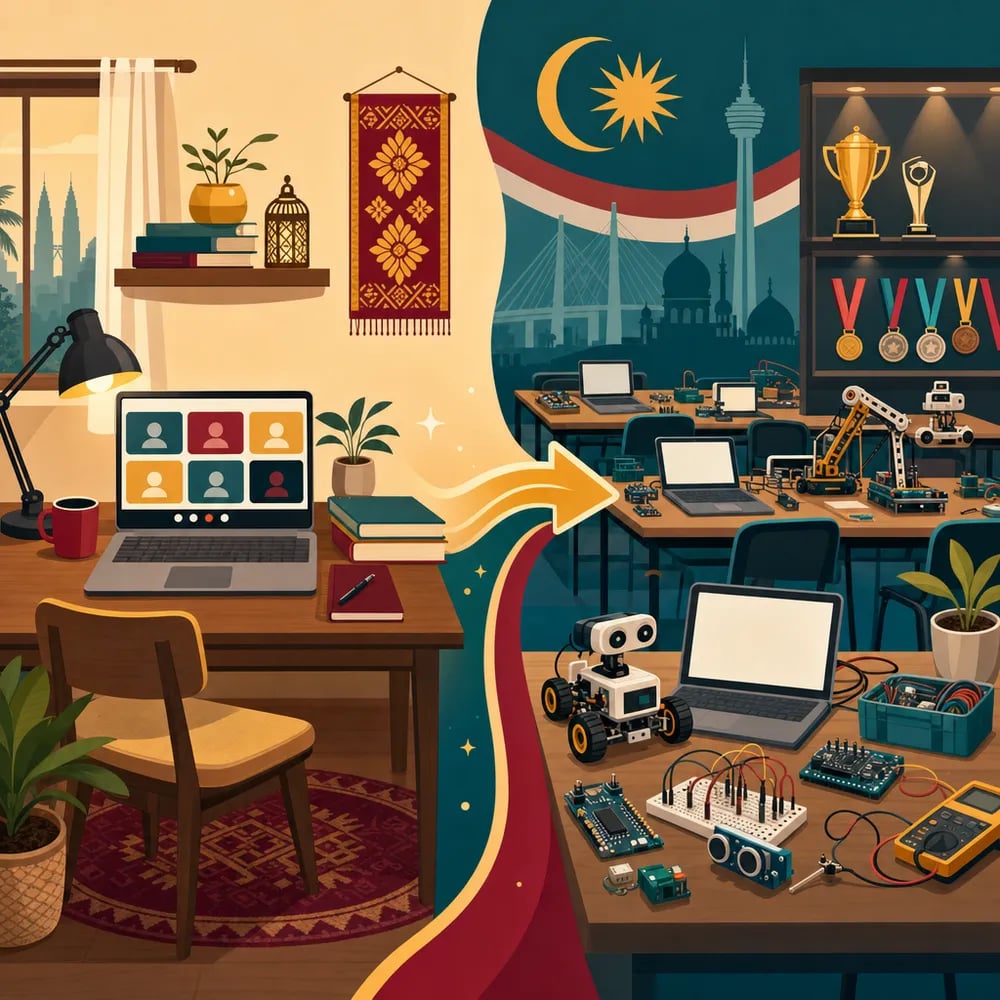
Both schools are real assets to Malaysia's STEM ecosystem. Algonova gives your child weekly consistent coding progression from age 5; Chumbaka gives them hackathon intensity and IoT projects. Many Malaysian families use one as the main class and the other for occasional deep-dive events.
Aina Rashid · Coding Education Specialist, Algonova Malaysia
Use these five checks:
Age of your child. If under 12, Algonova's structured Scratch/Roblox curriculum with small groups fits better. If 12+ and already comfortable with basics, both work — depends on preferred format.
Location and access. Chumbaka has physical centres in 12+ Malaysian cities. If you're near one and prefer face-to-face, that's realistic. If you live far from a Chumbaka centre or prefer home learning, Algonova online works everywhere with internet.
Learning cadence preference. If your child thrives with regular weekly progress (like piano lessons), Algonova's structured cadence fits. If they get bored with routines and prefer intensive bursts (bootcamps, hackathons), Chumbaka's project-based intensity matches better.
Interest area. Software-focused (games, apps, AI, Python) — Algonova has richer curriculum. Hardware-focused (IoT, robotics, Micro:Bit, Arduino) — Chumbaka has deeper hardware programme.
Community goal. Global (peers from 97 countries) — Algonova. Local Malaysian STEM community (schools, competitions, real Malaysian companies) — Chumbaka.
Many Malaysian families use both strategically. Algonova provides the weekly cadence and progressive coding foundation (Scratch → Python) from the first school years onward. When the child reaches 12–15 with solid coding skills, Chumbaka bootcamps or hackathons become natural ways to apply those skills to hardware, IoT, and real-world projects.
This combination gives your child both: structured skill-building (Algonova) and applied project experience (Chumbaka). It's not "choose one" — it's "use each at the right stage."
To see Algonova's online format directly, book a free 60-minute trial class with a certified teacher, or browse our coding classes for kids in Malaysia to see the full curriculum from Scratch to Python. To join a Chumbaka programme, visit their nearest centre or their website for schedule.
Both schools are contributing to Malaysia's STEM future. The question isn't which is "better" — it's which fits your family's situation now, and how to combine strengths across your child's growth stages.
There's no universal answer. Algonova excels at consistent weekly online coding progression for ages 5-17 in very small groups (1-on-1, mini groups of 2–4, or up to 10). Chumbaka excels at hackathon-culture STEM with physical centres nationwide and IoT/hardware focus, stronger for teens. For younger kids (6–11) needing structured beginner progression from home — Algonova. For teens who love intensive project bursts, hackathons, and hardware innovation — Chumbaka. For families wanting both structured foundation and applied projects — combine them. The most reliable way to decide: book Algonova's free 60-minute trial and contact your nearest Chumbaka centre for a demo or intro session.
Chumbaka does not publish public pricing on its website; the figure depends on programme type (regular ongoing vs bootcamp vs hackathon) and physical centre location. At Algonova, online lessons start from RM 48 per lesson, and the right level and format are confirmed after a free Master Class. Generally, online schools like Algonova are cost-efficient because they don't carry physical overhead. Chumbaka's physical centre programmes may cost more per session due to venue, equipment (Micro:Bit kits, robots), and instructor overhead. For accurate comparison: (1) book Algonova's free online trial, (2) contact your nearest Chumbaka centre for a quotation. Compare value per hour after seeing both numbers.
Chumbaka has physical centres in many Malaysian cities across both Peninsular Malaysia (Kelantan, Penang, Cyberjaya, PJ & KL, Malacca, Kluang, Johor Bahru) and Borneo (Kuching, Sarikei, Sibu, Miri, Kota Kinabalu, Tawau). They also offer online classes. Quickest way to check: visit chumbaka.asia and see their locations page for the current full list. Some centres may run different programme schedules. If there's no Chumbaka centre within reasonable distance of your home, Algonova (100% online, available across all of Malaysia) is the more realistic option. All you need is a laptop and stable internet.
Algonova teaches a continuous progression: Digital Literacy (6-7) → Scratch (8-11) → Roblox game design (10-12) → Python (12-17) → AI + web + data (15+). Each stage is designed to build on the previous, and the school itself takes children up to 17. Chumbaka serves "kids and teens" (roughly 7-17), with programme intensity often stronger for older kids (12-17) who can handle project-based work, hackathons, and IoT/hardware complexity. For young children starting from scratch, Algonova's structured progression is a natural fit. For teens who already know some coding and want to apply skills to real projects, Chumbaka's hackathon and project culture provides that outlet.
Both are legitimate — just different real-world contexts. Algonova teaches software engineering foundations that directly transfer to careers in coding, AI, data science, and web development — the highest-demand global tech skills 2025–2030 (per World Economic Forum). Chumbaka teaches applied hardware skills (IoT, microcontrollers, robotics) through partnerships with real Malaysian companies like Khind. Students work on actual internships and industry-connected projects. If your child aims at software/AI/web careers — Algonova's Python + AI curriculum is more directly relevant. If your child leans toward electrical engineering, IoT, robotics, hardware startups — Chumbaka's applied focus is a great match. Many careers benefit from both foundations.
Yes, and it's a strategic combination that many Malaysian families use. Algonova provides consistent weekly coding progression (structured, home-based, online). Chumbaka provides intensive project-based deep dives (hackathons, bootcamps, IoT projects). Suggested combination: Algonova as your child's main weekly class (steady progression, small groups, low logistical burden), plus Chumbaka bootcamps or hackathons 2–4 times per year for applied project experience. Start with one before adding the second. Give the child 3–6 months with the primary school to see if it fits. Only then add the second programme, unless your child is already actively participating in Chumbaka hackathons and wants Algonova to complement structured learning.
Algonova offers a free 60-minute online trial class scheduled directly through the website with no commitment. A certified teacher guides the child through a real project and gives an honest readiness assessment. Chumbaka usually offers introductory sessions, demos, or workshops at physical centres. Policy varies by centre and programme. Contact the nearest Chumbaka centre directly to arrange an intro visit. Try Algonova's trial first (easy, from home, 60 minutes). If your child is engaged, book Chumbaka for a physical visit to compare in-person experience. Two hours of parent time investment yields a much better decision than reading marketing pages.
For a 15+ teen already comfortable with Python, both schools offer valuable but different next steps. Algonova's advanced programme moves into AI + machine learning + data science + web development — preparing directly for tech careers and university CS. Small groups mean deep personal mentorship. Chumbaka's hackathon and IoT programmes let a Python-proficient teen apply skills to hardware, real-world projects, and industry-partnered challenges. Great for building a portfolio of tangible projects and competitive experience. Best strategy for advanced teens: Algonova for deep individual mentorship in Python + AI progression + portfolio development, plus Chumbaka hackathons 2–3 times yearly to test skills competitively and build hardware experience. The two together create a well-rounded STEM teenager ready for university or early career.
Start your child's tech journey
Book your free 60-minute trial class with an Algonova certified tutor. No payment, no obligation, just discover what your child can build.

Algonova worldwide
Contact us
Email: int_legal@alg.team
Visit us
Suite 8634, 1021 E Lincolnway, Cheyenne, WY, Laramie, US, 82001
Algonova online LLC International tech school for kids and teens