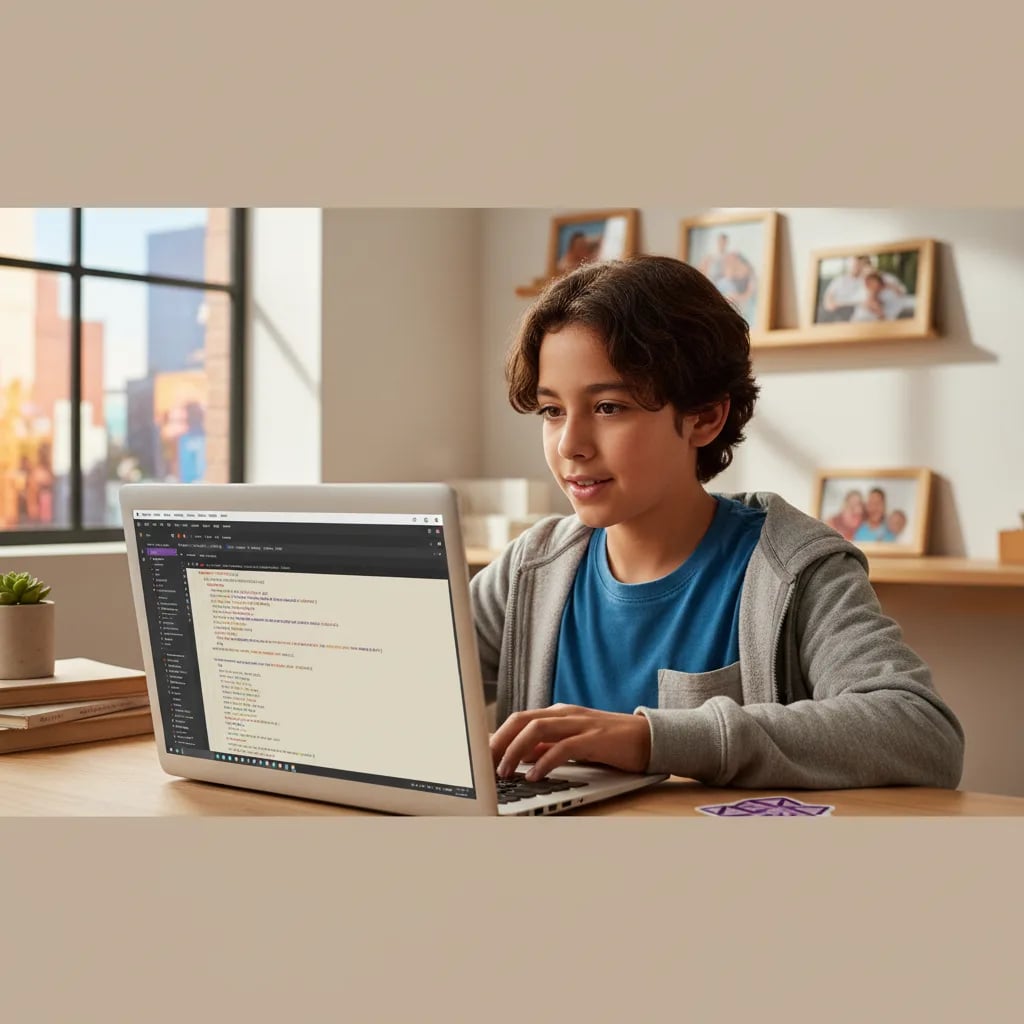
Python for kids is a way of introducing the Python programming language —used in AI and data science— to children aged 8 to 12 and up, with a simple, fun approach; in 4-6 weeks they read and write the basic syntax and build their first projects like a calculator or a number-guessing game. Python is chosen because its syntax is the closest to everyday English, making it friendly for beginners.
Unlike Scratch, which is block-based, Python requires writing code. That's why it's usually the next step after mastering visual programming. For a full overview of ages and languages, read our complete guide to coding for kids.
Why Is Python Ideal for Kids?
- Simple syntax: to print text you just write
print("Hello")— no complex symbols. - Easy to read: Python code resembles English sentences.
- Versatile: used for games, AI, data analysis, and automation.
- Huge community: plenty of free tutorials and libraries.
Why Python Matters for Your Child's Future
Python is one of the most widely used languages today in artificial intelligence, data science, and web development. It's the main language behind artificial intelligence, machine learning, and data analysis — the fastest-growing fields.
A child who masters Python from secondary school has a major advantage entering university or the workforce.
What Can a Child Build with Python?
- Text and simple games: number guessing, rock-paper-scissors, quizzes
- Calculators and math programs
- Simple chatbots that answer questions
- Data visualizations: charts from numbers
- Basic AI projects: recognizing simple patterns or images
These projects let kids see real results, not just theory — making learning more motivating.
How to Start Learning Python
No complex software needed. Kids can start in the browser with free tools:
- Trinket (trinket.io) — write and run Python in the browser
- Replit — a full online editor, free for basic use
- Python.org — for the official install on a laptop
A first program a child usually makes:
print("Hello, my name is Sofia!")
A slightly more advanced snippet — a number-guessing game with a condition:
if guess == number: print("Correct!")
The algorithm concepts learned earlier help a lot at this stage.
Concepts a Child Learns in Python
In Python, a child learns the core concepts that apply to all languages:
- Variables: store data, e.g.
name = "Sofia" - Data types: numbers, text, and lists
- Conditions (if/else): make decisions
- Loops (for/while): repeat actions
- Functions: group code to reuse it
Common path: Scratch (8-12) → basic Python (10-14) → Python projects in the teen years.
Tips for Parents
- Start with a project the child loves — games motivate more than theory.
- Be consistent — 30 minutes, 2-3 times a week beats an occasional marathon.
- Celebrate errors — bugs are a normal part of coding, not failure.
- Don't rush — master the basics before advancing.
If the child has never coded, it's best to start with Scratch before Python.
Summary
- Python for kids introduces a real text language simply, from age 10.
- Python is one of the most widely used languages today in AI, data science, and web development.
- Start free with Trinket or Replit in the browser.
- Concepts: variables, conditions, loops, and functions.
- Ideal path: Scratch → Python → AI/data projects.
Want your child to learn Python with a structured plan and experienced teachers? Book a free Masterclass at Algonova — a 60-minute session, at no cost.