School Holiday Maths Activities for Year 1 and 2: A 4-Week Plan

Checklists & Calendar8 min read
Other

Aina Rashid
Parent Education Editor, Algonova Malaysia
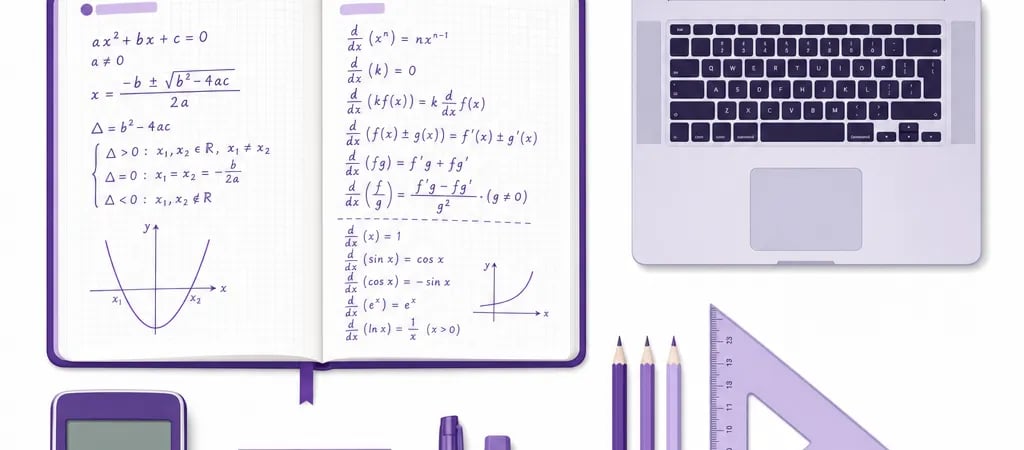
Add math tuition helps most SPM students when it rebuilds the ideas behind functions, differentiation and trigonometry — not when it just drills past papers. For a Form 4 or Form 5 teen, good online tuition means small live groups, a certified teacher, and flexible hours that fit a packed school week.
If your child suddenly finds Additional Mathematics overwhelming, you're not alone. The jump from Form 3 to Form 4 is real, and it catches strong students off guard. This guide walks you through why Add Maths feels so hard, what quality tuition actually changes, and how to choose it wisely.
Add Maths feels hard because it demands abstract thinking that earlier maths never asked for — and the KSSM syllabus moves fast enough that one shaky week leaves a gap.
In Form 1 to Form 3, most maths is concrete. You calculate, you substitute, you get a number. Then Form 4 arrives and the questions change shape. Functions ask your child to think about relationships, not just answers. Differentiation asks them to reason about how things change. Trigonometry stops being about right-angled triangles and starts living inside identities and graphs.
Three things pile up at once. First, the abstraction jump: the subject rewards understanding over memorisation, and teens who coasted on drilling suddenly stall. Second, foundation gaps. If quadratic functions or indices were never solid in Form 3, Form 4 Add Maths exposes it immediately, because every new chapter builds on the last. Third, pace. The KSSM Additional Mathematics syllabus covers a lot across Tingkatan 4 and 5, and teachers move on whether or not the class is ready.
The result is a familiar scene at home. A capable teenager stares at a differentiation question, gets nowhere, and decides they're "just not a maths person." That belief does far more damage than the missed marks.
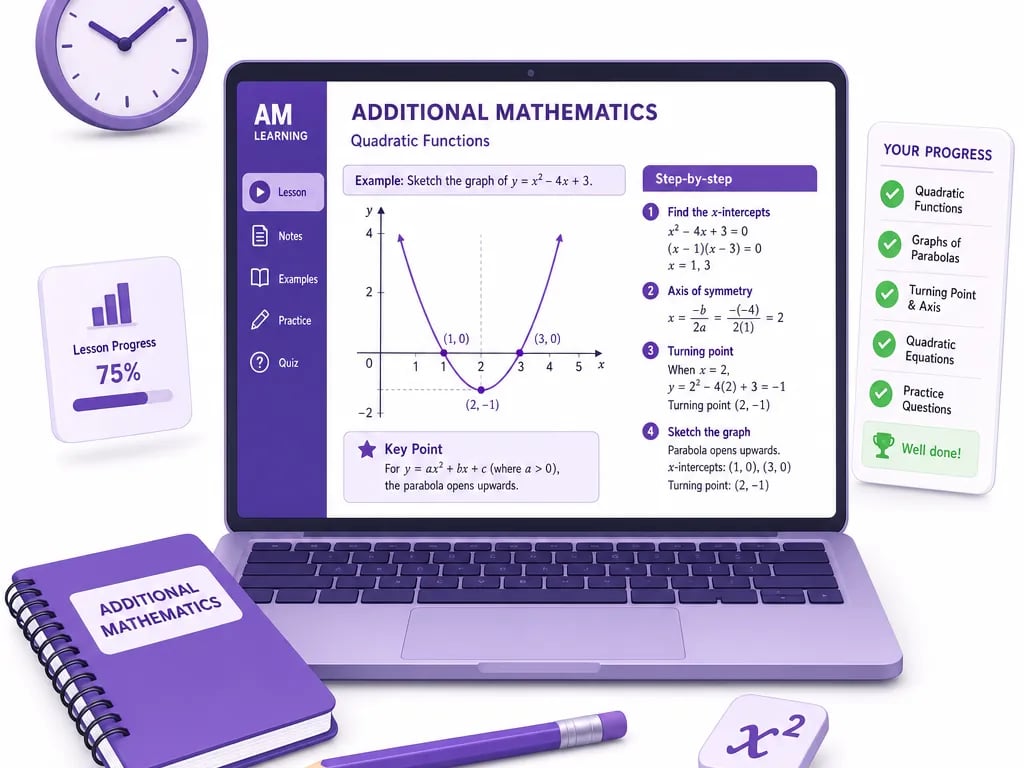
Good Add Maths tuition rebuilds the concept first, then uses practice to confirm it — the opposite of memorising a hundred past-paper answers and hoping the exam repeats them.
Drilling has a place. But drilling without understanding is how students learn to solve one specific question and freeze the moment the numbers change. SPM examiners know this, so they rephrase, combine topics, and test whether a student can reason.
Strong tuition does something different. It goes back to the "why." Why does the gradient of a curve mean anything? What is a function really describing? When a teenager finally sees that differentiation is just a precise way of measuring change, the past-paper practice that follows actually sticks — because now they're pattern-matching to an idea, not to a memorised template.
A good tutor also diagnoses before prescribing. Instead of assuming your child's weakness is trigonometry, they check whether the real gap is algebra from two years earlier. That single habit — fixing the foundation instead of the symptom — is what separates tuition that works from tuition that just fills an afternoon.
I stopped asking whether my son could get an A. I started asking whether he understood the chapter. Once he did, the marks followed on their own.
A Form 5 parent, Petaling Jaya
Algonova is an international tech school that helps 6-to-17-year-olds discover and develop their talents — including Form 4 and 5 students at the upper edge of that range. We teach maths through understanding and small live classes, and we're honest that we're not an exam-cram service promising a guaranteed A+.
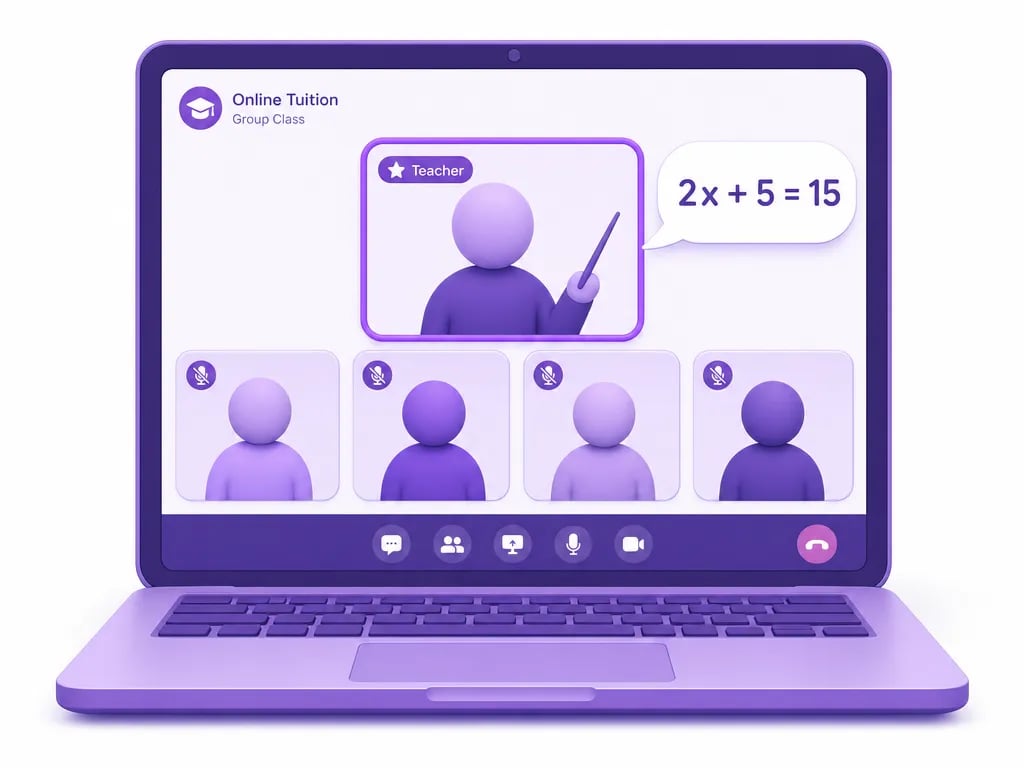
Here's what that means in practice for an SPM Add Maths student. Classes are live with certified teachers, not pre-recorded videos a teen watches alone and forgets. Groups are small — up to 10 students — so the teacher actually sees where your child is stuck. And the teaching starts from conceptual foundations: functions, differentiation and trigonometry taught so they connect, rather than as isolated tricks to memorise.
Algonova has been teaching modern tech and maths for over 10 years, with students in 97 countries. But we'd rather set the right expectation than oversell. We don't run a dedicated SPM past-paper cram machine, and we won't promise a grade. What we do well is rebuild the understanding underneath the grade — and help a teen see where their real strengths point, sometimes toward paths they hadn't considered.
For an older teen, that framing matters. Add Maths isn't just an exam hurdle; for many it's the first serious signal of whether a future in engineering, data or tech fits. Teaching it as something to understand, not survive, changes how a 16-year-old sees themselves.
The class was small enough that the teacher noticed my daughter had never really understood functions. That was the whole problem — and no one had caught it before.
A parent of a Form 4 student, Penang
Start your child's tech journey
Book your free 60-minute trial class with an Algonova certified tutor. No payment, no obligation, just discover what your child can build.
For most Form 4 and 5 families, online small-group tuition wins on schedule flexibility and feedback speed, while a physical centre wins on routine — but neither matters if the teaching still centres on drilling.
Here's how the three common formats compare on the things that actually affect learning. Note there's no price row — cost varies too widely to be useful here, and we cover budgeting separately.
| Format | Schedule flexibility | Personal attention | Feedback speed |
|---|---|---|---|
| Online small-group (≤8) | High — join from home, no commute, evening slots | High — teacher sees every screen, small ratio | Fast — live correction plus shared digital work |
| Traditional tuition centre | Low — fixed location and times, travel needed | Varies — often larger classes, back rows fade out | Medium — depends on class size and tutor |
The best Add Maths tuition passes five simple tests: a qualified teacher, live teaching, small groups, a diagnostic before it starts, and a clear focus on understanding over drilling.
Run any tuition option — online or centre-based — through this checklist before you commit:
No single tuition will fix everything overnight — anyone who promises that is selling, not teaching. But an option that clears all five points is far more likely to help your child than one that fails half of them. Algonova's

Algonova worldwide
Contact us
Email: int_legal@alg.team
| Self-study |
| Highest — fully self-paced |
| None — no one to catch misconceptions |
| Slowest — mistakes go unnoticed for weeks |
Online tuition suits Add Maths especially well when your child is self-motivated but time-poor: juggling co-curriculars, living far from good centres, or studying in KL, PJ, Penang or JB where evening traffic eats hours. It works less well for a teen who needs a supervised room to focus at all — though a quiet corner and a parent nearby usually solves that. The "near me" question answers itself online: your tutor is wherever you are in Malaysia, no drive required.
The honest first step is a free Master Class — an AI-assisted talent diagnostic that shows where your child stands and where their strengths point, with no obligation to enrol.
Rather than asking you to commit to a term of tuition on faith, the Master Class starts with information. Your child works through a short guided session; the diagnostic maps their current understanding and natural strengths; and you get a clear, honest picture — including whether Add Maths support is even the right priority right now, or whether something else would serve them better.
It's free, there's no pressure, and it fits around a Form 4 or 5 schedule because it's online. For a family trying to decide whether tuition is worth it at all, it's the lowest-risk way to find out.
Yes, online tuition can be very effective for SPM Add Maths when it uses live teaching and small groups rather than pre-recorded videos. What makes tuition work isn't the location — it's whether a qualified teacher can see where your child is stuck and correct misconceptions in real time. For a subject like Add Maths, where functions, differentiation and trigonometry all build on each other, catching a gap early matters more than anything. Online formats add a practical bonus for Form 4 and 5 students: no commute, evening slots that fit a full school day, and access to good teachers wherever you live in Malaysia. The one thing to watch is self-discipline. A teen who needs a supervised room to focus may need a quiet space and a parent nearby, but for most motivated students, live online tuition works just as well as a physical centre.
Modern Mathematics is the compulsory SPM maths subject that all students take, covering core topics needed for everyday numeracy and general study. Additional Mathematics is a separate, more advanced elective usually taken by students heading toward science, engineering or technical fields. Add Maths goes much deeper: it introduces calculus (differentiation and integration), advanced functions, trigonometric identities, and topics that Modern Maths never touches. Because it's more abstract and moves faster, Add Maths is the one that catches capable students off guard in Form 4. A student can be perfectly comfortable in Modern Maths and still struggle in Add Maths, simply because the thinking it demands is different. If your child is considering a STEM path after SPM, Add Maths is usually the more important of the two — and the one where good tuition makes the biggest difference.
Yes, but honesty helps here: improvement comes from fixing foundations, not from cramming past papers. A student who struggles in Add Maths almost always has an earlier gap — shaky algebra, weak understanding of functions, or indices that never clicked in Form 3. Once that foundation is rebuilt, the advanced topics stop feeling impossible, because they were only ever built on the missing basics. This takes time and effort, and no tutor can promise a guaranteed grade. What a good tutor can do is diagnose the real gap and teach the underlying idea until it makes sense, so practice actually sticks. Many students who once called themselves not a maths person turn out to have been missing one or two foundational pieces all along. The change usually starts the moment they understand something instead of memorising it.
Algonova is an international tech school, not an exam-cram centre, so the focus is on understanding and long-term strengths rather than drilling past papers for a promised grade. Classes are live with certified teachers in small groups of up to 10 students, not pre-recorded videos or large lecture-style rooms. The teaching starts from conceptual foundations — why differentiation works, what a function really describes — so the ideas connect instead of sitting as isolated tricks. Algonova has taught modern tech and maths for over 10 years across 97 countries, and it begins with a diagnostic to find where a student actually stands. What it deliberately doesn't do is promise a guaranteed A+ or run a dedicated SPM syllabus cram service. For families who want their teen to genuinely understand maths — and to see where their strengths might lead — that difference is the whole point.
The best time to start is early in Form 4, before small gaps compound into a sense of being permanently behind. Add Maths builds relentlessly on itself, so a shaky first term makes every later chapter harder. If your child is already in Form 5 and struggling, it's not too late — but the priority shifts to quickly identifying and repairing the biggest foundation gaps rather than covering everything. A simple signal to act: when a capable teenager starts saying they're just not a maths person, that's usually a gap talking, not a lack of ability. Before committing to anything, it's also worth thinking through what tuition costs and whether it fits your budget; our guide to math tuition costs in Malaysia can help you plan that. Starting sooner, with understanding-first teaching, almost always beats starting later in panic mode.
Visit us
Suite 8634, 1021 E Lincolnway, Cheyenne, WY, Laramie, US, 82001
Algonova online LLC International tech school for kids and teens