
Coding Education

12 min read

Parenting Styles in the Digital Era: 7 Principles for Modern Parents

Published: 09.06.2026·Updated: 09.06.2026
N

Neftalí Cázares

Senior Coding Instructor

Parenting Styles in the Digital Era: 7 Principles for Modern Parents

Parenting Styles in the Digital Era: 7 Principles for Modern Parents

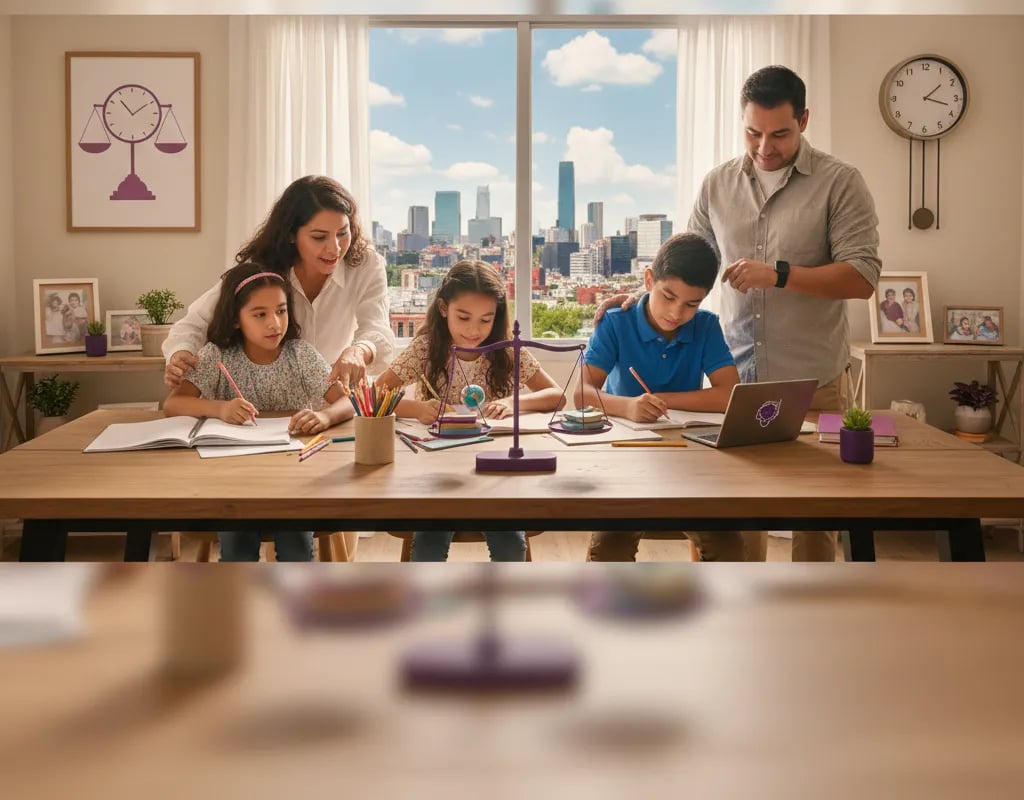
Parenting styles are the consistent patterns you use to guide, educate and shape your child's character from early childhood through adolescence. In the digital era, parenting is no longer just about table manners or bedtime — now you also have to decide when your child can use a tablet, how they should navigate the internet critically, and how to turn screen time into learning opportunities. This article breaks down the 4 classic Baumrind styles, 7 practical principles of positive digital parenting, the most common mistakes to avoid, and concrete recommendations based on your child's age.

What Parenting Styles Are and Why the Digital Era Changes Everything

Parenting styles are the consistent behavior patterns you use to raise your child: how you set rules, how you show affection, how you respond to their emotions, and how you guide their decisions. Parenting is not a single choice — it's thousands of small daily decisions that shape your relationship with your child.

Years ago, the parenting challenge was: how do I get my kid to do well in school, play with friends, and respect their elders? Today, in the digital era, you face situations your own parents never had to deal with:

  • A 3-year-old already knows how to open YouTube without help
  • An elementary schooler learns TikTok dances before reading a full book
  • A middle schooler lives in a parallel social world you don't see (Discord, WhatsApp groups, online games)
  • Social media algorithms are engineered to keep your child hooked
  • Adult content, cyberbullying and fake news are one click away

This is not the world you grew up in. Digital-era parenting is not about banning technology — that's a battle you'll lose. It's about teaching your child to become a conscious, critical, productive user — not a passive algorithm victim.

The good news: you don't need to be a tech expert to be an excellent digital parent. You just need clear principles, consistency, and the willingness to learn alongside your child.

The 4 Classic Baumrind Parenting Styles and How They Work in the Digital Era

Psychologist Diana Baumrind from UC Berkeley identified in the 1960s four parenting styles based on two dimensions: warmth (how much affection you show) and control (how many rules you set). Let's see how each interacts with today's digital challenges.

1. Authoritarian Parenting — High Control, Low Warmth

The authoritarian parent says: «Because I said so.» Strict rules, harsh punishment, little discussion. In the digital era, this translates to: «Phone confiscated. No more games. End of story.»

Pros: The child respects authority; clear limits exist. Cons: The child becomes sneaky (uses a friend's phone, hides devices), never learns self-regulation, the family bond turns cold. When they reach high school with their own phone, they have zero self-management skill — and crash straight into addiction.

2. Authoritative (Democratic) Parenting — High Control, High Warmth

The authoritative parent sets clear rules BUT explains why and listens to the child. «I know you love YouTube. But two hours straight is too much for your eyes. Let's agree on 30 minutes, and then we go ride bikes outside.»

Pros: This is the style most supported by research. The child develops critical thinking, self-esteem, autonomy, and a warm relationship with their parents. Cons: Requires patience and time. Harder on exhausting days.

This is the ideal style for the digital era. Children raised with this authoritative approach — closely linked to positive parenting — regulate their screen time better when they hit adolescence.

3. Permissive Parenting — Low Control, High Warmth

The permissive parent offers a lot of affection but few rules. «What matters is that the child is happy.» In the digital era: «Just give him the iPad so he doesn't whine.»

Pros: Close emotional bond, the child feels loved. Cons: The child can't self-regulate, throws tantrums when the device is taken, school performance drops, and digital dependence climbs fast.

4. Neglectful Parenting — Low Control, Low Warmth

The parent isn't involved — too busy, exhausted, or dealing with their own struggles. The phone becomes the babysitter. No rules, no conversations.

Pros: None. Cons: The highest risk of developmental problems, digital addiction, and emotional difficulties in childhood and adolescence.

Most modern research agrees: the authoritative or democratic style is the most effective parenting in the digital era. Warm but firm. With rules but open to dialogue. This is the foundation for the 7 principles below.

7 Principles of Digital-Era Parenting

Here are seven practical principles you can start applying today.

1. Modeling — Your Child Imitates What You Do, Not What You Say

Children learn from what you do, not what you say. If you tell your child not to use the phone at the table while you scroll Instagram during dinner, the message is clear: this rule is only for him, not for the family.

How to apply it:

  • Define «screen-free zones» at home: the dining table, bedrooms, short car rides.
  • When you arrive home from work, put the phone away for the first 30 minutes. Greet your child with your eyes, not a screen.
  • If you need to use the phone in front of your child, explain: «I'm replying to a work message, just one minute.»

2. Screen Time With Structure, Not Total Bans

Banning devices completely is unrealistic and often backfires: it triggers excessive curiosity and secret use. What actually works is structure.

General guide (American Academy of Pediatrics):

  • Children 2-5 years old: max 1 hour per day, quality content, with an adult
  • Children 6-12 years old: 1-2 hours of recreational use, more if it's educational
  • Teens 13-17 years old: quality over quantity; set screen-free zones and times

Practical tip: Use a visual timer with younger kids. With older ones, design a «family digital contract» together with clear hours and rules.

3. Productive vs Passive Screen Time

This is probably the most important and most overlooked principle. Not all screen time is equal.

  • Passive screen time: endless scroll on TikTok, watching YouTube without purpose, playing games without building skill — the brain only receives.
  • Productive screen time: learning to code, drawing digitally, making educational videos, taking interactive live classes — the brain actively thinks and creates.

Two hours of coding at Algonova creates a totally different developmental impact than two hours of Reels. As a parent, your job is not to eliminate screen time — it's to shift the composition toward the productive side.

Ask yourself this week: of the total screen time your child had, what percentage was productive?

4. Open Conversation About Internet Content

Your child is going to find content you don't want them to see — violent videos, bullying, gambling ads. The question is not «if» but «when».

The best strategy is to open up the conversation before it happens:

  • «If you ever see something online that makes you uncomfortable or confused, you can tell me. I won't get mad.»
  • Ask regularly: «What did you see online today that caught your attention? Anything weird?»
  • Don't react impulsively. If your child tells you they saw something bad, don't snatch the phone in that moment — that teaches them to hide it next time.

5. Joint Digital Activities — Do Things Together

One of the best ways to transform your child's relationship with screens is to participate actively.

  • Play cooperative games together (Minecraft, digital board games)
  • Watch educational YouTube videos and discuss them
  • Help them make a short video about their favorite hobby
  • Take an online class together to learn something new (programming, digital drawing, music)

This sends a powerful message: «Your digital world matters to me too.»

6. Build Offline Interests — Hobbies Beyond the Screen

Children with many offline interests regulate screen time more easily. They don't get bored, so they don't automatically reach for the phone.

Invest time and resources in:

  • Sports (soccer, swimming, basketball)
  • Music (guitar, piano, singing)
  • Art (drawing, crafts, painting)
  • Nature (gardening, hiking, biking)
  • Reading (regular visits to the bookstore or library; leave books visible at home)

The goal is not to raise an Olympic champion — it's to give your child a world beyond the screen.

7. Help Them Become CREATORS, Not Consumers

This is the decisive, most powerful principle. The internet can turn your child into a passive consumer (scroll, watch, observe other lives) or an active creator (make, build, produce).

The child who learns to code doesn't just play games — he creates his own games. He doesn't just watch animations — he makes them. He doesn't just use apps — he builds them. If your child is more visual and creative than technical, they can also explore the digital design path for kids and teens.

It's an identity shift. The child who sees themselves as a digital creator doesn't fall as easily into the traps of passive consumption. That's why more than 1,000,000+ students in 90+ countries choose Algonova — to learn to create from an early age.

→ Check out the coding program for younger kids (6-9 years) as an ideal starting point.

Common Parenting Mistakes in the Digital Era

Mistake 1: Total Ban

«No phone until high school!» This approach fails because: (1) your child will still be exposed to devices at friends' houses or at school, (2) they never learn self-management, (3) when they finally get their own phone — it explodes into uncontrolled consumption.

Better: teach gradual use with supervision and slowly increase autonomy.

Mistake 2: Zero Limits

«As long as he's quiet.» Phone as a babysitter while the parents are busy. Long-term: attention span drops, sleep gets disrupted, school performance falls.

Better: structure with clear zones and times.

Mistake 3: Double Standard

Parents scroll TikTok for hours, then get angry when the child does the same. The child perceives the rule as unfair — and they're right.

Better: apply screen-free zones to the ENTIRE family, no exceptions.

Mistake 4: Ignoring the Child's Digital Interests

«Video games are trash.» «Coding for what?» «Why don't you go play outside like we used to?» Parents who refuse to understand the digital world lose the most valuable opportunity: to guide.

Better: ask with genuine interest what they enjoy, and look for its productive version. Loves video games? Steer them toward coding for teens. Loves YouTube? Help them launch their own channel with original content.

Mistake 5: Never Talking About Online Risks

Parents assume the child «already knows.» But an elementary-schooler doesn't know what phishing, online grooming, or how an algorithm manipulates them really mean.

Better: regular conversations, simple language, real-life examples.

Parenting Recommendations by Age

Preschool (5-7 Years) — Digital Awareness Foundations

At this age, the brain builds its baseline patterns. What is learned now becomes the default for life.

  • Maximum 1 hour of screen time per day, always supervised
  • Choose educational apps (not random YouTube or autoplay)
  • Start introducing basic logic: puzzles, board games, visual coding for kids 6-9 years with colored blocks
  • Lots of physical activity and hands-on creation (drawing, clay, building)
  • Read books every night — this is the literacy foundation no tablet can replace

Elementary (8-12 Years) — The Golden Age to Build Skills

This is the golden window to build long-term skills. The child has enough cognitive capacity to learn seriously but isn't yet weighed down by teenage social pressure.

  • Screen time of 1-2 recreational hours, plus learning time
  • Start a serious program — coding for kids 10-13 years is ideal at this age
  • Help them pick YouTube channels and podcasts that add knowledge
  • Avoid giving them their own phone too early — a family tablet is a better option
  • Talk to them about algorithms, ads and how social media works

Many parents wonder when the right time to start coding is. Read our full article: Why kids in Mexico should learn coding in 2026.

Middle and High School (13-17 Years) — Accompaniment, Not Control

Teens need autonomy. Excessive control only generates rebellion or hidden use.

  • Build a «family digital contract» together — don't dictate it
  • Focus on content quality, not hours
  • Talk about privacy, digital footprint and online reputation
  • Steer them toward skills with long-term value — coding for teens (14-17) can become the foundation of a university portfolio or a first career
  • Keep showing interest in their digital world, even when they tell you they «don't need» you

3 Everyday Scenarios and How to Solve Them

Scenario 1: «The Kid Pulls Out a Phone at the Dinner Table»

Situation: You're having family dinner, your child takes out their phone to play.

Authoritarian approach (not ideal): «Put that away right now!» in a threatening tone.

Authoritative approach (ideal):

  1. Take a breath first (three deep breaths)
  2. «Sweetheart, we have a family rule: the table is a screen-free zone. It applies to Dad, to Mom and to you. Please put the phone away.»
  3. Once they do: «Thank you. So, how did school go today? Anything fun?»

Consistency is the key. Repeat this every day until it becomes an automatic habit.

Scenario 2: «My Child Only Wants to Watch YouTube and Nothing Else»

Situation: It's Saturday afternoon and your child refuses every activity — they just want YouTube.

Ideal approach:

  1. Don't ban right away. Ask: «What are you watching? Tell me.»
  2. Watch with them for 5 minutes, show genuine interest
  3. Then: «That's pretty cool. Hey, if you like this kind of content, do you want to try making your own video about it? Or take a class to learn to create video games like the one we just watched?»
  4. Offer alternatives that connect to their interest, not opposite to it

Scenario 3: «My Teen Wants TikTok»

Situation: Your 13-year-old tells you all their school friends already have TikTok.

Ideal approach:

  1. Don't answer «no» or «yes» right away
  2. Talk it through: «What's interesting to you about TikTok? Do you want to create content or just watch?»
  3. If you decide to let them try: set the rules together — private account, time limits, no location sharing, weekly check-in
  4. Speak honestly about the risks: fake news, addictive algorithms, body image pressure, cyberbullying
  5. Offer a productive alternative: «Instead of only scrolling, if you love video, what about learning to make your own animations or games at Algonova?»

When to Start Guiding Your Child Toward Coding

Many parents ask: when is the right time to start coding? Based on cognitive development research and our experience teaching 1,000,000+ students in 90+ countries:

  • 5-7 years: ideal to introduce logic with block-based visual coding. Not to «make them a programmer» — but to build structured thinking.
  • 8-12 years: the golden window. The child has full cognitive capacity but isn't saturated yet. Start with programming for kids 10-13 years — Scratch, basic Python, game development.
  • 13-17 years: focus on real skills — Python, web development, intro to AI. The coding program for teens can become the basis of a university portfolio or first professional path. And if their interest is more visual or creative, the Digital Design Hub is a great parallel route.

Coding is not «an extra class» — programming is the language of the 21st century. Just like you learned English for your future, your child learns programming for theirs.

What sets Algonova apart:

  • 9 years of experience teaching kids and teens online
  • 1,000,000+ students in 90+ countries
  • Maximum 8 students per class — personalized attention, not massive webinars
  • Specialized children's instructors — not random programmers, but trained educators
  • Progressive curriculum — from visual blocks to real-world projects

Start a More Conscious Digital Parenting Journey Today

Digital-era parenting is not about running from technology — that's impossible. It's about guiding your child to become a conscious, critical and productive user. The seven principles in this article are your roadmap. But a map alone isn't enough — you need a concrete first step.

One of the best concrete steps: shift your child's screen time from consumption to creation.

Book your free Algonova masterclass — 60 minutes with a children's instructor, to see firsthand how your child responds to coding. No cost, no commitment.

Or talk first with our team for a personalized recommendation based on your child's age and interests. Schedule your family masterclass now — we listen first, then recommend.

You're not alone in this journey. More than a million families in 90+ countries already chose this path with Algonova. Start your masterclass today — because your child's digital future starts with one small decision made today.