
Free Coding Trial Class for Kids in Malaysia: What Happens in 60 Minutes and How to Judge It

Coding Education7 min read
Coding Education

Hafiz Rahman
Lead Coding Instructor at Algonova Malaysia
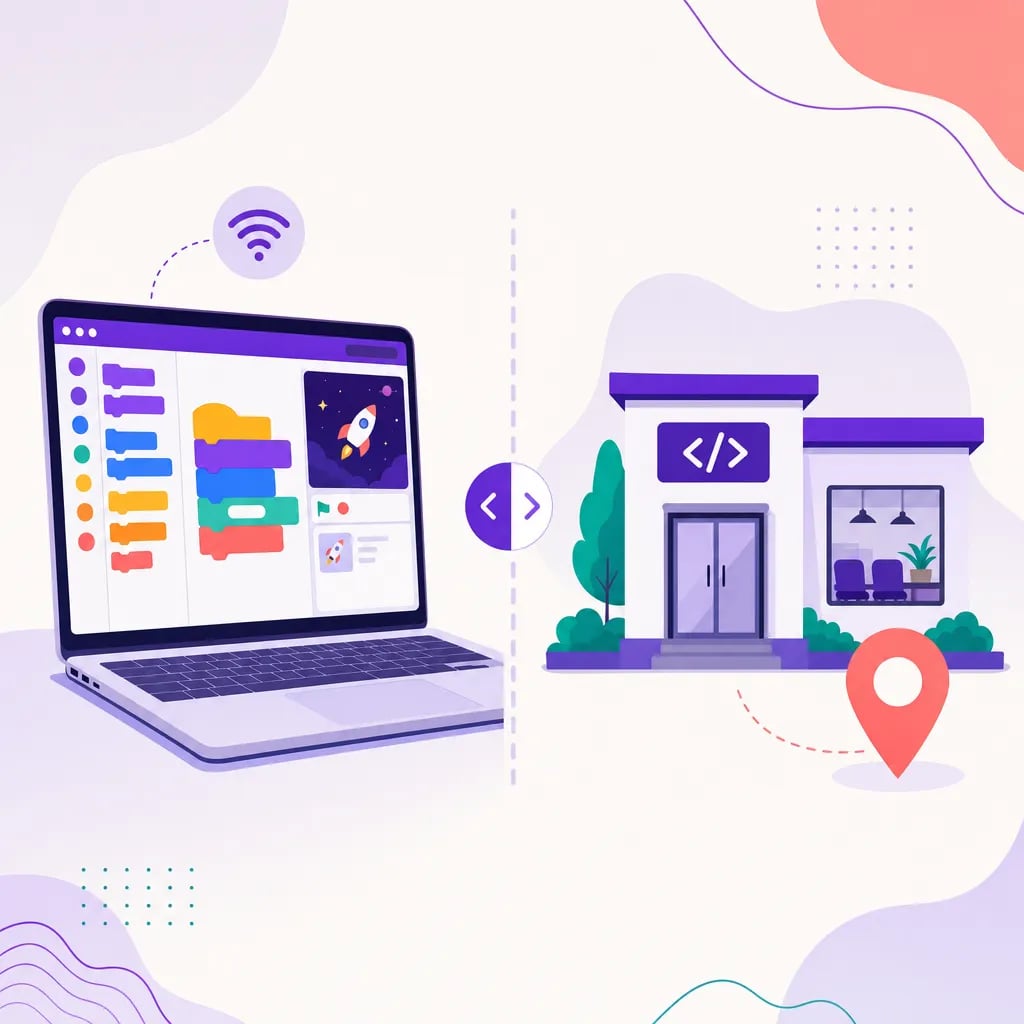
Programming (pengaturcaraan) is the process of writing, organising and testing the instructions that make a computer perform a task. A programmer plans what should happen, writes it in a programming language, then runs and fixes the code until it works — turning an idea into working software.
Table of Contents
Programming is more than typing commands; it is designing a clear sequence of steps and the logic that connects them. A programmer decides what should happen and in what order, using building blocks like sequences, loops (repeat an action) and conditions (if this, do that). In Scratch, children build these steps with blocks; in Python, they write them as lines of text. A concrete fact: the same program can often be written in many different languages — Python, Java, JavaScript — because they all express the same underlying logic in different words.
Programming built almost every digital thing a child uses. A mobile game, a messaging app, a website, a smart watch, and a robot toy each run on programs written by people. A small classroom example is a quiz program that asks a question, checks the answer, and keeps score. A young coder might build it in Scratch with blocks or in Python with a few lines of text. Big or small, every program is a planned set of steps written in a language the computer understands.
In everyday use programming and coding mean the same activity: writing instructions for a computer. The small difference is scope. Programming often names the full process of planning a solution, writing it, testing it, and fixing it, while coding points more narrowly to the writing of the lines themselves. A programmer might spend as much time thinking through the steps as typing them. For children learning their first projects, the two terms describe the same enjoyable work.
Programming builds logical thinking, patience and problem-solving that help children across every subject, and these ideas already appear in Malaysia's KSSR computing lessons. Programming and everyday coding mean much the same thing, and both start with a clear algorithm. Kids can learn step by step in an Algonova coding class.
Want your child to start programming? Book a free trial class today.
Programming is writing and organising instructions that tell a computer what to do, then testing them until they work. Those instructions together are called a program.
In everyday use they mean the same thing: writing instructions for computers. 'Programming' sometimes describes the wider process - planning, testing and fixing - while 'coding' points to the writing itself.
Building a quiz game that asks a question, checks the answer and keeps score is programming. You plan the steps, write them in Scratch or Python, then run and fix the program.
Children can begin around age 6-7 with block-based programming in Scratch, then move to text languages like Python from about age 9-10 as their reading and logic grow.
Blog
Start your child's tech journey
Book your free 60-minute trial class with an Algonova certified tutor. No payment, no obligation, just discover what your child can build.

Algonova worldwide
Contact us
Email: int_legal@alg.team
Visit us
Suite 8634, 1021 E Lincolnway, Cheyenne, WY, Laramie, US, 82001
Algonova online LLC International tech school for kids and teens

