AI or coding first: which should your child learn?

Course Guides7 min read
Coding Education

Hafiz Rahman
Lead Coding Instructor at Algonova Malaysia
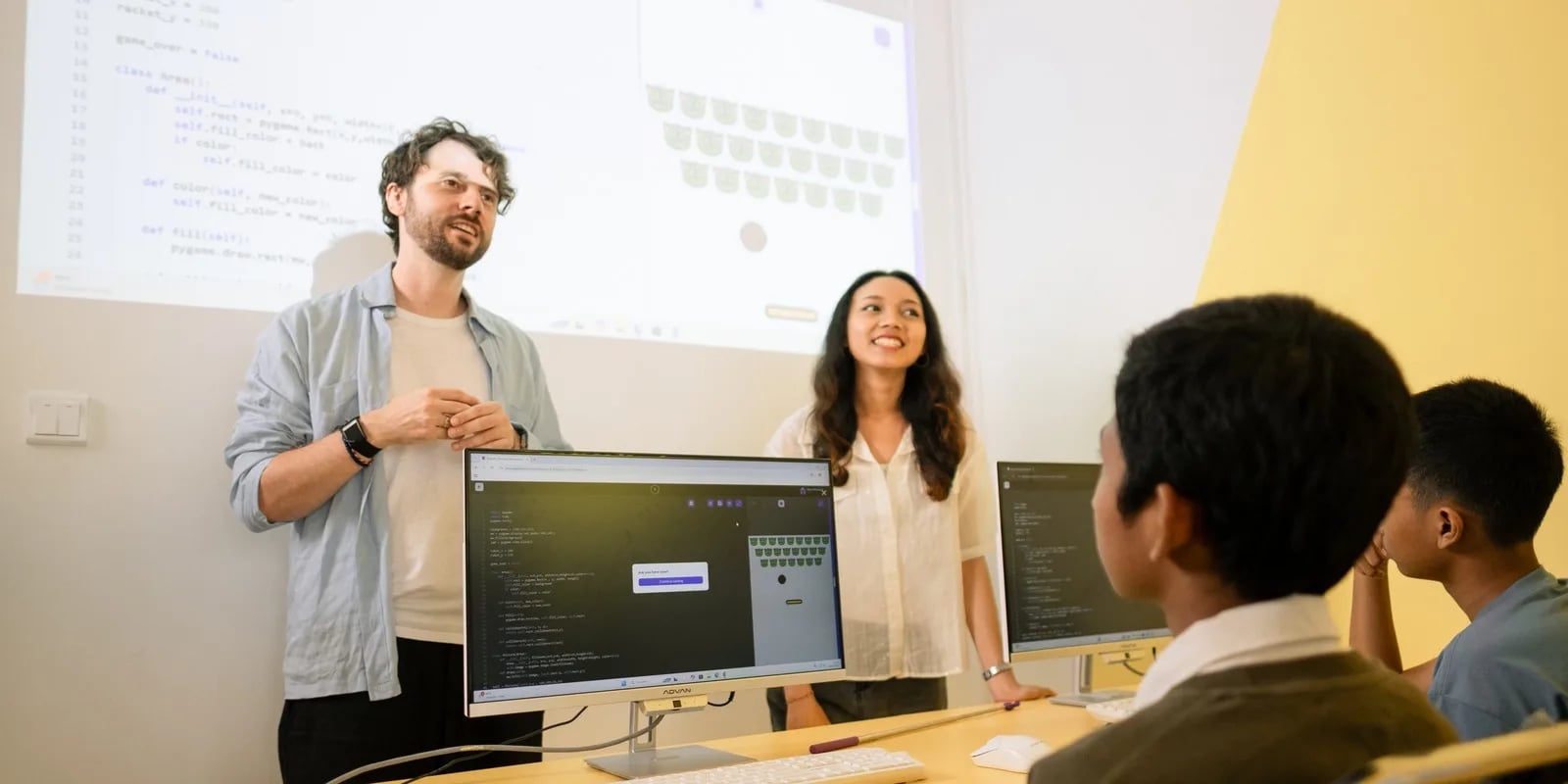
An algorithm is a clear, step-by-step set of instructions for solving a problem or completing a task. Every algorithm takes an input, follows a fixed sequence of steps, and produces a predictable output. Computers, phones, and video games all run on algorithms — but so does a cooking recipe or the directions you give a friend to reach your house.
Every algorithm follows the same simple pattern: input → process → output. You start with something (the input), apply an ordered series of steps (the process), and finish with a result (the output). Think of baking cookies: the ingredients are the input, the recipe's numbered steps are the process, and the warm cookies are the output. Change the order — bake before you mix — and the result breaks, which is why the order of steps matters as much as the steps themselves. The word "algorithm" itself comes from Al-Khwarizmi, a 9th-century Persian mathematician whose name was Latinised into "algorithm." A good algorithm is also finite: it always stops after a limited number of steps rather than running forever. That efficiency adds up — a smart search algorithm can find one name in a sorted list of 1,000 by checking only about 10 items instead of all 1,000.
Learning about algorithms teaches children to break a big problem into small, ordered steps — a thinking skill that supports maths, science, and the computational thinking goals in Malaysia's KSSR curriculum. When a child writes their first program, they are really writing an algorithm for the computer to follow. Structured Algonova coding classes turn this idea into hands-on practice, and beginners often start by exploring what coding is for kids. Curious how your child thinks in steps? A free trial class is an easy first look.
An algorithm is a clear set of steps that solves a problem or finishes a task, a bit like a recipe. Good algorithms are precise, finish in a set number of steps, and give the same result every time. People use them everywhere, from a maps app finding the fastest route to a search engine ranking pages. Kids meet algorithms whenever they plan the moves in a game. They learn to design their own in Algonova's coding classes for kids, often using programming logic, and a free trial class puts the idea into practice.
An algorithm is a set of step-by-step instructions that solves a problem or finishes a task. You give it an input, it follows the steps in order, and it produces an output — exactly like following a recipe.
A cooking recipe is a perfect everyday algorithm: its numbered steps turn ingredients (the input) into a finished dish (the output). Sorting a list of names into alphabetical order is another common example.
The word comes from Al-Khwarizmi, a 9th-century Persian mathematician. His name was Latinised as "algoritmi," which over time became the modern English word "algorithm."
Algorithms teach children to break problems into clear, ordered steps — a foundation for coding, maths, and logical thinking that fits the computational thinking goals in Malaysia's KSSR curriculum.
Start your child's tech journey
Book your free 60-minute trial class with an Algonova certified tutor. No payment, no obligation, just discover what your child can build.

Algonova worldwide
Contact us
Email: int_legal@alg.team
Visit us
Suite 8634, 1021 E Lincolnway, Cheyenne, WY, Laramie, US, 82001
Algonova online LLC International tech school for kids and teens