A prime number is a natural number greater than 1 that has exactly two exact divisors: 1 and itself. This means it cannot be divided evenly by any other number. For example, 7 is prime because it can only be divided by 1 and 7. On the other hand, 8 is not prime because it can also be divided by 2 and 4; numbers like 8 are called composite numbers.
The first prime numbers
The first prime numbers are: 2, 3, 5, 7, 11, 13, 17, 19, 23 and 29. Here is a curious detail: 2 is the only even prime number, because every other even number can be divided by 2 and therefore stops being prime. The number 1 is not considered prime, because it has only one divisor (itself). A simple way to check whether a number is prime is to try dividing it by the smallest numbers: if none divides it evenly, it is prime.
Why do prime numbers matter for kids?
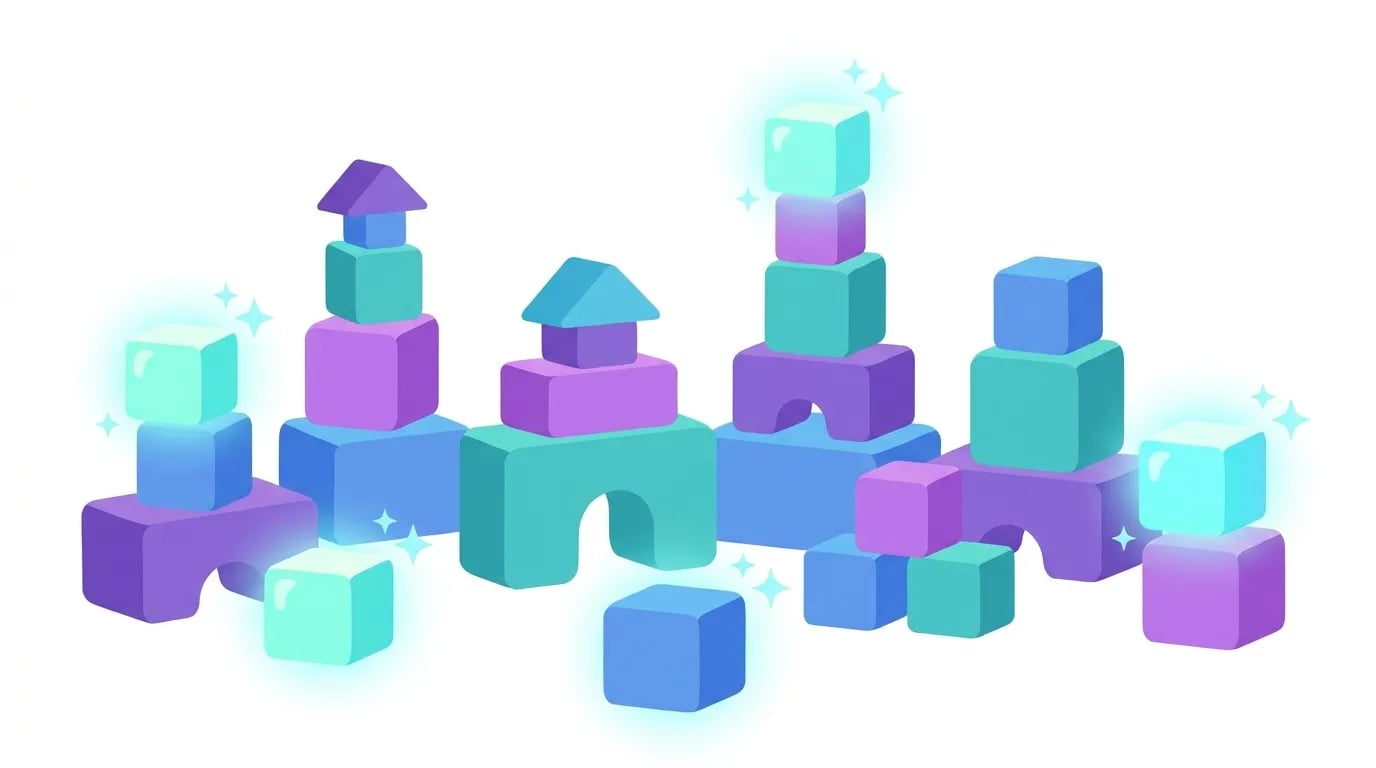
Prime numbers are like the "building blocks" of mathematics: any whole number can be built by multiplying prime numbers, something called prime factorization. This idea is learned in elementary school and is the basis for finding the least common multiple and for simplifying fractions. Prime numbers are also used today to protect information on the internet: passwords and online payments work thanks to very large prime numbers.
An amazing fact: prime numbers are infinite. The Greek mathematician Euclid proved this more than 2,000 years ago. Want your child to discover math in a fun way? Book a free masterclass with Algonova.