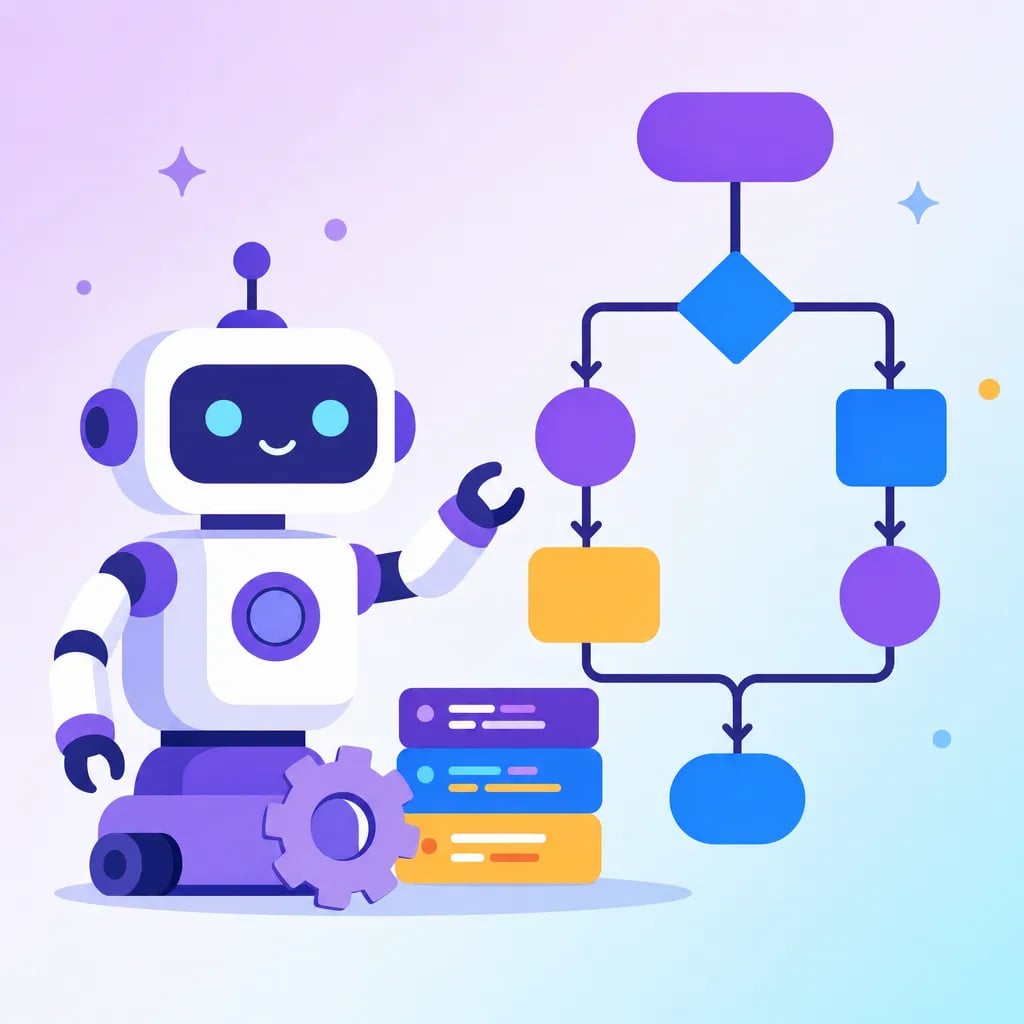
A framework is a ready-made code structure —with rules, components and tools already built in— that programmers use as a base to create apps or websites much faster, without writing everything from scratch.
Think of a framework like the mold of a prefab house: the walls, pipes and roof are already solved, and you just choose the color, the furniture and the decoration. In programming, that "mold" includes common features that almost every project needs —handling buttons, saving data, showing screens— so the programmer can focus on what makes their app unique.
Why Programmers Use Frameworks
Programmers use frameworks to save time, avoid mistakes and work as a team with a clear structure. A teenager who already knows some code can spot it easily: in Scratch, the "motion" and "looks" block groups work like a mini-framework, because they bundle ready-to-use commands instead of programming every pixel by hand. In Python, a framework like Flask lets you build a web page in just a few lines. A concrete fact: React, created by Meta in 2013 and running on sites like Netflix and Instagram, is one of the most popular tools in the world (though technically a library, many people use it as a framework).
Why It Matters for Kids
Understanding what a framework is helps kids see that coding is not reinventing the wheel, but leaning on smart tools to build bigger things. It is a skill that blends logic, structure and creativity. In Algonova coding courses kids move from blocks to real frameworks step by step, and basics like what a variable is become key to mastering them.
Want your child to try it? Book a free class and discover it live.