Source code is the set of instructions a programmer writes, in a programming language, before the computer runs them. It is the original, human-readable text —with words, symbols and rules— that is then translated into a language the machine understands. Every program, app or video game starts out as source code.
How Source Code Works
The programmer writes the source code in text files and saves them with an extension based on the language: for example, a Python file is named game.py. Inside that file there are lines like print("Hello!"), an order that asks the computer to show a message on the screen. To make it run, another program —an interpreter or a compiler— reads that code and turns it into instructions the processor executes.
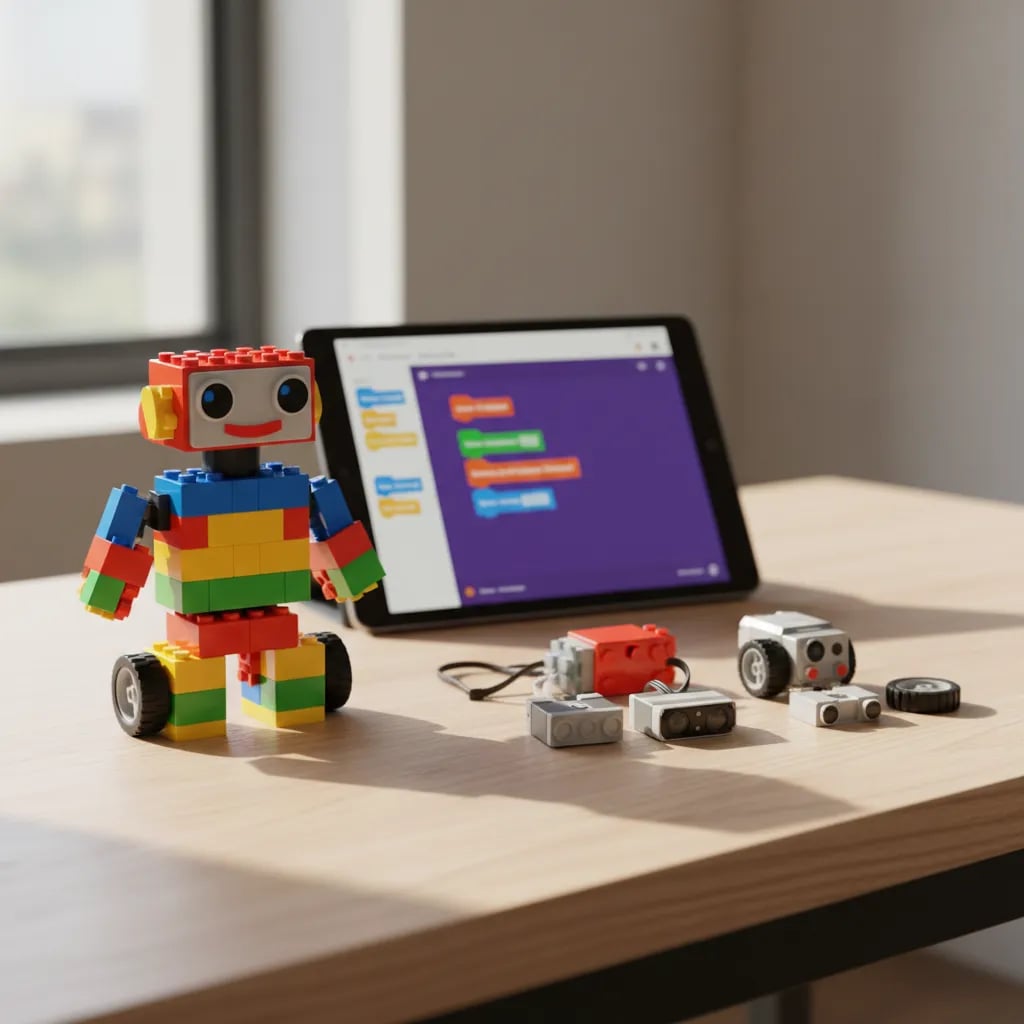
A relatable example: in Scratch kids snap colored blocks together, and underneath that is the equivalent of source code; when they move to Python, they write those same orders with words. A concrete fact: the source code of the Apollo 11 Moon landing, now published, has more than 60,000 hand-written lines.
Why It Matters for Kids
Reading and writing source code teaches children to give clear, ordered instructions, a skill that goes beyond programming. In Algonova coding courses they learn to write their own code step by step, first understanding concepts like what a variable is.
Want your child to write their first program? Try a free class and find out.