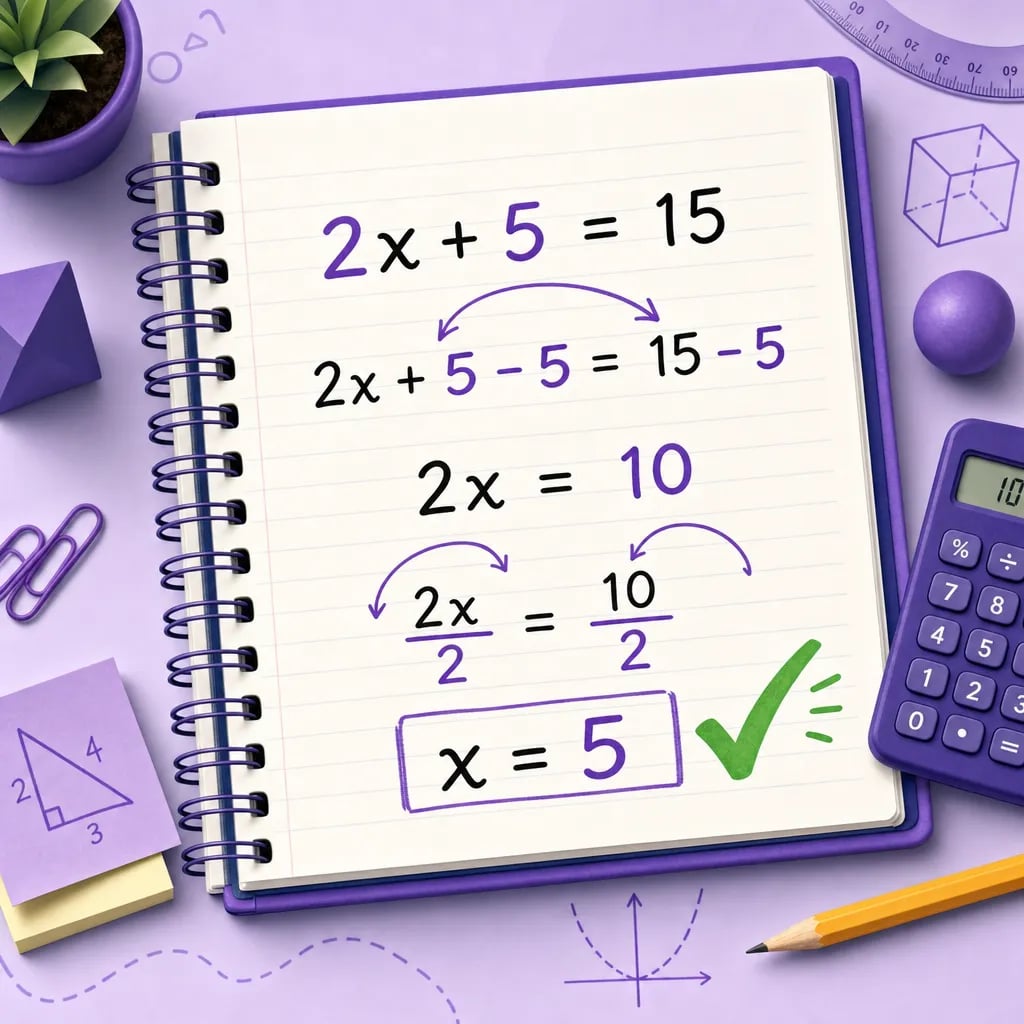
A first-degree equation is a mathematical equality with an unknown raised to the power of 1, solved by isolating that unknown using inverse operations. It's taught around 7th grade (ages 12-13) and is the gateway to algebra — formulas, everyday problems and more advanced equations all build on it. This guide explains it with worked, step-by-step examples.
What is a first-degree equation?
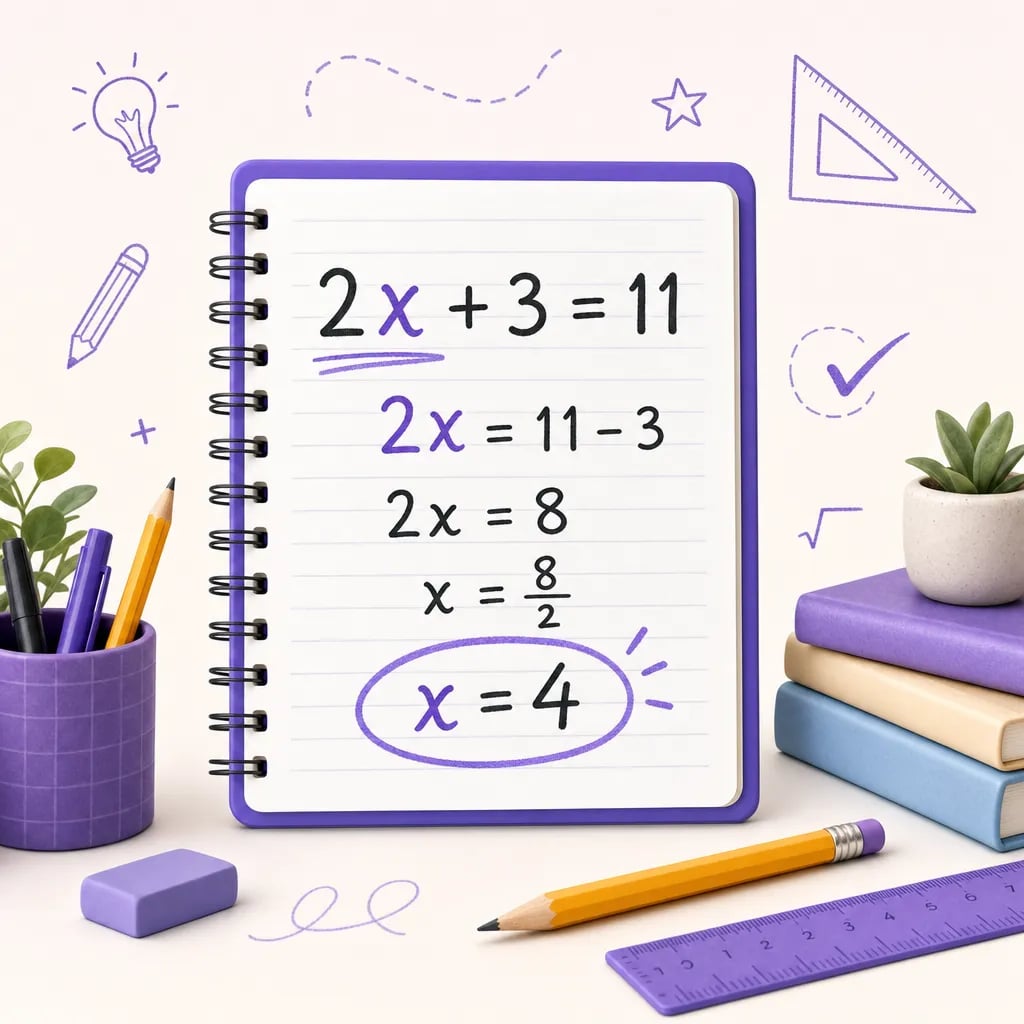
A first-degree equation (or linear equation) is an equality between two expressions where an unknown —usually called x— appears raised only to the power of 1 (no x², no square roots of x). The goal is to find the value of that unknown that makes the equality true.
For example, in 2x + 3 = 11, we're looking for the number that replaces x so the equation balances. The answer is x = 4, because 2 × 4 + 3 = 11.
These equations fall into a few types:
- Unknown on one side only: ax + b = c (e.g. 2x + 3 = 11).
- Unknown on both sides: ax + b = cx + d (e.g. 3x + 2 = x + 10).
- With parentheses or fractions: these need one extra step before isolating the unknown.
Before solving equations, it helps to be comfortable with fractions and decimal numbers, since they show up often while isolating x.
Tip: if your child sees an equation as a scale that must stay balanced, they'll stop memorizing disconnected steps. In a free coding class they'll use variables just like in an equation.