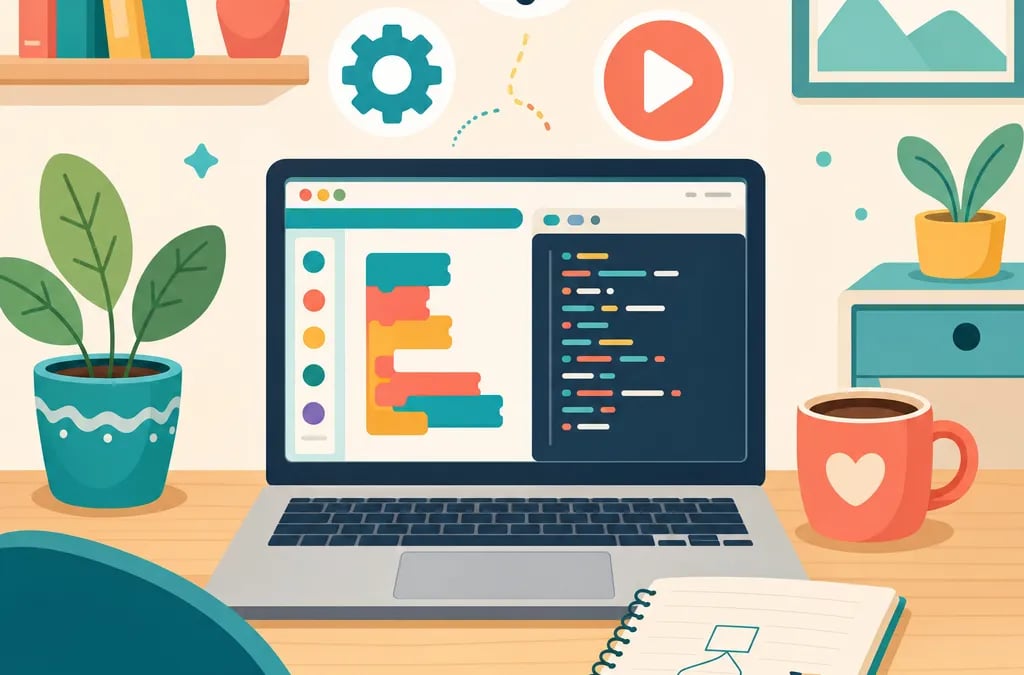
HTML (HyperText Markup Language) is the language that defines the structure and content of every web page: headings, paragraphs, images, links, and buttons. It is not a programming language —it has no logic or calculations— but the skeleton the browser reads to display a page on screen.
Each element is written with tags inside angle brackets, almost always in pairs that open and close the content, like <p>text</p>.
How HTML Works
An HTML page is a series of nested tags. For example, <h1> marks the main heading, <p> defines a paragraph, <a> creates a link, and <img> inserts an image. The browser reads these tags from top to bottom and builds the page you see.
Every document starts from a skeleton: <html> wraps the page, <head> holds invisible information (like the browser-tab title), and <body> contains everything visible. CSS then adds style and color, and JavaScript adds interactivity. But HTML is always the base: without it, there is no page.
Why It Matters for Kids
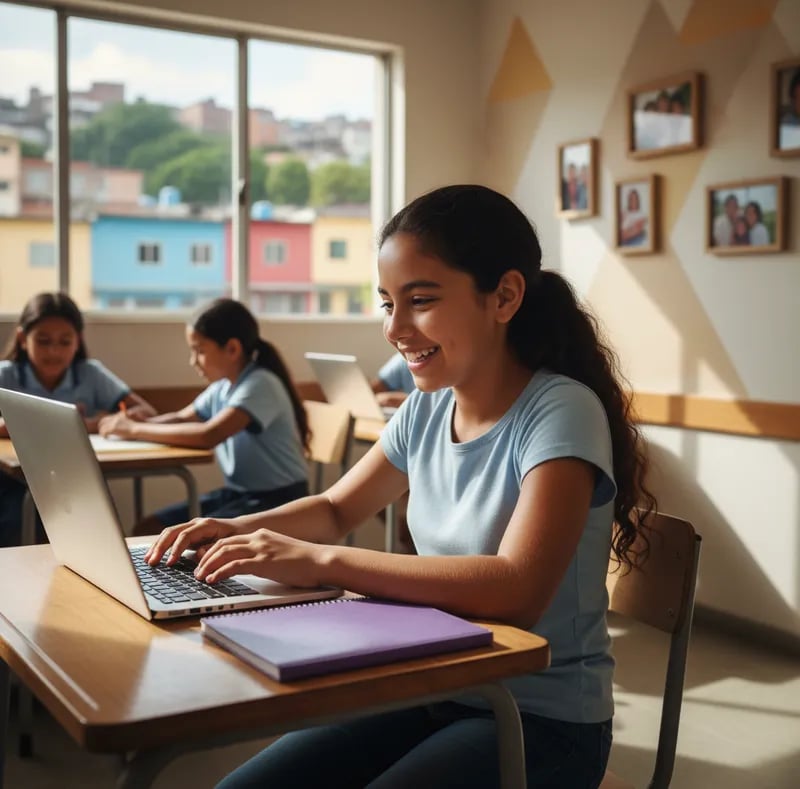
Learning HTML is the most natural gateway into programming. With just a few tags, a child creates their first real page and sees the result instantly, which boosts their motivation. It also trains structured thinking —just like understanding what an algorithm is— and paves the way to more advanced languages.
In Algonova's coding courses for kids, students build their own web pages step by step, from the first tag to a complete site. You can see it in action in a free trial class, at no cost.