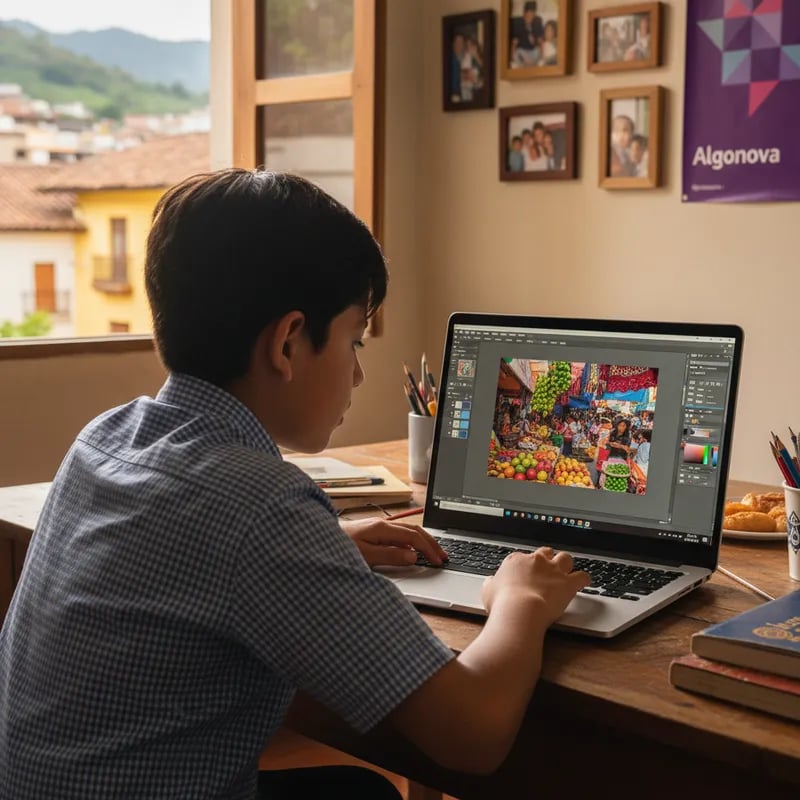
Graphic design for kids is the skill of communicating ideas with images, color and shape using digital tools, and learning it early develops creativity, visual thinking and confidence. It's not about having a talent for drawing, but about organizing ideas and solving problems visually, something increasingly valuable in Latin America's digital economy. A child can take their first steps from age 6 or 7 with free tools.
Algonova is a platform of live courses in coding, design and AI for children aged 6 to 17, with over 1,000,000 graduates in 97 countries and more than 10 years teaching technology to kids. Classes are live with certified teachers in a 1-on-1 private format, a mini-group of 2 to 4 or a group of up to 10 students —not pre-recorded videos— and a 4.9★ rating from families confirms it.
What Is Graphic Design, Explained for Parents
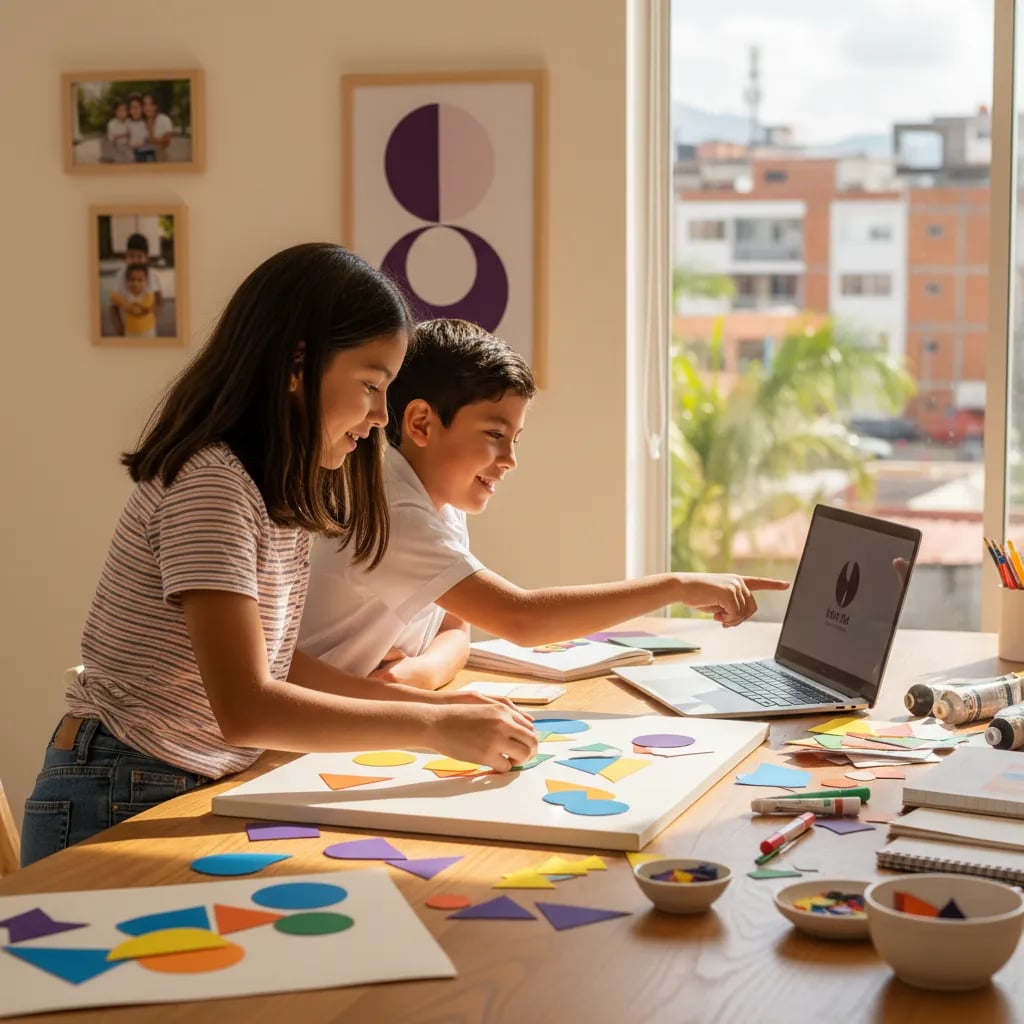
Graphic design is the art of conveying a message by combining text, image, color and composition so it's clear and appealing. When your child picks the colors for a school project cover, lays out a poster for a fair, or makes a sticker for friends, they're already thinking like a designer. It's a discipline that unites the creative and the logical, which is why it fits curious young minds so well.
It's Not Just Drawing
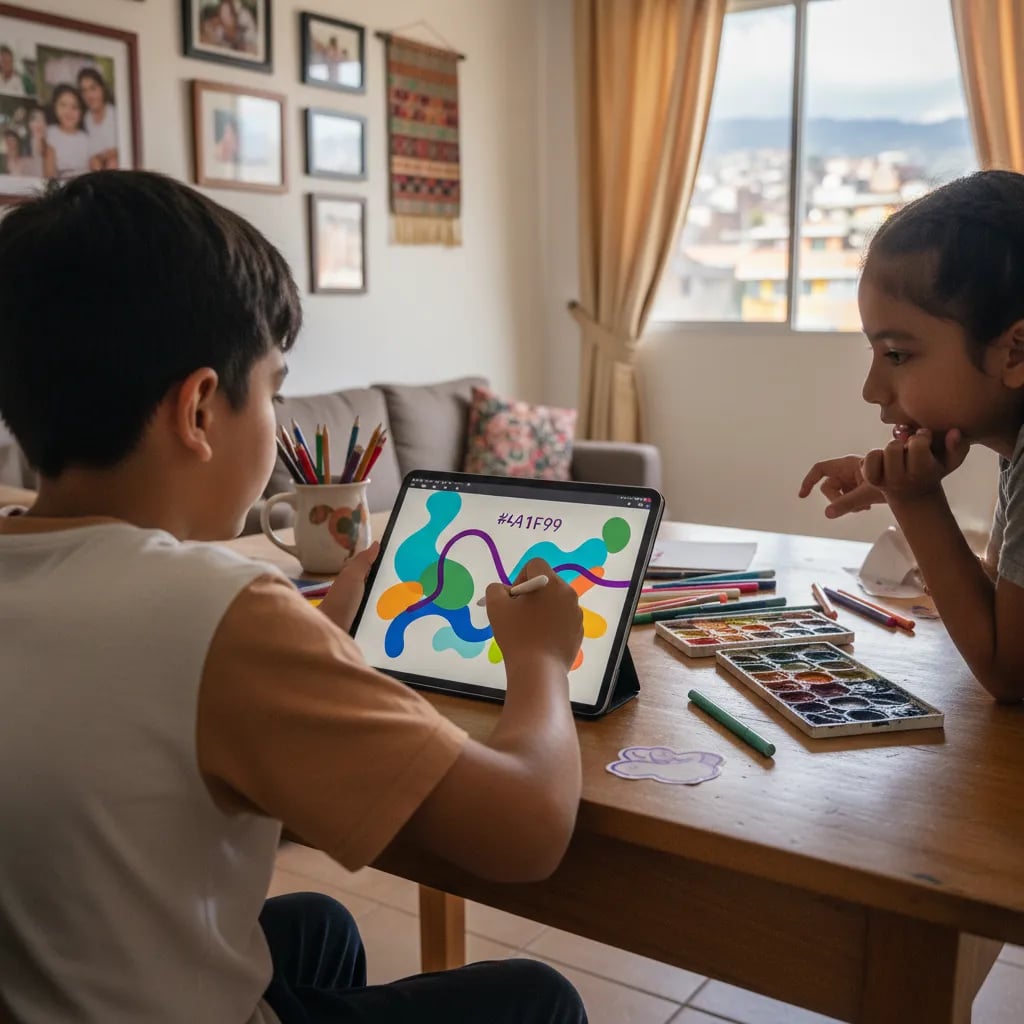
Design isn't limited to drawing well. It's about communicating: deciding what information comes first, which color draws attention, how an ordered page looks. A child who doesn't consider themselves "good at drawing" can create excellent designs, because digital tools provide shapes, templates and ready-made elements to combine. What matters is the idea, not the perfect stroke.
Why It Appeals to Kids
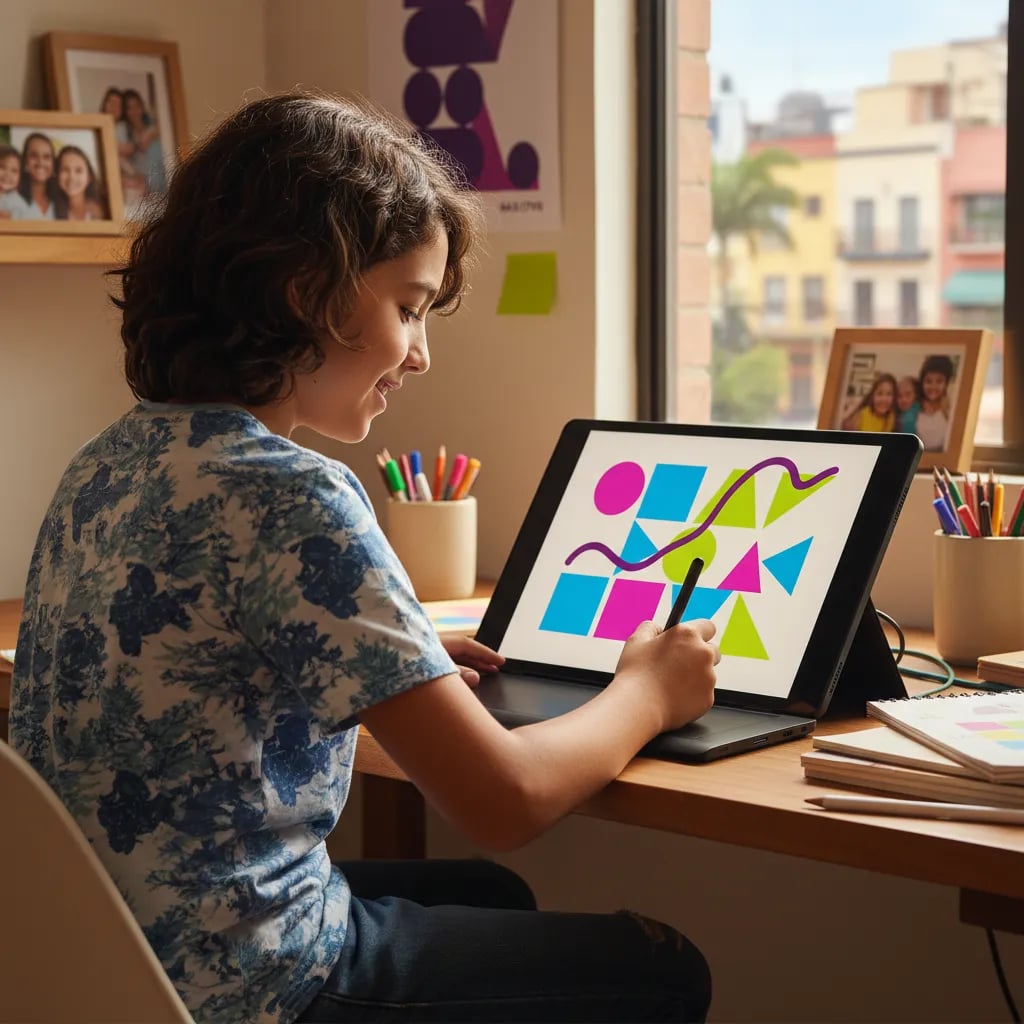
Kids get hooked on design because they see quick, real results. In minutes they go from a blank page to a poster or an avatar they can show and share. That "I made it" feeling turns the screen into a space to create, not just to consume.