AI or coding first: which should your child learn?
Course Guides7 min read
Coding Education

Hafiz Rahman
Lead Coding Instructor at Algonova Malaysia
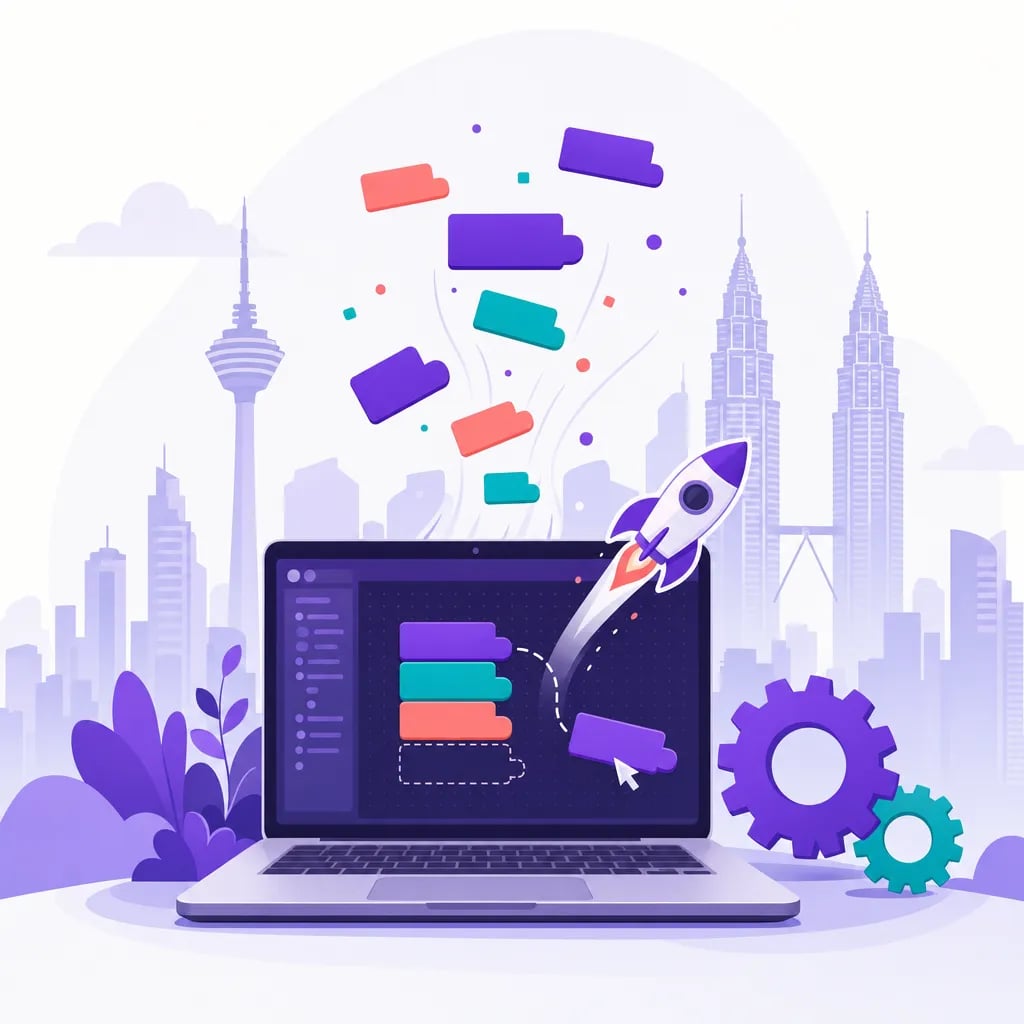
Source code is the set of human-readable instructions a programmer writes, in a programming language like Python or Scratch, to tell a computer exactly what to do. Before a program can run, it exists as source code — plain text saved in a file that people can read, edit, and share. A computer then translates that text into the machine instructions it actually executes.
Table of Contents
Source code is written in a text editor and saved with an extension that matches its language — .py for Python, .js for JavaScript, or a .sb3 project for Scratch. When a child types the following into a file called hello.py:
name = "Aisyah"
print("Hello, " + name)
that text is the source code. On its own it does nothing; a tool called an interpreter or compiler reads the file and turns it into instructions the computer runs, printing Hello, Aisyah on the screen. Every app, game, and website a child uses started life as source code someone wrote and saved. Large professional programs can contain millions of lines of it.
Reading and writing source code is the core skill behind computational thinking, a key goal of Malaysia's KSSR and STEM education. When kids see that source code is just clear, step-by-step instructions, coding stops feeling like magic and becomes something they can learn and control. Structured practice in Algonova coding classes helps children write, run, and fix their own source code, building on ideas like what a variable is.
The simple meaning of source code is the readable text a programmer writes before a computer turns it into a working program. People sometimes say "source codes" in the plural, but the idea stays the same: the original, human-written instructions behind an app or game. That source code definition holds true whether the file is a single line of Python or one of the millions of lines inside a large program.
Curious minds learn fastest by doing, and a free trial class is a simple first step.
Source code is the human-readable instructions a programmer writes to tell a computer what to do. It is plain text, written in a language like Python or Scratch, before the computer turns it into a running program.
A single line such as print("Hello") in Python is source code. So is an entire Scratch project or the thousands of files behind a mobile game — all of it is text written by programmers.
Not quite. Source code is what a programmer writes; a program is what runs after that code is translated by a compiler or interpreter. The source code always comes first.
Yes. Children often start with visual blocks in Scratch, then move to typed languages like Python. Both produce real source code, and kids as young as 7 can begin.
Start your child's tech journey
Book your free 60-minute trial class with an Algonova certified tutor. No payment, no obligation, just discover what your child can build.

Algonova worldwide
Contact us
Email: int_legal@alg.team
Visit us
Suite 8634, 1021 E Lincolnway, Cheyenne, WY, Laramie, US, 82001
Algonova online LLC International tech school for kids and teens