How to Make a Simple Comic for Primary School Kids: From Paper to Digital Comics

Course Guides8 min
Course Guides
Maya Putri
Early Childhood Education Specialist
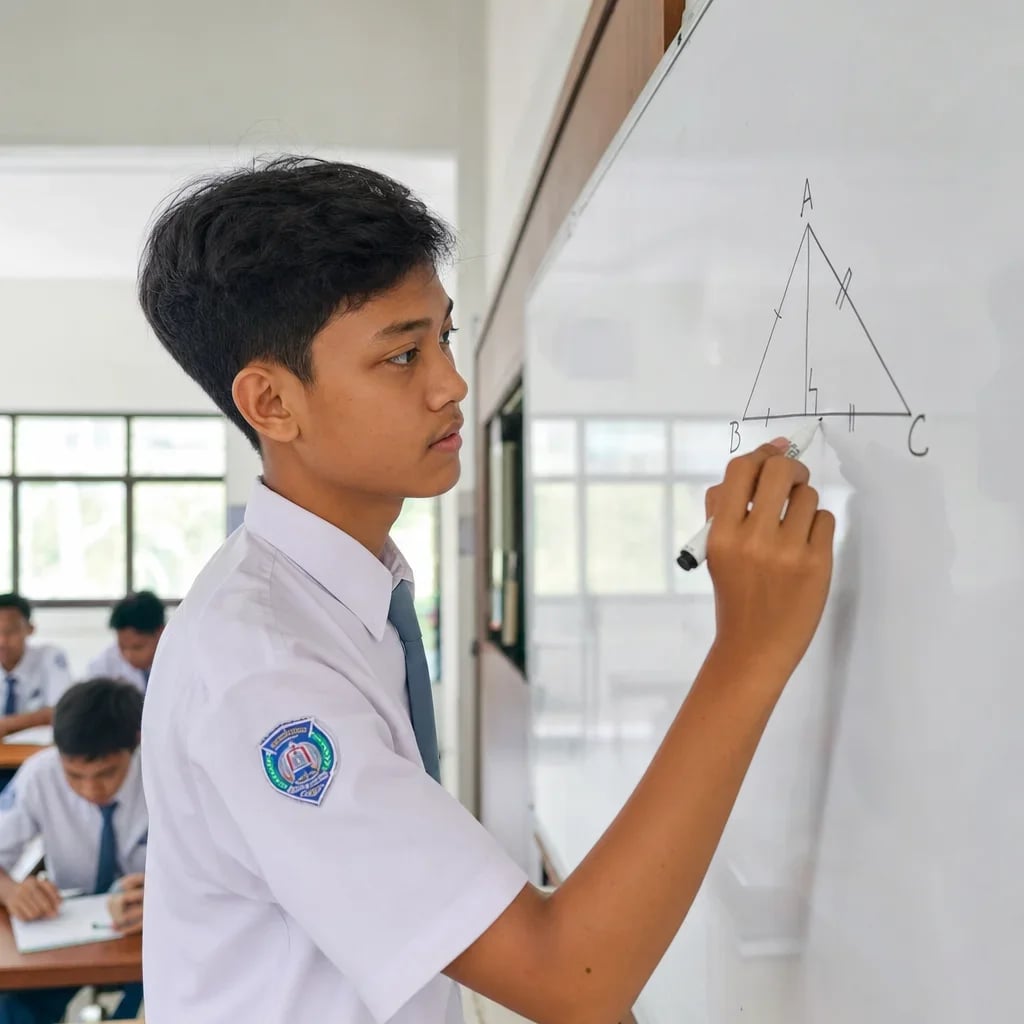
An elementary math olympiad is a mathematics competition for primary-school (SD) students that tests logical thinking, problem-solving, and reasoning — not rote memorisation of formulas. In Indonesia it comes in two forms: the official government route, the National Science Olympiad (Olimpiade Sains Nasional / OSN) run by Pusat Prestasi Nasional (Puspresnas/BPTI) under the Ministry of Education, and various private olympiads held by universities, tutoring institutions, or communities. This article explains what the elementary math olympiad is, who can take part, how to register, and how to prepare a child.
At the SD/MI level, OSN competes in two fields: Mathematics and Science. Unlike school tests, olympiad questions emphasise creative reasoning — number patterns, logic, geometry, and multi-step word problems. The goal is not to find who calculates fastest, but who is most flexible in finding a way to the answer.
Participants are generally SD/MI students (often grades 4-6 — check the current year's rules), Indonesian citizens, registered through their school. For OSN, selection is tiered: school level, then OSN-K (regency/city), OSN-P (province), up to the national OSN. Private olympiads set their own rules and can often be entered independently.
For OSN, registration is done by a teacher or school operator through the official Puspresnas platform — parents do not register on their own. Because schedules and mechanics change yearly, the safest step is to contact the maths teacher or homeroom teacher and follow official school announcements. Private olympiads usually open online registration on the organiser's website.
An often-forgotten fact: many olympiad winners are not "naturally gifted" — they are children who trained in a structured way over years. One Algonova student, Rey Ayres Yusuf, won a gold medal at the national math olympiad after consistent preparation.
At Algonova we teach maths and coding for children aged 5-17 in Private (1 student), Mini (2-4 students), and Group (up to 10 students) formats, so each child is guided at their own level. To strengthen mathematical reasoning, you can also read our guide to preparing for the math olympiad. Want to know your child's level? Try a free Master Class — no commitment, no credit card.
Note: This guide is general and informational. Requirements, eligibility, schedules, and official amounts can change each year — always check the latest official sources. Algonova is an online coding and math school for children, not the organizer of this program.
Preparing for the primary maths olympiad works best when it emphasises understanding concepts and solving non-routine problems, rather than repeating school exam questions. A child needs to get comfortable thinking flexibly about unfamiliar problems.
When should a child start? From grades 3–4, beginning with the joy of exploring rather than pressure to win.
How do you train problem solving? Give open-ended problems and let the child try several approaches. Coding trains the same mindset: breaking a big problem into small steps. See Algonova's coding classes for ages 5–17, or try a free coding class.
A mathematics competition for primary-school (SD) students testing logical reasoning and problem-solving. Its official form is the National Science Olympiad (OSN) in Mathematics from Puspresnas/Ministry of Education, alongside many private olympiads.
Generally SD/MI students (often grades 4-6) who are Indonesian citizens. For OSN, students are registered through their school and go through tiered selection from school, regency/city, and province, up to the national level.
OSN registration is handled by a teacher or school operator through the official Puspresnas platform, not by parents personally. Follow official school announcements and check the latest schedule each year, as the mechanism can change.
Focus on understanding concepts, practise graded problems consistently, and keep the child enjoying the process. Structured guidance and regular practice matter far more than talent alone.
Blog

Algonova worldwide
Contact
Whatsapp: +62 21 50996971
Email: info@algonova.id
Address
Coworking Area, Gedung IT 6 Lantai Dasar, Nongsa Digital Park, Jalan Hang Lekiu, Kelurahan Sambau, Kecamatan Nongsa, Batam, Indonesia Directorate General of Consumer Protection and Trade Compliance – Ministry of Trade of the Republic of Indonesia. WhatsApp Ditjen PKTN: 0853-1111-1010.
PT Algonova Indonesia Cerdas All rights reserved 2026