
Free Coding Trial Class for Kids in Malaysia: What Happens in 60 Minutes and How to Judge It

Coding Education7 min read
Coding Education

Hafiz Rahman
Lead Coding Instructor at Algonova Malaysia
A boolean is a data type that can hold only one of two values: true or false. Named after mathematician George Boole, it is how a computer answers a yes/no question — is the light on, is the game over, did the player win? A boolean is always either true or false, never anything in between.
Table of Contents
Booleans usually come from a comparison. When code asks if (score > 10), the computer checks the score, produces a boolean — true if the score really is above 10, false if it is not — and then decides what to do next.
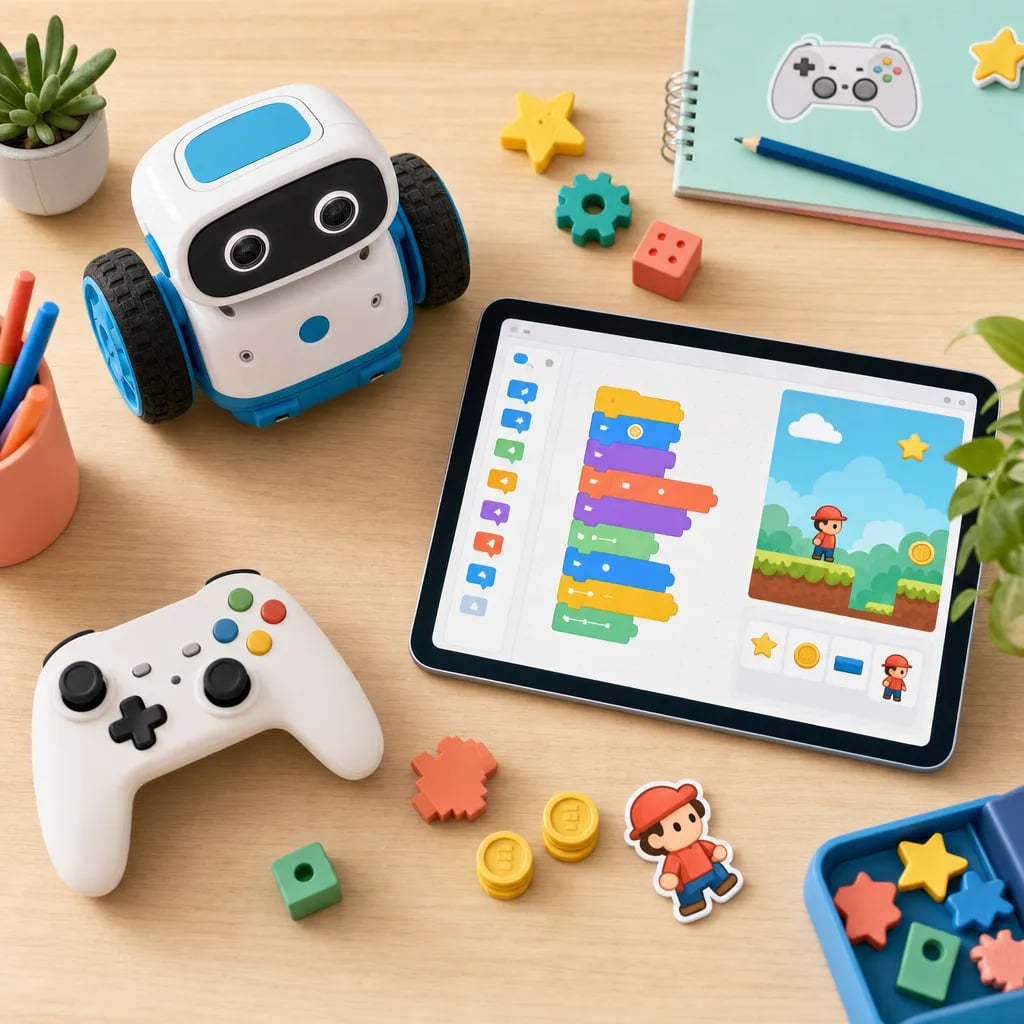
In Scratch, the green pointed blocks like key space pressed? or touching edge? are booleans; they slot into an if block and report true or false. In Python, age >= 7 gives back True or False, and you can store it: can_play = age >= 7. A fun fact: because a computer only has two states — on and off — booleans map perfectly onto the 1s and 0s inside every chip.
Booleans are the foundation of decisions in code — every if, every loop that stops at the right moment, and every game rule relies on true/false thinking. Learning them builds the logical, computational thinking that Malaysia's KSSR curriculum and STEM education encourage. Children practise booleans from their first projects in Algonova coding classes, and they pair naturally with what a variable is.
In coding, booleans are values that can only ever be true or false, and programs lean on them to make almost every decision. Whenever code compares two things, like whether a score is high enough or a key is pressed, the answer comes back as a boolean. Knowing what a boolean is in coding helps a child understand how a game decides to keep playing, stop, or award a point.
Curious to see it in action? Book a free trial class and watch your child code their first true/false rule.
A boolean is a value that is either true or false — nothing else. Computers use it to answer yes/no questions, like whether a player has enough points to win.
A comparison like score > 10. If the score is 12 the boolean is true; if it is 5 it is false. In Python, age >= 7 returns True or False.
It is named after George Boole, a 19th-century mathematician who created the logic of true and false values that computers now rely on.
Yes. The green pointed blocks such as 'touching edge?' or 'key pressed?' are booleans — they report true or false and slot into if blocks.
Blog


Start your child's tech journey
Book your free 60-minute trial class with an Algonova certified tutor. No payment, no obligation, just discover what your child can build.

Algonova worldwide
Contact us
Email: int_legal@alg.team
Visit us
Suite 8634, 1021 E Lincolnway, Cheyenne, WY, Laramie, US, 82001
Algonova online LLC International tech school for kids and teens

