How to Make a Simple Comic for Primary School Kids: From Paper to Digital Comics

Course Guides8 min
Course Guides
Maya Putri
Early Childhood Education Specialist
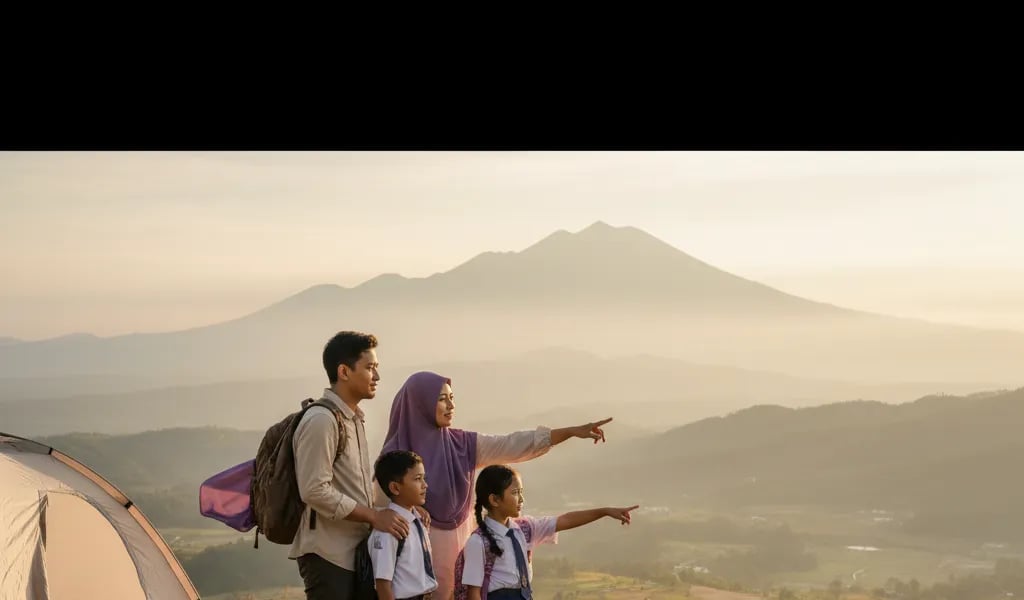
The benefits of camping for children aged 5–12 are physical resilience, quality rest from gadgets, growth in social skills, building independence, and direct connection with nature. Five things no course can give a child - because the child has to actually live them, not just study them in a classroom.
Many parents in Jakarta, Bandung, and Surabaya hesitate to take their kids camping. The reasons are reasonable: dark forests, wild animals, sudden weather changes. But camping in Indonesia is far more family-friendly today than a decade ago. Many natural attractions offer safe camping zones, and glamping (glamorous camping) lets families enjoy nature with comfortable facilities. This article explains five major benefits children gain, plus how to start safely.
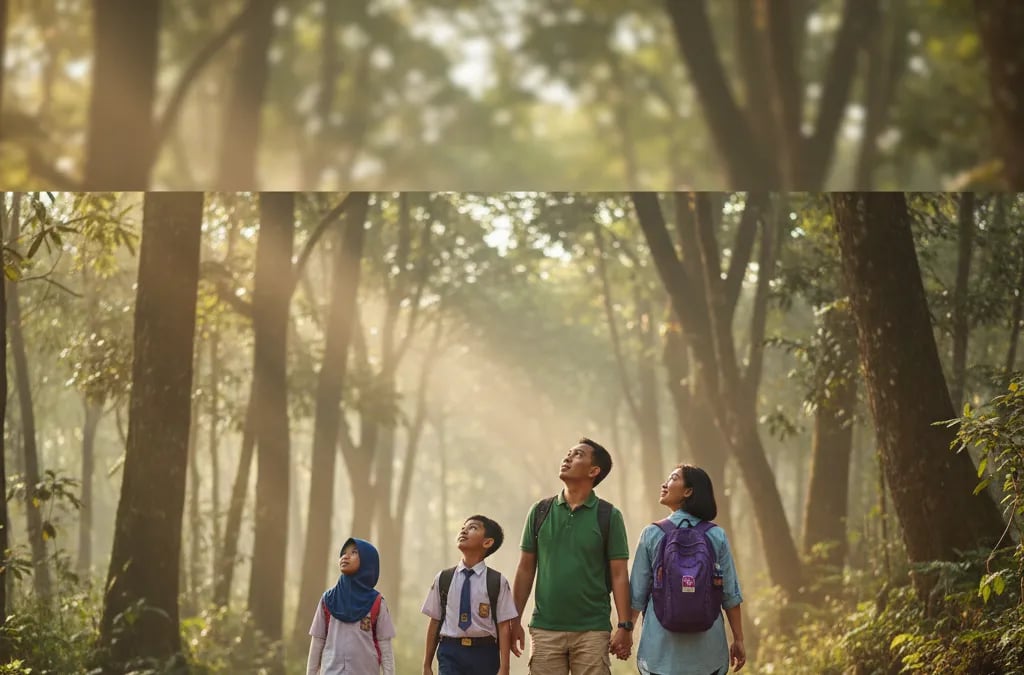
Camping in Indonesia is no longer only about remote forests that are hard to reach. Many destinations now offer family-designed camping areas: vehicle access nearby, clean bathrooms, and safe play areas for children.
Glamping is the latest evolution. Guests still get the sensation of sleeping in a tent and waking to bird sounds, but with comfortable mattresses, electricity, and proper bathrooms. This is the ideal entry point for a family that has never camped before, or for a child far from home for the first time.
Tip for a first camping trip: pick a location that is not too hard to reach and clearly safe. The goal of the first visit is not to prove resilience, but to build a positive impression of nature. Once a child loves the first experience, the next ones can be more adventurous.
Camping is almost equivalent to a sport - the physical activity is high, and it happens naturally. Setting up a tent takes effort. Hiking to a camping spot needs stamina. Walking around the area, gathering firewood, or playing outdoors all involve active movement that children rarely get in the city.
Clean air at camping areas also strengthens a child's immune system. After two days in nature, many children who are usually sensitive to city dust actually breathe more freely.
One important note: don't take a child camping when they are unwell. Intense activity in an uncontrolled environment can worsen their condition. Choose a time when the child is genuinely fit.
At home, a child can always find a reason to return to a screen. Wi-Fi is available, gadgets are charged, and one YouTube video always leads to ten more. At a camping site, this dynamic breaks naturally.
Many camping areas have weak signal or no Wi-Fi. Even if signal is good, a child is usually too busy - setting up the tent, gathering firewood, cooking, playing with other kids - to pull out a phone. Life follows the rhythm of the sun, not the rhythm of notification algorithms.
This is also a golden window for family conversation. Without competition from screens, conversation becomes deeper and slower. A child who usually answers parent's questions in one word starts telling longer stories.
In camping, almost nothing can be done alone. Setting up a tent needs two people. Cooking needs someone tending the fire and someone preparing ingredients. Exploring nature needs a team looking out for each other. A child automatically learns to contribute to a team and respect others' opinions.
Slightly challenging conditions - far from home comfort - strengthen family bonds. A child sees their parents not just as providers of comfort, but as partners in problem-solving. When sudden rain hits and the tent has to be rearranged, everyone moves together.
And if camping is done with a group or other families, a child socialises with new people automatically. They learn to introduce themselves, join collective games, and adapt to new group dynamics. Tolerance for differences grows naturally - because in nature, background differences matter less than the need to help each other.
Camping is full of small challenges that keep appearing. Setting up a tent. Sleeping on something harder than a soft mattress. Bathing with limited water. Tolerating mosquito bites. Walking long with a backpack.
A child who lives through all this over two or three days returns home with new confidence. They know they can take care of themselves in non-ideal conditions. They learn to choose clothing suited to weather, manage food supplies until going home, and use mosquito repellent without being reminded.
Time management also grows without formal teaching. A child learns to wake earlier to avoid long bathroom queues. They learn to eat on time because hunger in the open is stronger than at home. They learn to sleep earlier because the body is genuinely tired.
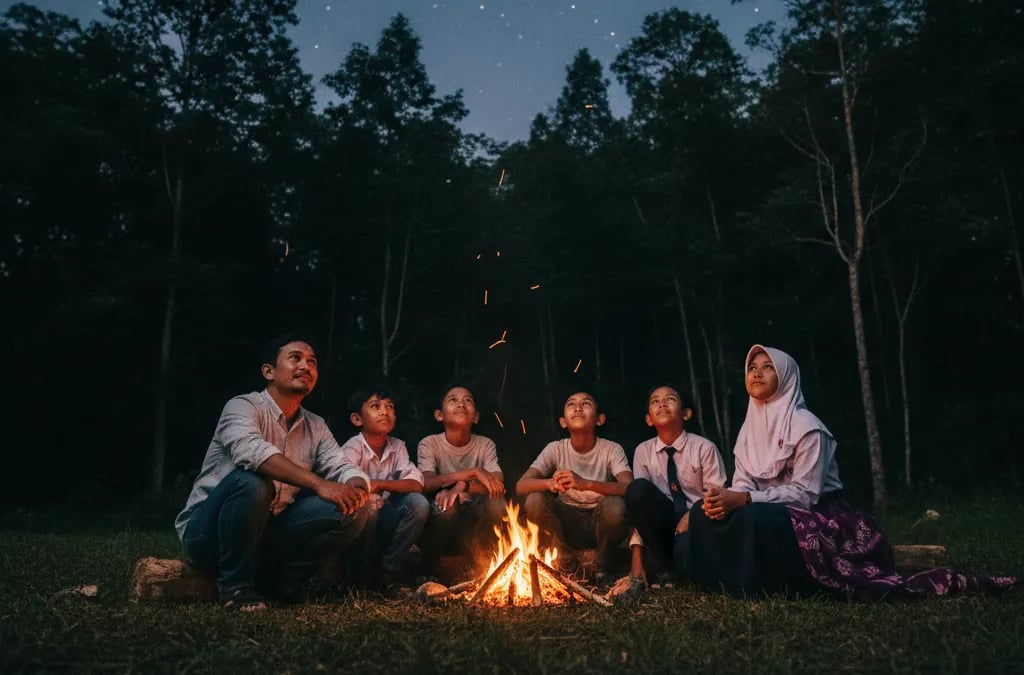
Deeper still: a child learns to overcome hesitation. New experiences are often scary, and camping is full of first-time conditions. When a child successfully gets through them - starting a campfire alone, sleeping in a tent for the first time, climbing to a viewpoint - bravery and confidence grow in ways no classroom can build.
Camping is the best activity to know nature, not from a screen or book, but directly. While camping, a child sees a sky of stars rarely visible from the city. They hear the trickle of a stream, birds in the morning, leaves rustling, or ocean waves.
These phenomena leave deep marks on a child. Many adults still remember the first time they saw the Milky Way, or the first time they slept in a tent and woke to morning mist. Such experiences shape a sense of wonder that becomes the foundation of caring about nature later.
Camping is also a chance to instil environmental ethics. A child learns that everything brought in must be brought out - including trash. They learn not to damage plants, not to disturb animals, and to keep the area clean. These simple rules form habits that carry into daily city life.
And for a child curious about the world, camping introduces practical skills: reading a map, recognising direction from the sun's position, understanding tracks on the ground, identifying plants and animals. Many children after a single camping trip become interested in books about nature, geography, or astronomy - subjects that previously felt abstract now have real context.
For a family that hasn't camped together before, start gradually:
For preparation, focus on three things: warm clothing (Indonesian mountain night temperatures can drop below 15 degrees), enough food and water supplies, and a basic first aid kit with mosquito repellent.
Camping complements a child's learning in ways no class can give. But modern skills like coding remain important for a child's future. At Algonova we teach coding and digital literacy with the same philosophy a child experiences in nature: learn through direct experience, not memorisation. Available in Private (1 student), Mini (2-4 students), and Group (up to 10 students) formats, with over 1,000,000 alumni in 97 countries.
To try our approach directly, sign up for a free Master Class. Or read our complete coding guide for primary school children on the blog first.
Camping teaches a child independence, teamwork, and curiosity about nature, life skills that are hard to gain in a classroom. Ideally, time in nature is paired with activities that train logic and creativity such as coding, so a child grows in a balanced way. To complement the outdoors with digital skills, see the programs on the coding class page, or try a free class so your child builds their first project after a diagnostic session.
Blog

Algonova worldwide
Contact
Whatsapp: +62 21 50996971
Email: info@algonova.id
Address
Coworking Area, Gedung IT 6 Lantai Dasar, Nongsa Digital Park, Jalan Hang Lekiu, Kelurahan Sambau, Kecamatan Nongsa, Batam, Indonesia Directorate General of Consumer Protection and Trade Compliance – Ministry of Trade of the Republic of Indonesia. WhatsApp Ditjen PKTN: 0853-1111-1010.
PT Algonova Indonesia Cerdas All rights reserved 2026