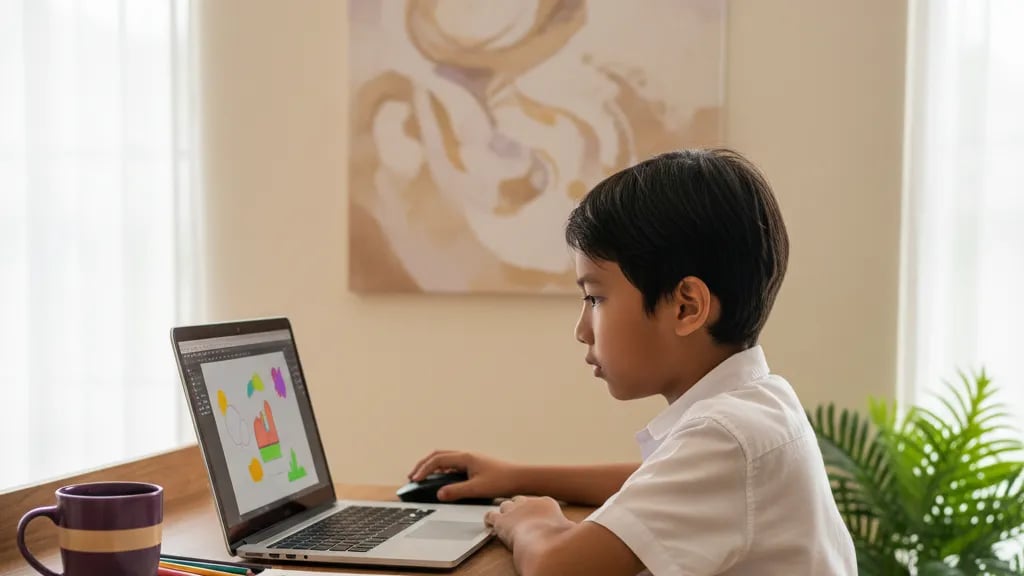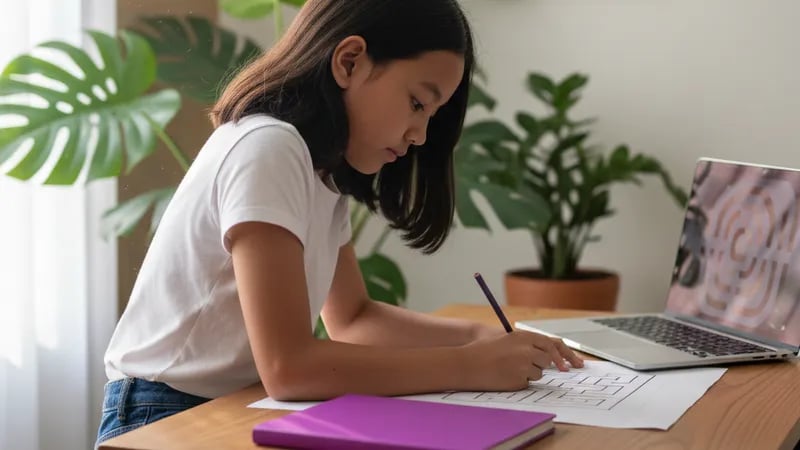
How to Make a Simple Comic for Primary School Kids: From Paper to Digital Comics

Course Guides8 min
Course Guides

Maya Putri
Early Childhood Education Specialist
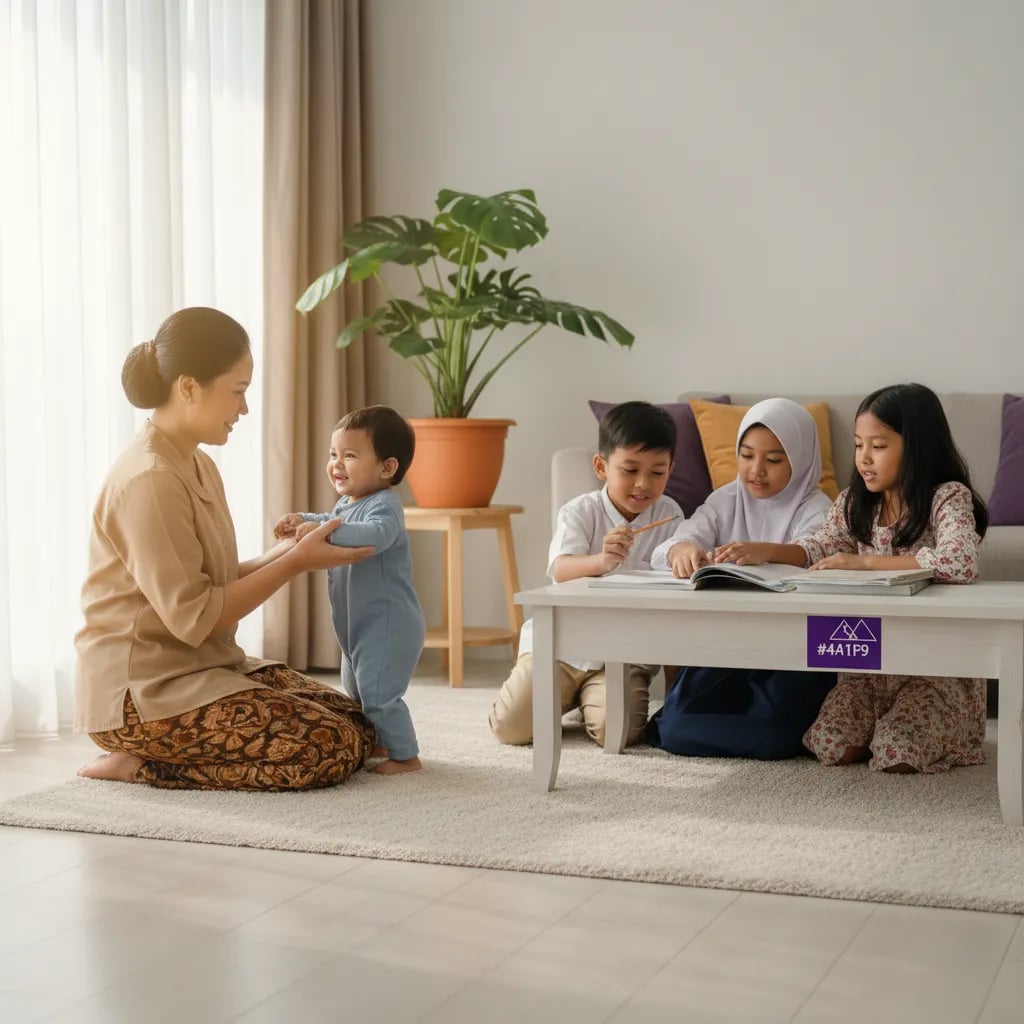
Character in children begins forming from the earliest years of life, even before they start school. The golden age (0–6 years) is the best window to instill positive values and habits that will become the foundation of their personality for life.
As parents, we play the biggest role in this process. Here are 8 practical tips you can start using today.
Children are natural imitators. They learn far more from what they observe than from what they're told. If you want your child to be honest, demonstrate honesty in your everyday life. If you want them to respect others, show respect first.
Start small: say thank you, apologize when you're wrong, and show empathy to the people around you. Children notice and absorb everything.
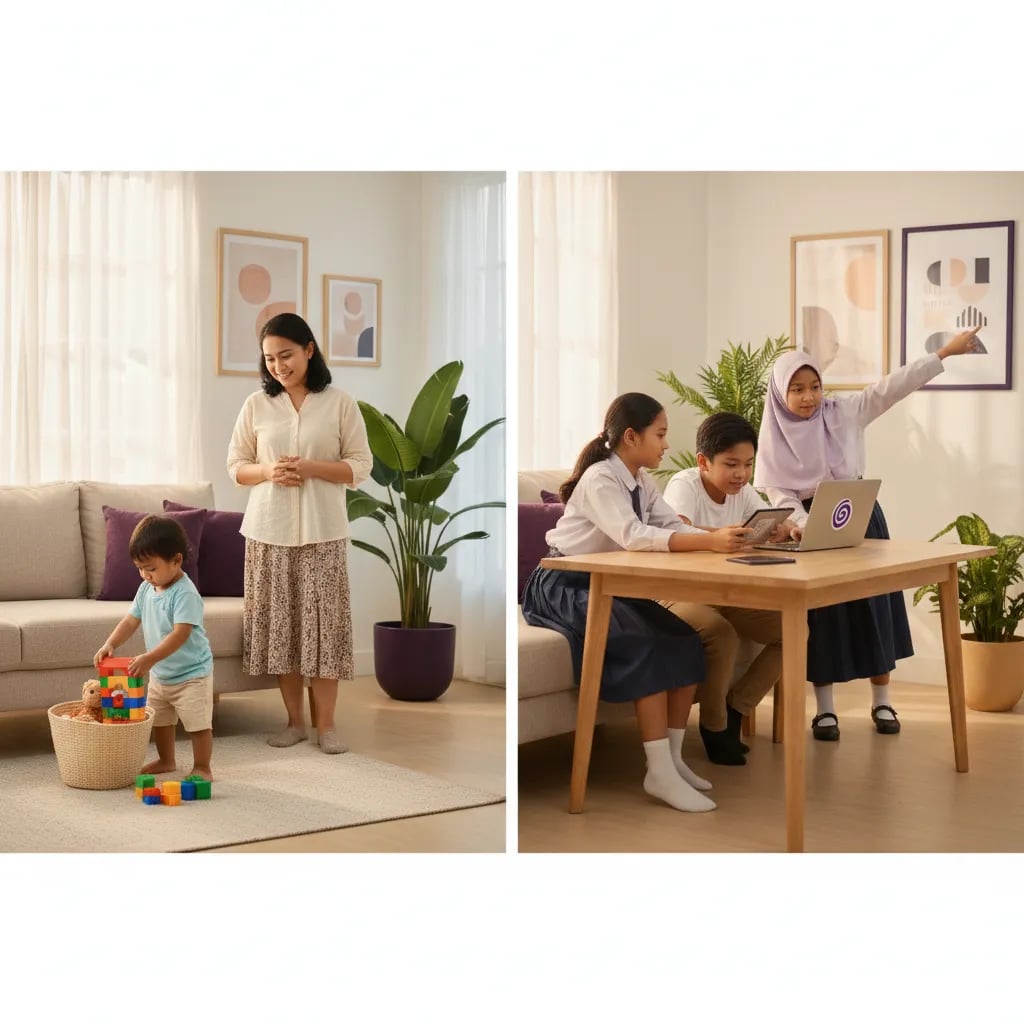
Giving age-appropriate tasks is one of the best ways to build character. Children aged 3–4 can tidy up their toys. Children aged 5–6 can make their bed or help set the dinner table.
Resist the urge to step in the moment they struggle — give them time to try on their own first. The pride they feel after succeeding is the greatest motivator you can give them.
Honesty is the foundation of strong character. When children lie (which is normal at ages 3–5), don't react with anger. Ask calmly why they did it, and explain the consequences of dishonesty.
Create a safe environment where your child feels comfortable telling the truth, even when they've made a mistake. Praise them when they're brave enough to own up.
Many parents want to protect their children from fear — but it's actually fear faced with the right support that builds courage. When your child is scared to try something new, stay with them — don't replace their experience.
Validate their feelings: “I know you're scared, and that's okay. But we can try together.” Courage doesn't mean not being afraid — it means stepping forward even when you are.
Courage doesn't mean not being afraid — it means stepping forward even when you are.
Maya Putri, Child Education Specialist
GET STARTED NOW
Book a free masterclass and your child builds their first project in 60 minutes. Regular classes start from Rp 102,000 per lesson.
In today's competitive world, many children fear failure because they've always been shielded from it. But failure is an essential part of learning.
When your child doesn't succeed, shift the focus from the outcome to the effort: “You tried so hard, and that's what matters most.” Help them understand that every failure is a valuable lesson, not the end of the road.
Gratitude is more than a mechanical “thank you.” It’s the ability to appreciate what you have. Get your child into the habit of naming three things they’re grateful for each evening before bed.
Help them find the positive in difficult situations. Children who practice gratitude grow into happier, more resilient people who are more caring toward others.
Building character in young children is a long-term investment whose results aren't always immediately visible.
Maya Putri, Child Education Specialist
Empathy and compassion are social skills that need to be practiced from an early age. Encourage your child to notice how others are feeling: “What do you think your friend was feeling just now?”
Get them involved in simple acts of kindness — sharing food with neighbors, setting aside toys for children in need, or saying something encouraging to a friend who's sad.
A connection with nature teaches children about responsibility, gratitude, and care for all living things. Take them gardening, observe animals together, or simply take a walk in the park.
Children who grow up with a love of nature tend to be calmer, more creative, and more responsible toward their environment and the people around them.
Beyond these 8 tips, there are a few key things parents should pay attention to:
Your Child’s Natural Character
Every child is born with a unique temperament. Some are more sensitive, some more energetic, some more reserved. Understand your child’s natural character before applying any particular approach — what works for one child won’t always work for another.
Consistent Parenting
Inconsistency confuses children. If lying is okay one day but punished the next, your child will struggle to understand where the real boundaries are. Agree on ground rules with your partner and make sure you both stick to them.
The Surrounding Environment
Character isn’t only shaped at home. School, peers, and the media your child consumes all have a significant influence. Choose an environment that supports the positive values you’re trying to instill.
Building character in young children is a long-term investment whose results aren’t always immediately visible. What matters most is consistency, patience, and genuine love from parents.
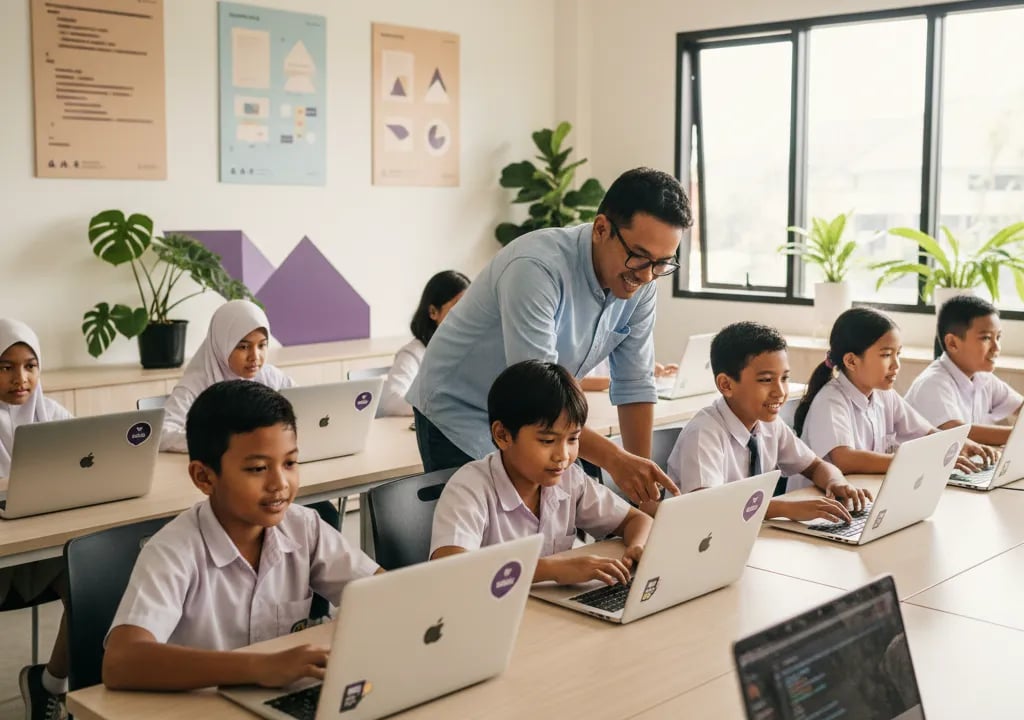
Building character in early childhood works best through daily habits and example rather than lectures: consistent routines, small responsibilities, and honest praise for effort. Activities that ask a child to plan, try, fail, and try again quietly grow patience and persistence, and a small coding project is one good example. See Algonova's coding classes for ages 5 to 17, or try a free class to see how a guided project builds focus and confidence.
Algonova Indonesia accepts students aged 5 to 17 for coding and math courses. Every age group has a dedicated program designed for their cognitive development stage and interests. For kindergarten kids aged 5-7, we offer ScratchJr (visual block-based coding requiring no reading) and fun basic math introduction. For primary school kids aged 8-12, the program covers Scratch, Roblox, Python Start, and complete math. For junior and senior high teens aged 13-17, focus is on Python, JavaScript, secondary school math, AI courses, full Web Development, UTBK SNBT preparation, and university portfolio. No prior experience is required. An Algonova certified teacher will recommend the right learning path during the free trial class.
Yes, all Algonova Indonesia courses are fully available online with live sessions taught by certified teachers — not recorded videos. Kids learn in real time in small groups, with two-way interaction and tasks worked on alongside the teacher. To join online class, a child only needs a computer or laptop with a camera, a stable internet connection, and a headset. The Algonova platform runs directly in the browser so no special software installation is required. Many families choose a mixed schedule: weekday classes for flexibility around school, and weekend sessions for a calmer pace outside school hours. Our team helps choose the format best suited to family needs.
Algonova Indonesia classes come in three formats: 1-on-1 private, a mini-group of 2–4 kids, and a group of up to 10 students. This small group format is deliberately chosen because it provides the optimal balance between social interaction and personal teacher attention. In a mini-group, every child averages about 10 minutes of direct teacher interaction in a single session. Compare with traditional offline bimbel of 20-40 students per class — direct interaction there is only 1-2 minutes per child, or none at all. For families wanting full attention, one-on-one private class is also available (1 student per teacher). This format is more intensive and suits kids with special needs, competition preparation, or specific topic depth.
Choosing the right course for your child depends on three main factors: age, interest, and previous learning stage. The best way to decide is by taking a free trial class at Algonova Indonesia. During the trial class, a certified teacher will talk with the child, understand their interests (games, art, mathematics, science experiments), and assess their ability level. Based on this diagnostic, the teacher recommends the most suitable learning path — perhaps visual coding for creative kids, Python for logic-loving kids, or math tutoring for kids wanting to improve school grades. After the trial, the Algonova team provides a transparent explanation of the recommended program, along with schedule and pricing. No pressure to enrol — we believe the best decisions come from full understanding. Contact our WhatsApp to book a trial.
The Algonova Indonesia trial class is 100% free, no credit card, no auto-subscription. You and your child can attend the entire 60-minute session with no obligation afterwards. Many families take a few days to decide, and that's completely fine. For regular programs, pricing starts from Rp 102,000 per lesson. The price includes a live session with a certified teacher, digital learning materials, platform access, and an official certificate upon completing each level. Final pricing depends on program (coding or math), child's age, and class format (private, mini-group, or group). Full pricing details are shared transparently after the trial class. No surprise fees, every cost component is explained before formal enrolment.
Algonova Indonesia uses Project-Based Learning methodology combined with modern cognitive science principles. Three main pillars: kids learn by creating (not memorising), small groups for personal attention, and a gradual curriculum matched to age. Every program level ends with a real project: kindergarten kids build animations, primary school kids build games or interactive stories, teens build Python applications or websites. Projects become concrete evidence of understanding, far more effective than theoretical exams. We also apply "scaffolded learning" principles — teachers provide full support at the start, then gradually reduce until the child is independent. This approach is inspired by Lev Vygotsky's work on the Zone of Proximal Development. The result: children master not just the material but also build confidence as independent learners willing to try new things.
Yes, Algonova Indonesia students receive an official certificate after completing each level of a coding or math program. The certificate lists the child's name, the program completed (for example Scratch Basics, Python Basics, or Primary School Math), the completion date, and is signed by the Algonova team. The certificate documents the child's learning journey, attaches to a school portfolio or coding competition application, and motivates kids to see the results of their hard work. Some primary and secondary schools in Indonesia accept Algonova certificates as evidence of digital extracurricular activity. Beyond the formal certificate, kids also take home a portfolio of real projects they built themselves: games, animations, websites, or running Python programs. This portfolio is concrete evidence of the child's ability that can be shown to family, teachers, friends, or even in university applications.
Character development ideally starts from birth. The golden age (0–6 years) is the most critical period — a child's brain is developing rapidly and is highly responsive to the surrounding environment.
There's no fixed timeline — character building is a lifelong process. That said, consistency over 21–66 days can establish strong new habits in children.
Stay calm and consistent. Explain the reasoning behind rules in age-appropriate language. Avoid physical punishment — use logical consequences directly related to the child's behavior.
Character can continue to develop throughout life, but the foundation built in early childhood has a lasting impact. The earlier positive values are instilled, the stronger that foundation becomes.
Blog

Algonova worldwide
Contact
Whatsapp: +62 21 50996971
Email: info@algonova.id
Address
Coworking Area, Gedung IT 6 Lantai Dasar, Nongsa Digital Park, Jalan Hang Lekiu, Kelurahan Sambau, Kecamatan Nongsa, Batam, Indonesia Directorate General of Consumer Protection and Trade Compliance – Ministry of Trade of the Republic of Indonesia. WhatsApp Ditjen PKTN: 0853-1111-1010.
PT Algonova Indonesia Cerdas All rights reserved 2026