Future careers in the AI era: what to prepare now
AI Education8 min
Coding Education

Bayu Nugraha
Children's Coding Specialist
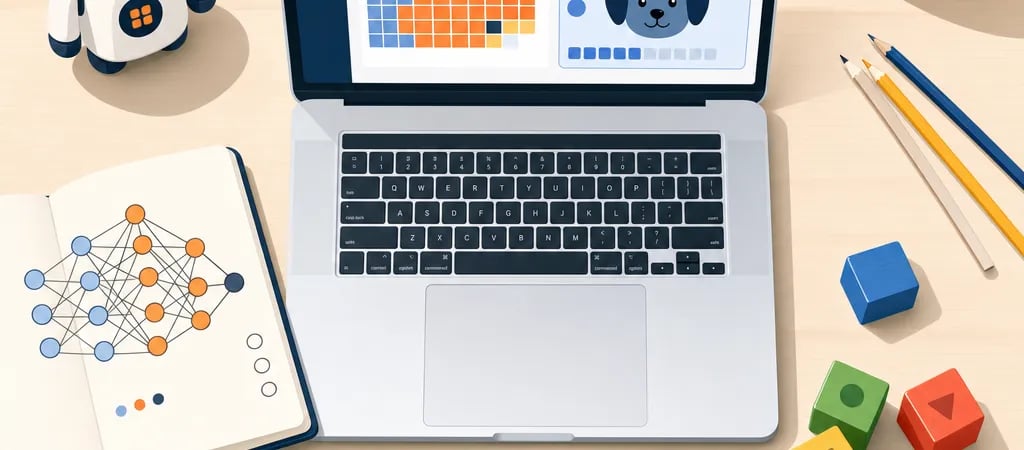
Source code (kode sumber) is the collection of written instructions a programmer creates in a programming language, before it is turned into a program a computer can run. Source code is written as plain, human-readable text — for example saved in a file ending in .py for Python — and is then translated by the computer into commands the machine understands.
Table of Contents
Source code is like a "recipe" written by a programmer. A computer does not understand human language directly, so the source code must be translated first. There are two common approaches: some languages use an interpreter that reads the code line by line, while others use a compiler that translates the whole file at once into a program.
In Scratch, source code is the set of colorful blocks a child snaps together. In Python, source code is lines of text saved in a .py file. For example, a child writes one line, print("Hello!"), in a file called hello.py. That line is source code. When the file runs, Python reads the source code and shows the word "Hello!" on the screen.
Fun fact: the source code of a large project like the Chromium browser has tens of millions of lines written by thousands of programmers around the world.
Source code is the version a human writes and can read; machine code is the version of 0s and 1s that the computer actually runs. The two are the same instructions at different stages: a programmer types source code in a language like Python, and a compiler or interpreter turns it into machine code the processor understands. A child never has to write machine code by hand, and that is the whole point of a programming language, to let people work in words and symbols instead of raw numbers. Seeing this split helps kids understand why the same program can run on very different devices.
Understanding source code helps children see that a program is not magic, but instructions they can write and change themselves. It builds logic and the confidence to create technology instead of only using it. In Algonova's coding course, kids learn to write source code step by step, from Scratch blocks to Python. For a related term, see what is a programming language.
Try a free coding class and watch your child write their first line of code.
Source code is the written instructions in a programming language that a programmer creates before it is turned into a program a computer can run. An example is the code inside a `.py` file.
Source code is text written by a human, while a program is the final, runnable result the computer produces after the source code is translated.
Source code is saved in text files with an extension that matches its language, such as `.py` for Python, `.js` for JavaScript, or `.html` for HTML.
Yes. Children can start with visual blocks in Scratch, then move on to writing simple text source code in Python as their skills grow.

Algonova worldwide
Contact
Whatsapp: +62 21 50996971
Email: info@algonova.id
Address
Coworking Area, Gedung IT 6 Lantai Dasar, Nongsa Digital Park, Jalan Hang Lekiu, Kelurahan Sambau, Kecamatan Nongsa, Batam, Indonesia Directorate General of Consumer Protection and Trade Compliance – Ministry of Trade of the Republic of Indonesia. WhatsApp Ditjen PKTN: 0853-1111-1010.
PT Algonova Indonesia Cerdas All rights reserved 2026