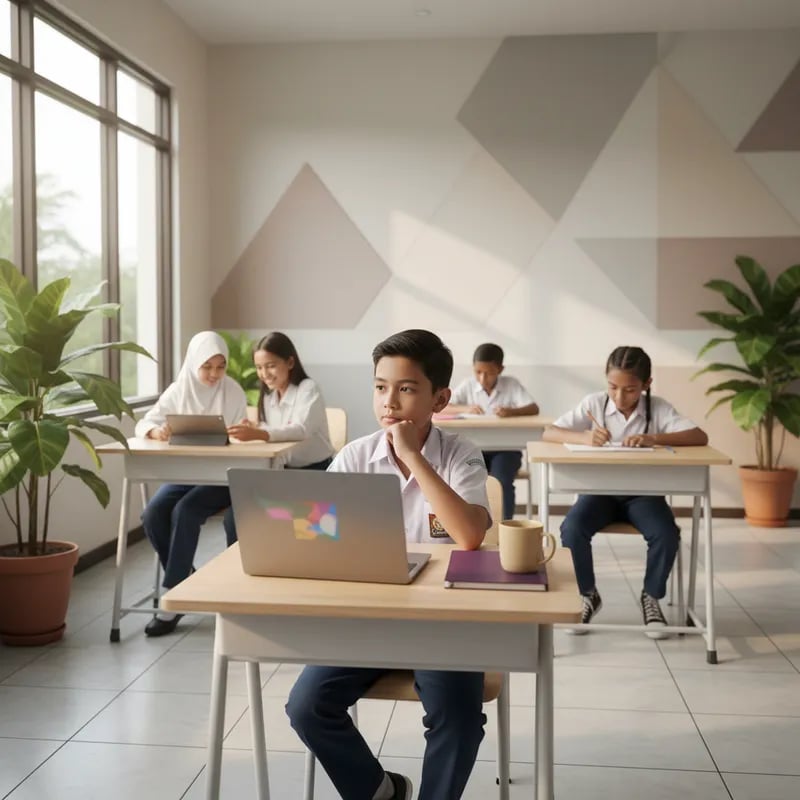
Future careers in the AI era: what to prepare now

AI Education8 min
Coding Education

Bayu Nugraha
Children's Coding Specialist
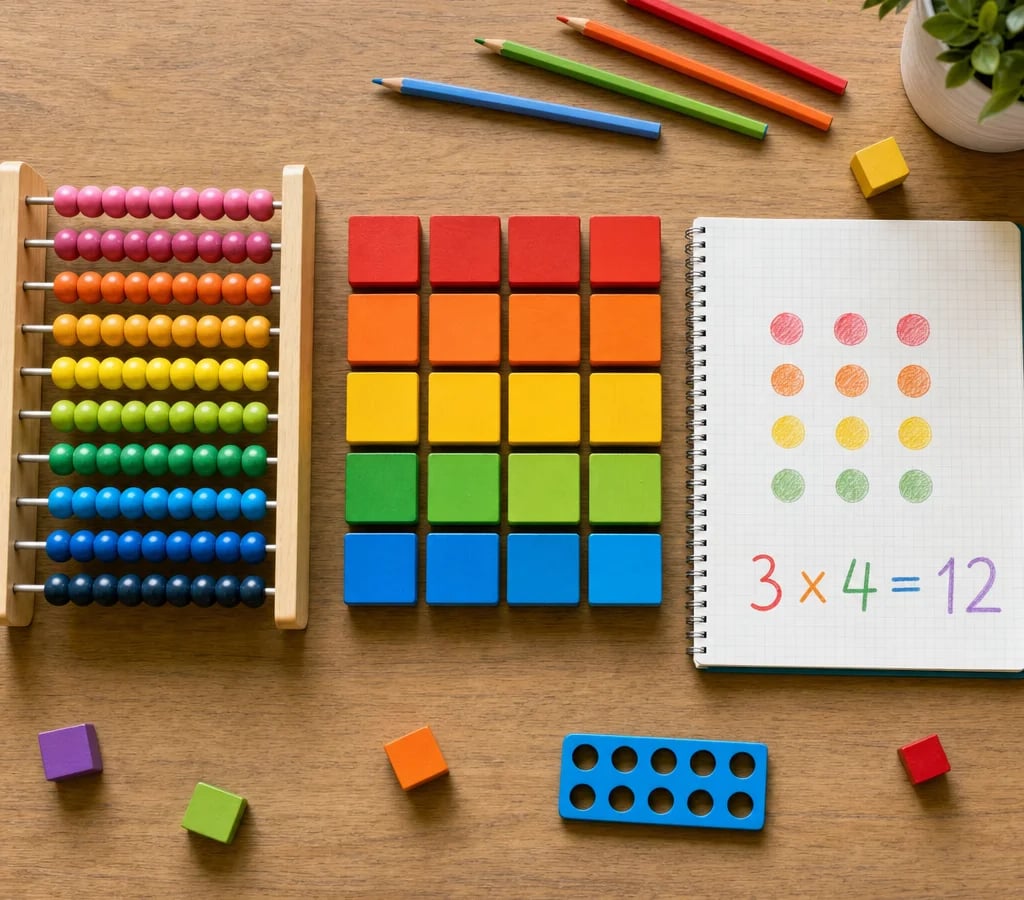
Robotics is an applied field that combines coding, mechanics, and electronics to design, build, and operate robots — machines that can sense their environment and act automatically without constant human control.
Table of Contents
Every robot works through three main parts: sensors as its eyes and ears, motors or actuators as its muscles, and coding as its brain. Sensors read the surroundings, the code decides the right action, and the motors move the robot accordingly. Robots come in many forms — from a home vacuum robot and drones to giant robotic arms in a car factory. Picture that vacuum robot: its sensor detects a wall, its code tells it to turn, and its wheels move to avoid a crash — all in milliseconds. In factories, modern robotic arms repeat the same motion with a precision of under 0.1 mm, thousands of times a day, without ever getting tired. Without coding, even the most advanced robot would just sit still like a toy without batteries.
Examples of robots in everyday life include the robot vacuum that cleans the floor, delivery drones that carry packages, the automated arms that assemble cars, and the voice assistant that answers questions on a smart speaker. Each one follows the same three-part design: a sensor reads the world, code decides what to do, and a motor or speaker carries out the action. Hospitals use robots to assist in surgery, and warehouses use them to move heavy shelves. Pointing these out to a child makes robotics feel less like science fiction and more like something they can learn to build, one line of code at a time.
Robotics teaches children to think logically and solve real problems because they see the code they write move in the physical world. When a robot doesn't turn correctly, a child learns to trace the cause and fix it — the heart of computational thinking that helps in every field. Beyond logic, robotics also builds creativity and confidence when a child succeeds in making something move. Through the Algonova coding course, kids aged 5-17 start from simple visual blocks and grow into writing their own robot logic, step by step. Because coding is the brain of a robot, mastering it opens the door to almost every future technology.
Want to see your child build their first program? Try a free Algonova class.
Children can grasp robotics concepts from age 5-6 through visual blocks and simple toy robots. At this age the focus is cause-and-effect logic, not memorizing code. Complexity is added gradually as they grow.
Coding means writing instructions for a computer, while robotics combines that coding with physical parts like sensors and motors. Coding is the brain; robotics is the full body. A child who learns coding already masters the most important foundation of robotics.
No. Many robotics concepts can be learned through simulations and on-screen coding before touching any physical device. The main focus is the way of thinking, not the equipment.
Children develop logical thinking, persistence in problem-solving, and creativity. These skills help both at school and in future technology careers.

Algonova worldwide
Contact
Whatsapp: +62 21 50996971
Email: info@algonova.id
Address
Coworking Area, Gedung IT 6 Lantai Dasar, Nongsa Digital Park, Jalan Hang Lekiu, Kelurahan Sambau, Kecamatan Nongsa, Batam, Indonesia Directorate General of Consumer Protection and Trade Compliance – Ministry of Trade of the Republic of Indonesia. WhatsApp Ditjen PKTN: 0853-1111-1010.
PT Algonova Indonesia Cerdas All rights reserved 2026