Future careers in the AI era: what to prepare now
AI Education8 min
Coding Education

Bayu Nugraha
Children's Coding Specialist
Algonova is a global online school for children aged 5–17 with 1,000,000+ graduates across 97 countries, available in Private (1 student), Mini (2-4 students), and Group (up to 10 students) formats, all 100% online. KodeKiddo is an Indonesian kids' IT school with Silicon Valley roots and a network of 34 in-person learning centres across Indonesian cities. For families who prioritise a physical classroom in a city with a KodeKiddo centre, KodeKiddo is a solid choice. For families who need online flexibility or live far from a centre — Algonova.
This article compares both honestly — what each excels at, and which family each fits. There is no universal winner — the choice depends on your concrete situation. Details about KodeKiddo are summarised from the information they publish officially and may change; please confirm them directly with the provider.

KodeKiddo is an Indonesia-based kids' IT school with Silicon Valley roots and a network of 34 learning centres across the country. Its programmes span early childhood through secondary school, with a robotics component using devices such as Sphero, micro:bit, and Arduino. Parents can track their child's progress through the Klaskoo app.
KodeKiddo's strengths: a physical classroom experience, a wide network of learning centres across Indonesia, hands-on robotics with real devices, a parent monitoring app, and participation in international competitions (Codeavour, CTC Battle).
Age bands, class sizes, schedules, and the latest locations are best confirmed directly on KodeKiddo's official website.
Algonova is an online school for coding, maths, AI, and design for children aged 5–17, with 1,000,000+ graduates across 97 countries and 10+ years of teaching experience. All classes are live with certified teachers in Private (1 student), Mini (2-4 students), and Group (up to 10 students) formats. Format is 100% online — the child learns from home via a laptop.
In Indonesia, Algonova teaches families in cities nationwide — from Jakarta to Manado, from Medan to Balikpapan. Because it is online, access isn't limited by geography.
Algonova's strengths: flexible class-size options (Private 1 student, Mini 2-4 students, or Group up to 10 students), access from anywhere (no need to live near a learning centre), global scale (graduates from 97 countries), and a mature progressive curriculum (Scratch → Roblox → Python → AI + maths + design).
Not who is better, but who fits better:
Group size: Algonova has three formats — Private (1 student), Mini (2-4 students), and Group (up to 10 students). KodeKiddo does not state its class sizes officially, so ask the nearest learning centre directly.
Format: KodeKiddo is primarily in-person with an online option; Algonova is 100% online.
Geography: KodeKiddo has 34 in-person learning centres across Indonesian cities — strong if one is near you. Algonova is available across all of Indonesia online, independent of location.
Curriculum: KodeKiddo combines coding with hands-on robotics using real devices (Sphero, micro:bit, Arduino). Algonova uses its own curriculum co-designed by educators and child psychologists, with a progressive path Scratch → Roblox → Python → AI.
Scale: KodeKiddo = an Indonesian network of 34 learning centres; Algonova = a global brand with 1,000,000+ graduates in 97 countries.
| Algonova | KodeKiddo | |
|---|---|---|
| Main format | 100% online | In-person + online option |
| Physical centres | No (all online) | 34 learning centres across Indonesian cities |
| Availability | All of Indonesia | Cities with a KodeKiddo learning centre |
| Group size | Private (1) · Mini (2-4) · Group (up to 10) | Not stated officially — ask directly |
| Age | 5–17 years | Early childhood to secondary — confirm directly |
| Curriculum | Own curriculum: coding + math + AI + design | Coding + hands-on robotics |
| What is taught | Scratch, Python, Roblox/Lua, AI tools | Coding + robotics (Sphero, micro:bit, Arduino) |
| Scale | 1,000,000+ graduates in 97 countries | Indonesian network, Silicon Valley roots |
| Teachers | International certified | Indonesian instructors |
| Parent monitoring | Regular progress reports | Klaskoo app |
| Competitions | Hackathons, coding olympiads | Codeavour, CTC Battle |
| Price | From Rp 102,000 per lesson | Contact a centre for a quote |
| Free trial class | Yes, free 60-minute masterclass | Contact a centre to confirm |
Pricing note: Algonova's price starts from Rp 102,000 per lesson. KodeKiddo does not publish rates on its main site, so fees need to be requested directly. For an accurate KodeKiddo quote, contact the nearest learning centre.
Free-class note: a free trial class is now common in this market, so simply having one is not a differentiator — what matters is what actually happens inside that class.
KodeKiddo offers a physical class experience with rich facilities; Algonova offers small groups and access from anywhere. The right choice lies at the intersection of your home's geography, family schedule, and the child's learning style.
Bayu Nugraha · Children's Coding Specialist, Algonova Indonesia
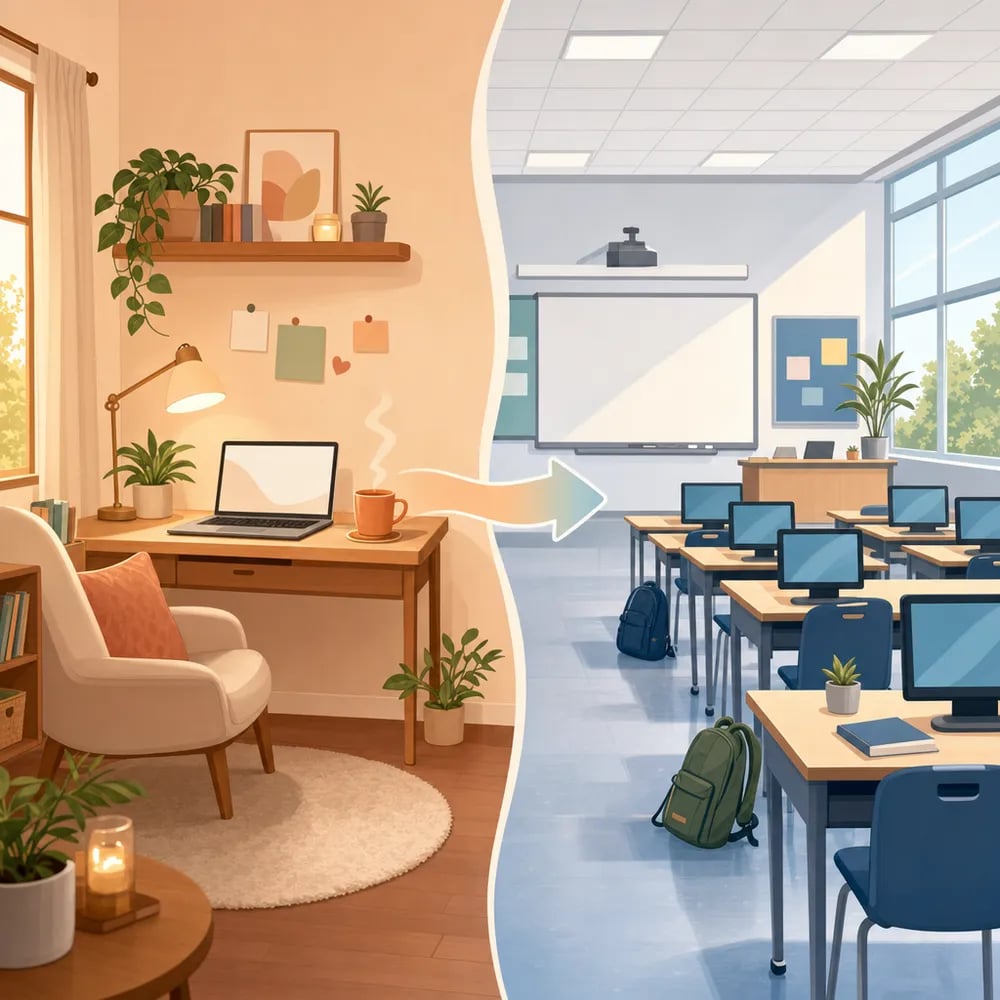
Both schools have their place. The right choice depends on your family's concrete situation — not on which brand is better known.
Check geography: If a KodeKiddo learning centre is reachable within 30–45 minutes of home — KodeKiddo is worth trying. If not — Algonova. The latest list of locations is on KodeKiddo's official website.
Check family schedule: If you can bring the child consistently 2–3 times a week — in-person works. If the parent's schedule is packed or the commute is long — online is more realistic.
Check learning style: Does the child focus better in a classroom with physical peers, or at home in an online class? Some kids focus better at home because there's no social distraction.
Check budget: Algonova's price starts from Rp 102,000 per lesson. KodeKiddo doesn't publish public pricing, so contact the nearest learning centre for a quote and compare.
Check what's taught: If your child is drawn to hands-on robotics with real devices — KodeKiddo delivers that. If your child is heading towards advanced coding, AI, and maths on one path — Algonova.
To experience Algonova's format, book a free 60-minute masterclass with a certified teacher. For KodeKiddo, check the nearest learning centre on their official website.
Choose Algonova if you want live classes with a choice of Private (1 student), Mini (2-4 students), or Group (up to 10 students) formats, an international curriculum for ages 5 to 17, and online reach across all of Indonesia. Choose KodeKiddo if a physical classroom in a specific city matters most to you. Both are credible; the real difference is format and scale.
Which one is cheaper? Algonova starts from Rp 102,000 per lesson and can be tried for free before you pay, so you don't have to guess. KodeKiddo doesn't publish public pricing, so you'll need a quote from a branch.
How do you make sure of the right choice? The most honest way is to try it yourself. See the list of Algonova coding classes for ages 5 to 17, then try a free coding class at no cost to compare it directly against other options before deciding.
Yes, Algonova Indonesia runs a full coding program for kids aged 5 to 17, covering kindergarten through senior high. It splits into three age tracks: Little Coders for ages 5 to 7 using visual block based coding, Junior Coders for ages 8 to 12 using Scratch and the fundamentals of programming logic, and Teen Coders for ages 13 to 17 using Python and game development. Every class is live online with certified teachers in small groups of up to 10 students. Kids build a real project from the first session rather than memorising syntax. Algonova has taught more than 1,000,000 students across 97 countries since 2016.
Yes. For the coding track Algonova Indonesia offers a free 60 minute master class with no commitment. No credit card is needed and there is no auto subscription afterwards. Note that these 60 minutes are an introductory master class, not a regular lesson. A regular coding class runs 90 minutes. During the master class the child works directly with a certified teacher, tries the online learning platform, and finishes a first small project matched to their age. After the session parents receive a personal learning track recommendation plus a transparent explanation of program, schedule, and pricing from Rp 102,000 per lesson. To book, fill in the form on the website.
Algonova Indonesia coding classes come in three formats: Private with one student per teacher, Mini group of 2 to 4 kids, and Group of 6 to 10 kids of similar age and level. The small group format exists because coding gets stuck on very specific lines of code, and a child needs a teacher who can look at their screen when it happens. In a Mini group the teacher checks each child's screen several times per session. The Private format is the most intensive and suits competition preparation, independent projects, or a child who wants to move faster than the group.
Kids coding at Algonova Indonesia starts from Rp 102,000 per lesson. The price covers the live session with a certified teacher, digital learning materials, online platform access, and an official certificate once the child completes each program level. The starting rate is the same across all age tracks. The final quote depends only on class format, meaning Private, Mini, or Group, and on how many sessions per week you choose. Group is the most affordable option and Private is the most intensive. Full pricing is shared after the free master class and before formal enrolment, with no surprise fees. To get a quote, fill in the form on the website.
Yes, every Algonova Indonesia coding program runs fully online with live sessions taught by certified teachers, not recorded videos. Kids learn in real time in small groups, with live Q&A and code written alongside the teacher during the class. To join, a child needs a computer or laptop with a camera, a stable internet connection, and a headset. The Algonova platform runs directly in the browser, so no special software installation is required and no expensive machine is needed. Because everything is online, families anywhere in Indonesia can join and easily fit lessons around school.
Three things make Algonova coding effective for Indonesian kids: project based learning, a staged track, and small groups. Every session produces something that runs and can be shown to a parent, which keeps motivation alive far longer than theory alone. The track climbs gradually from visual block based coding to Python, so a child never jumps into a text language before their logic is ready. Small groups of up to 10 students let the teacher adjust pace: faster kids get extra challenges and stuck kids get help inside the same session. The material also lines up with coding and artificial intelligence entering the Indonesian school curriculum.
That is fine, most Algonova students start from zero with no coding experience at all. Every new child begins with the free master class, where the teacher watches how they solve problems and picks the right starting point. Kids aged 5 to 7 start with visual block based coding and do not need to type fast yet. Older kids can start with Scratch and move up to Python once their logic is solid. All that is required is basic reading and curiosity. Parents do not need to understand programming to support the child, because every task is explained by the teacher during class.

Algonova worldwide
Contact
Whatsapp: +62 21 50996971
Email: info@algonova.id
Address
Coworking Area, Gedung IT 6 Lantai Dasar, Nongsa Digital Park, Jalan Hang Lekiu, Kelurahan Sambau, Kecamatan Nongsa, Batam, Indonesia Directorate General of Consumer Protection and Trade Compliance – Ministry of Trade of the Republic of Indonesia. WhatsApp Ditjen PKTN: 0853-1111-1010.
PT Algonova Indonesia Cerdas All rights reserved 2026